Qazvin Ab Anbars: Ancient Water Reservoirs of Iran
Before the modernization of the 20th century, the city of Qazvin relied on a sophisticated network of drinking water reservoirs known as ab anbars. These traditional subterranean cisterns were essential for survival in the arid climate, designed to collect and store water while keeping it cool through ingenious architectural techniques. While Qazvin once boasted over 100 of these structures, only ten remain fully intact today, all of which are now protected as national cultural heritage relics.
Key Facts
- Historical Scale: Qazvin originally had close to or more than 100 ab anbars.
- Current Status: Only ten intact reservoirs remain, all designated as national heritage sites.
- Construction Materials: Many used Sarooj, a traditional water-resistant mortar, to seal walls.
- Architectural Features: Common elements include the sardar (entrance portal), windcatchers for cooling, and deep stairways.
- Timeline: The extant structures primarily date from the Zand era (18th century) and the Qajar era (19th century).
The Architecture and Function of Ab Anbars
An ab anbar is more than just a hole in the ground; it is a complex engineering feat. Most consist of a deep storage tank surrounded by thick walls to maintain a constant temperature. Access is typically provided via a long stairway, and the air is circulated using windcatchers—towers that channel surface breezes down into the reservoir to cool the water.
Some reservoirs also feature a saqqa-khaneh, a small enclave where passersby can drink and offer prayers (nazr) before sacred images of Shia icons. Additionally, certain structures include a separate private stairway used for lay-rubi, the process of cleaning the sediment from the bottom of the tank.
Notable Ab Anbars of Qazvin
Ab anbar of Sardar-e Bozorg
Completed in 1812, this reservoir was born from a vow made by two brothers, Mohammad Hasan Khan and Mohammad Hosein Qoli Khan e Sardar. As commanders in the army of the Qajar monarch Fath-Ali Shah, they pledged to build a mosque, school, and ab anbar in the city's driest region if they returned victorious from a battle against the Russian army. The structure is noted for its massive walls, which are 3 meters thick.
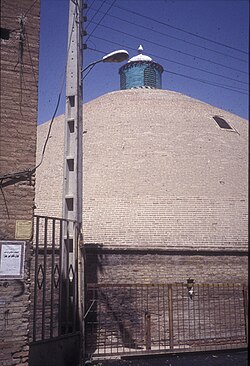
Ab anbar of Haj Kazem
Finished in 1840 in one of Qazvin's drier neighborhoods, this reservoir features 40 steps and two windcatchers standing 8 meters tall. The architects, Haj Kazem Kuzehgar and his assistant Haji Ismail, are credited in inscriptions found on top of the sardar.
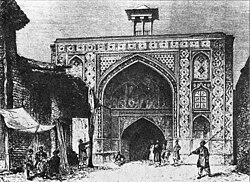
Ab anbar of Zananeh Bazar
Located inside the coppersmiths' bazaar, this reservoir was built through the charity of Haj Mola Abdol-vahhab, a prominent Qajar-era cleric. It is one of the most complex structures, featuring 43 steps, 10 flat domes, 5 windcatchers, and 4 internal columns. It also possesses a separate stairway for layeh-rubi that connects to the basement of a nearby mosque.
Other Significant Reservoirs
- Ab anbar of Jame’ mosque: Built in 1682 by benefactor Ali Khan-e Nāmi, it features Sarooj-covered walls 2.4 meters thick and a private stairway for cleaning.
- Ab anbar of Sardar e Kuchak: Built in 1814 by the same brothers who built Sardar-e Bozorg, this site includes 37 steps, four domes, and four semi-windcatchers.
- Ab anbar of Hakim: Completed in 1828 by local physician Haj Mirza Hakim, this 36-step reservoir is accompanied by a saqqa-khaneh.
- Ab anbar of Mola Verdi Khan mosque: A Zand-era structure dating to 1763, featuring a pasheer with two gushvars.
- Ab anbar of Agha: A Qajar-era relic with 30 steps and walls 2.2 meters thick.
Summary of Extant Ab Anbars
| Name | Date Completed | Key Feature | Wall Thickness / Steps |
|---|---|---|---|
| Jame’ mosque | 1682 | Sarooj walls | 2.4m walls |
| Mola Verdi Khan | 1763 | Zand era origin | N/A |
| Sardar-e Bozorg | 1812 | Largest single dome | 3m walls |
| Sardar e Kuchak | 1814 | 4 semi-windcatchers | 37 steps |
| Hakim | 1828 | Attached saqqa-khaneh | 36 steps |
| Haj Kazem | 1840 | 8m windcatchers | 3m walls / 40 steps |
| Zananeh Bazar | Qajar Era | 10 flat domes | 43 steps |
| Agha | Qajar Era | Heritage relic | 2.2m walls / 30 steps |
Frequently Asked Questions
What is an ab anbar?
An ab anbar is a traditional Iranian drinking water reservoir designed to store water underground to keep it cool and prevent evaporation in arid climates.
How many ab anbars are left in Qazvin?
While the city once had over 100 reservoirs, only ten remain fully intact today, all of which are protected as national cultural heritage relics.
What is the purpose of a windcatcher in these structures?
Windcatchers are architectural towers that capture surface wind and direct it down into the reservoir to cool the stored water.
What is lay-rubi?
Lay-rubi refers to the process of cleaning the sediment and silt from the bottom of the water tank, often accessed via a separate, private stairway.
Who built the Ab anbar of Sardar-e Bozorg?
It was built by two brothers, Mohammad Hasan Khan and Mohammad Hosein Qoli Khan e Sardar, who were commanders in the army of Fath-Ali Shah.