Iranian Architects and the Legacy of the Mi'mar
The history of Iranian architecture is a testament to ingenuity and precision, spanning millennia from the ancient empires to the Islamic age. Central to this legacy is the figure of the mi'mar (Persian: معمار), the traditional term for an Iranian architect. While the names of many ancient masters have been lost to time, the evolution of their roles provides a fascinating glimpse into how the great edifices of Greater Iran were conceived and constructed.
Defining the Mi'mar and Related Roles
According to the Persian dictionary of Mo'in, a mi'mar is defined as the individual who devises the design and plan of a building and oversees its construction. However, the terminology used in classical manuals of Islamic architecture reveals a more nuanced division of labor and expertise.
Several other classical terms appear alongside mi'mar to describe those responsible for the built environment:
- Banna: The person responsible for the actual building, development, and repair of a structure or edifice (known as an Emārat).
- Mohandes: A term appearing in classical references denoting engineering and technical skill.
- Ostad: A term for a master or teacher of the craft.
- Amal: Another classical designation for a builder or practitioner.
While some scholars argue that the historical role of the mi'mar differs from the modern concept of an architect, there is a general consensus that their responsibilities overlapped extensively. For the purpose of historical study, these roles are often grouped together.
The Challenge of Historical Records
Tracing the lineage of Iranian architects is a difficult task due to the scarcity of early records. While the ruins of ancient cities provide evidence of immense skill, the names of the individuals who designed them remain a mystery. There are no surviving records of the architects who created the spectacular palaces of Persepolis, Susa, Firuzabad, or Bishapur.
As history progressed into the Islamic age, record-keeping improved, allowing historians to attribute specific works to named masters. Even so, many remaining structures were likely the result of collaborations between multiple architects, though historical lists often highlight only the most prominent figure associated with a building's most famous work.
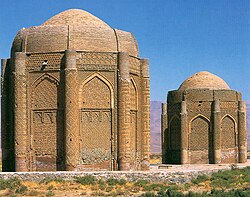
One such example of the enduring precision of these masters is the Kharāghān twin towers, which stand as a testament to the architectural prowess of the 11th century.
Key Facts
- The term mi'mar refers to the designer and overseer of a building's construction.
- Classical architecture manuals use terms like Banna, Mohandes, Ostad, and Amal to describe builders and engineers.
- The architects of ancient sites like Persepolis and Susa are unknown because no written records of their names exist.
- The Kharāghān twin towers were constructed in 1053 CE in the Qazvin province.
- Historical records for the Islamic age are more available but often attribute a building to a single primary architect despite potential collaborations.
Summary of Architectural Terminology
| Term | Primary Responsibility |
|---|---|
| Mi'mar | Designing the plan and overseeing construction |
| Banna | Building, developing, and repairing structures (Emārat) |
| Mohandes | Technical engineering and planning |
| Ostad | Mastery and instruction of the craft |
| Amal | Practical execution and building |
Frequently Asked Questions
What is the difference between a mi'mar and a banna?
A mi'mar is primarily the designer and supervisor who creates the plan for a building, whereas a banna is the person responsible for the physical construction, development, and repair of the structure.
Who designed the palaces of Persepolis and Susa?
The names of the architects who built Persepolis, Susa, Bishapur, and Firuzabad are unknown, as no historical records of their identities have survived.
Are the terms mi'mar and architect interchangeable?
While some scholars suggest historical differences, most agree that their responsibilities overlapped significantly, and they are often treated as the same in historical contexts.
When were the Kharāghān twin towers built?
The Kharāghān twin towers in the Qazvin province were built in 1053 CE.
Why are so few early Iranian architects named in history?
There is very little to no record of the masters who built the pre-Islamic and early Islamic wonders of Iran; only the physical ruins remain to indicate their existence.