Pyrrhic Victories: When Winning Costs Too Much
In the study of conflict, not every win is a true success. A Pyrrhic victory occurs when a victor achieves their immediate goal but sustains such devastating losses that the win becomes functionally equivalent to a defeat. Named after King Pyrrhus of Epirus, this concept describes a scenario where the cost of winning outweighs the benefit of the achievement, often leaving the victor unable to sustain further efforts or pursue long-term strategic goals.
Key Facts
- A Pyrrhic victory is a tactical win that results in a strategic disadvantage.
- The term originates from King Pyrrhus of Epirus after his costly victory over the Romans.
- These victories are characterized by irreplaceable losses of manpower, resources, or political capital.
- The concept applies beyond warfare, including politics, law, and professional sports.
Historical Military Examples
Ancient and Medieval Warfare
The concept began with the Battle of Asculum (279 BC). While Pyrrhus of Epirus and his Italian allies defeated the Roman Republic, the Romans could easily replenish their ranks despite suffering twice as many casualties. Pyrrhus, however, lost most of his commanders and a significant portion of his forces, eventually forcing his withdrawal to Sicily.
In 451, the Battle of Avarayr saw the Sassanid Empire defeat outnumbered Christian Armenian rebels led by Vardan Mamikonian. Although the Persians won the field, their losses were so severe that it became a strategic victory for the Armenians, eventually leading to the Nvarsak Treaty of AD 484, which granted Armenian religious freedom and autonomy.
Similarly, the Battle of St. Jakob an der Birs (1444) was a devastating tactical defeat for the Swiss and a blow to the canton of Bern. However, the French suffered such heavy casualties that the Dauphin abandoned plans to move toward Zürich. This strategic shift contributed to the eventual Swiss victory in the Old Zürich War.
Early Modern and Colonial Conflicts
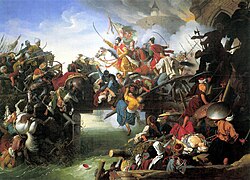
The Siege of Szigetvár (1566) during the Ottoman–Habsburg wars ended in an Ottoman victory after 33 days. However, the heavy casualties and the death of Sultan Suleiman delayed the Ottoman push for Vienna, effectively suspending their expansion into Europe.
During the Eighty Years' War, the Siege of Ostend (1601–1604) lasted three years. Spain eventually captured the port, but the cost was catastrophic. While Spain fought for Ostend, the Dutch captured the port of Sluis. By 1607, Spain was bankrupt, and the subsequent Twelve Years' Truce recognized the Dutch Republic as an independent state.
In the American Revolutionary War, the Battle of Bunker Hill (1775) gave the British control of the Boston peninsula, but the high casualty rate—particularly among officers—forced the British to adopt more cautious tactics and increased colonial support for independence. Later, in 1781, the British won the Battle of Guilford Court House, but the losses they sustained altered their drive to conquer the southern colonies.
Modern Warfare
The Battle of Chancellorsville (1863) during the American Civil War saw General Robert E. Lee defeat a larger Union force. However, Lee lost 20% of his army, including General Stonewall Jackson. These irreplaceable losses weakened his army just before its defeat at the Battle of Gettysburg.
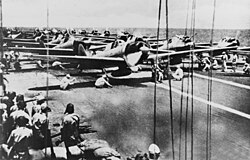
In World War II, the Battle of the Santa Cruz Islands (1942) resulted in a tactical Japanese victory as no Japanese ships were sunk, while the U.S. lost an aircraft carrier and a destroyer. However, the Japanese lost 100 airplanes and veteran aircrews that could not be replaced, providing a strategic advantage to the Allies.
During the Korean War, the Battle of Chosin Reservoir (1950) saw Chinese forces occupy northeast Korea after encircling UN forces. However, the UN forces inflicted crippling losses on the Chinese during a 17-day fighting withdrawal, allowing the UN to maintain a foothold in Korea.
More recently, the Battle of Vukovar (1991) during the Croatian War of Independence ended with the city falling to the Yugoslav People's Army (JNA) after 87 days. Despite having twenty times more soldiers and superior artillery, the JNA suffered twice as many losses as the defenders, exhausting the army and marking a turning point in the war.

Beyond the Battlefield: Politics, Law, and Sports
The term is frequently used as an analogy in non-military contexts to describe struggles that ruin the victor. In sports, a Pyrrhic victory might occur if a team wins a game but loses a star player to a season-ending injury, or wins a match but loses a favorable draft position.
In politics and ethics, theologian Reinhold Niebuhr warned that moral reason must use coercion carefully to avoid a Pyrrhic victory where the means of achieving justice actually negate the triumph.
In law, the concept appeared in the 1952 U.S. Supreme Court case Beauharnais v. Illinois. In his dissent regarding group libel, Associate Justice Hugo Black referenced Pyrrhus, suggesting that if minority groups viewed the ruling as a victory, they should remember the warning: "Another such victory and I am undone."
Summary of Notable Pyrrhic Victories
| Conflict/Battle | Tactical Victor | The "Cost" (Pyrrhic Element) | Strategic Outcome |
|---|---|---|---|
| Battle of Asculum | Pyrrhus of Epirus | Loss of key commanders and forces | Withdrawal to Sicily |
| Siege of Szigetvár | Ottoman Empire | Death of Sultan Suleiman; heavy losses | Halted expansion into Europe |
| Battle of Bunker Hill | Great Britain | High officer casualties | Increased colonial independence support |
| Battle of Chancellorsville | Confederate Army | 20% casualties; loss of Stonewall Jackson | Weakened army before Gettysburg |
| Battle of Santa Cruz Islands | Imperial Japanese Navy | Loss of 100 planes and veteran crews | Strategic advantage for Allies |
| Battle of Vukovar | Yugoslav People's Army | Double the losses of the defenders | Turning point in Croatian Independence |
Frequently Asked Questions
What is the difference between a tactical victory and a strategic victory?
A tactical victory is winning a specific engagement or battle (e.g., capturing a hill or city). A strategic victory is achieving the overall goal of the war or conflict. A Pyrrhic victory is a tactical win that leads to a strategic loss.
Why is it called a "Pyrrhic" victory?
It is named after King Pyrrhus of Epirus, who defeated the Romans at the Battle of Asculum but suffered such heavy losses that he famously remarked that another such victory would ruin him.
Can a Pyrrhic victory happen in sports?
Yes. For example, if a team wins a championship game but their best player suffers a career-ending injury during the match, the immediate win is overshadowed by the long-term loss of talent.
How does a Pyrrhic victory affect a military's future capabilities?
It typically depletes irreplaceable resources, such as veteran leadership, specialized aircrews, or a significant percentage of the total manpower, making the victor vulnerable to subsequent attacks or unable to maintain their gains.
Is a Pyrrhic victory the same as a stalemate?
No. In a stalemate, neither side makes significant progress. In a Pyrrhic victory, one side actually achieves its objective, but the cost of doing so is so high that the victory provides no real advantage.