Public Domain: How Creative Works Become Free for Everyone
The public domain refers to the vast collection of creative works that are not restricted by exclusive intellectual property rights. When a work is in the public domain, it means no single person or entity holds the legal authority to control its use. Consequently, anyone can legally use, share, or reference these works without seeking permission or paying royalties.
Works enter the public domain for several reasons: their copyright terms may have expired, the rights were forfeited or waived by the creator, or the work was never eligible for copyright protection in the first place. This "intellectual commons" serves as a foundation for culture and innovation, allowing new artists and scholars to build upon the achievements of the past.
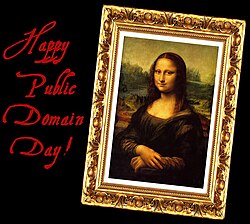
Key Facts
- Universal Access: Anyone can use public domain works without permission.
- Diverse Origins: Works enter the public domain via expiration, waiver, or legal inapplicability.
- Jurisdictional Variance: A work may be in the public domain in one country but still under copyright in another.
- Derivative Freedom: Public domain works can be freely adapted into new books, films, or art.
- Patent Limits: Most patents enter the public domain after 20 years.
How Works Enter the Public Domain
Expiration of Copyright
The most common path to the public domain is the passage of time. For example, the works of William Shakespeare, Leonardo da Vinci, and Ludwig van Beethoven are in the public domain because they were created long before modern copyright laws existed or their protection terms have long since lapsed.
Legal Inapplicability
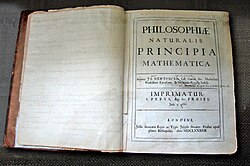
Some items are simply not eligible for copyright. In the United States, this includes cooking recipes and the formulae of Newtonian physics. Similarly, while patent rights protect an invention for a set period (typically 20 years), the text and line drawings within a patent are generally not subject to copyright protection.
Active Dedication and Waivers
Authors can choose to actively dedicate their work to the public domain through a waiver. A modern example includes the reference implementations of certain cryptographic algorithms. In the US, before March 1, 1989, works could enter the public domain simply by being released without an explicit copyright notice.
Public Domain by Medium
Books and Literature
In the United States, every book and tale published before 1931 is in the public domain. For works published between 1931 and 1978, copyright lasts for 95 years, provided the copyright was properly registered and maintained. However, unpublished works remain protected for the life of the author plus 70 years.
Music and Sound Recordings
Copyright law distinguishes between the musical composition (the melody and lyrics) and the sound recording (the actual audio file or disc). As of 2025, musical compositions published before 1930 are generally in the public domain. Sound recordings are subject to different rules and will not enter the public domain until between 2021 and 2067, depending on their publication date and location.
Films and Visual Arts
Films enter the public domain through similar expiration or failure to renew copyright. For instance, the 1937 film A Star is Born entered the public domain due to an unrenewed copyright, allowing the 2018 remake to be produced.
The Value of Derivative Works
One of the greatest benefits of the public domain is the rise of derivative works—new creations based on existing public domain material. When Frances Hodgson Burnett's The Secret Garden entered the public domain in the US in 1977, adaptations increased significantly.
Shakespeare's plays provide a prime example; by 1999, they had inspired over 420 feature-length films. These range from direct adaptations to transformative retellings, such as Tom Stoppard's Rosencrantz and Guildenstern Are Dead. Similarly, Marcel Duchamp's L.H.O.O.Q. is a famous derivative of Leonardo da Vinci's Mona Lisa.
Identifying Public Domain Works
To help users identify copyright-free material, Creative Commons introduced the Public Domain Mark (PDM) in 2010. This symbol combines the copyright symbol with the international "no" symbol, indicating that a work is free of known copyright restrictions.
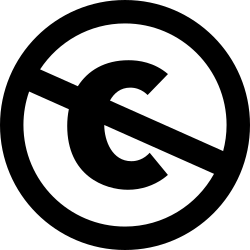
This mark is used extensively in databases like Europeana and Wikimedia Commons. Additionally, "Public Domain Day" is celebrated annually to mark the date when a new batch of works enters the public domain.
Summary of Public Domain Status
| Category | General Rule for Public Domain Entry | Key Example/Note |
|---|---|---|
| Books (US) | Published before 1931 | Unpublished works: Life + 70 years |
| Musical Compositions | Published before 1930 (as of 2025) | Covers melody and lyrics |
| Sound Recordings | Gradual entry between 2021–2067 | Distinct from the composition |
| Patents | Typically 20 years from filing | Text/drawings often not copyrighted |
| Dedicated Works | Via author waiver | Cryptographic algorithms |
Frequently Asked Questions
Can a work be in the public domain in one country but not another?
Yes. Because copyright laws and registration requirements vary by jurisdiction, a work may be subject to rights in one country while being free to use in another.
What is the difference between a public domain work and a licensed work?
A public domain work has no exclusive rights attached to it. A licensed work is one where the creator retains residual rights but grants permission for others to use the work under specific conditions.
Are all old books automatically in the public domain?
Not necessarily. While many are, the status depends on the publication date, whether the copyright was renewed (for certain eras), and whether the work was published or remained unpublished.
What is a derivative work?
A derivative work is a new creation that includes major elements of a pre-existing, public domain work, such as a movie based on a public domain novel or a modern painting based on a classical one.
How does the Public Domain Mark help users?
The Public Domain Mark (PDM) provides a visual signal that a work is free of known copyright restrictions, making it easier for researchers and creators to find usable material.