Free and Open Content: Principles, Licenses, and the Evolution of Shared Knowledge
Free content, also referred to as libre or open content, encompasses any creative work—ranging from art and books to software programs—where the legal limitations on usage, modification, and distribution are minimal. Unlike traditional copyrighted works, open content is designed to be freely studied, applied, copied, and modified by anyone for any purpose, including commercial use in many instances.
This ecosystem includes works in the public domain (works not protected by copyright) and those released under specific licenses that comply with the Definition of Free Cultural Works.
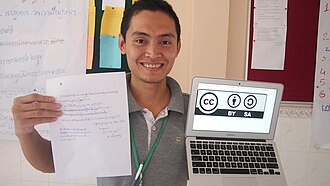
Key Facts
- Core Definition: Creative works with minimal legal restrictions on reuse, modification, and distribution.
- Legal Basis: While the Berne Convention grants copyright by default, authors can explicitly grant freedoms via free or open licenses.
- The 5Rs: A foundational concept including the right to Retain (make, own, and control copies of the content).
- Academic Shift: A growing movement toward Open Access, mandated by bodies like the NIH and the European Union.
- Key Organizations: Creative Commons, the Open Knowledge Foundation, and the Free Software Foundation.
Legal Framework and Licensing
In most jurisdictions, the Berne Convention ensures that creators hold copyright over their work by default. To make a work "free," authors must explicitly declare it so, typically by including a licensing statement within the work.
These permissions are granted through a free license (also known as an open or free distribution license). While these licenses grant freedoms to use and modify work, they often come with specific obligations or restrictions, such as:
- Attribution: The requirement to cite the original author.
- Share-Alike: The obligation to maintain the original license for any derivative works.
- Non-Commercial: Restrictions that ban the use of the work for profit.
Public Domain and Copyleft
Works in the public domain are free of all copyright restrictions. In contrast, copyleft is a legal mechanism that allows others to modify and distribute a work, provided that the same freedoms are preserved in the derivative versions.

Applications Across Sectors
Academia and Open Access
In the academic world, Open Access refers to online research outputs that are free of access restrictions and many usage restrictions. This movement aims to expand the reach and impact of scientific research. While more common in the sciences than the humanities, it is increasingly mandated by funding bodies such as the US National Institutes of Health, Research Councils UK (since 2016), and the European Union (since 2020).

Software and Technology
The philosophy of open content is deeply rooted in the free software movement. This approach extends to Open Source Hardware, where designs are shared openly to encourage collaborative innovation in engineering.



Education
Open Educational Resources (OER) allow for the free sharing of teaching and learning materials, reducing costs and increasing accessibility to knowledge globally.

History and Evolution
The application of free software licenses to general content was first proposed by Michael Stutz in 1997. In 1998, David A. Wiley coined the term "open content" and launched the Open Content Project.

By 2003, the Open Content Project was succeeded by Creative Commons, where Wiley served as the Director of Educational Licenses. In 2006, the Definition of Free Cultural Works was introduced by a group including Richard Stallman and Lawrence Lessig to provide a standardized benchmark for free content, a definition subsequently adopted by the Wikimedia Foundation.
Another pivotal development was the 2004 founding of the Open Knowledge Foundation (OKF) by Rufus Pollock. The OKF promotes the sharing of open data and content, defining "open" as synonymous with the standards set by the Open Source Definition and the Free Software Definition.
Summary of Open Content Frameworks
| Concept | Primary Focus | Key Characteristic |
|---|---|---|
| Public Domain | Legal Status | No copyright restrictions apply. |
| Copyleft | Licensing Strategy | Requires derivatives to remain free. |
| Open Access | Academic Research | Free online access to scholarly outputs. |
| Creative Commons | Standardized Licensing | Modular options for reuse and attribution. |
| Free Cultural Works | Standardized Definition | Benchmark for truly free creative content. |
Frequently Asked Questions
What is the difference between free content and public domain?
Public domain works have no copyright protection at all. Free content may still be copyrighted, but the author has used a license to grant the public specific permissions to use and modify the work.
What are the "5Rs" of open content?
While the source highlights Retain (the right to make and manage copies), the 5Rs generally describe the permissions necessary for a work to be considered truly open for educational and creative reuse.
Is open access mandatory for all researchers?
It is not mandatory for all, but many funding agencies, such as the European Union and the US National Institutes of Health, require open access publishing as a condition for receiving grants.
Who created the term "open content"?
The term was coined by David A. Wiley in 1998 through the Open Content Project.
What is the role of the Open Knowledge Foundation?
Founded in 2004, the OKF is a global non-profit network that promotes the sharing of open data and content, providing a broad definition of "open" that aligns with free software and free cultural work standards.