Province of Santa Fe Railway
The Province of Santa Fe Railway (Spanish: Ferrocarril Provincial de Santa Fe) was a pivotal transport network in Argentina that bridged the gap between agricultural colonies and urban centers. Originally established by the provincial government, it later became a French-owned enterprise before being absorbed into the national rail system. Operating on a 1,000 mm metre gauge—a track width narrower than the standard gauge—this network played a critical role in the economic development of the Santa Fe, Chaco, and Córdoba provinces.
Key Facts
- Original Owner: Santa Fe Province government.
- French Ownership: Transferred to a French consortium on April 10, 1900.
- Track Gauge: 1,000 mm (3 ft 3 3⁄8 in).
- Operational Reach: Spanned the provinces of Santa Fe, Chaco, and Córdoba.
- Nationalisation: Integrated into the state-owned Belgrano Railway in 1948.
Early Development and Provincial Origins
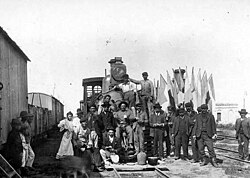
The railway's origins date back to a contract between the Santa Fe Provincial government and John G. Meiggs Son & Co. The primary objective was to construct a 100 km (62 mi) line heading north from the city of Santa Fe to serve expanding agricultural colonies. The first section, connecting Santa Fe to Rafaela, opened on July 1, 1885, followed by the extension to Lehmann on May 1, 1886.
Rapid expansion followed throughout the late 1880s. Branch lines were established to San Carlos Sur and Colastiné in 1886, while the line to Gálvez was completed by July 1, 1887. By 1888, the network reached San Francisco and Josefina, and critical connections were made to Rosario and San Justo. This growth eventually pushed the railway into the Chaco Province, reaching La Sabena by November 1, 1892.
The French Consortium Era
On April 10, 1900, by provincial decree, the network was transferred to the Compañía Francesa de los Ferrocarriles de la Provincia de Santa Fe. This consortium was composed of the banque d'affaires (investment bank) Paribas, the steel manufacturer Fives Lille, and a group of associated financiers. As the oldest of three French-owned railway companies in Argentina, it brought significant capital and industrial expertise to the region.
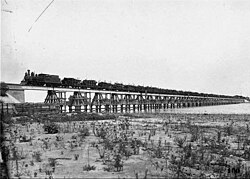
Under French management, the railway expanded its footprint. In December 1901, a branch to Moisés Ville was opened, and access to the Port of San Martín was established two years later. The network also pushed deeper into Córdoba, opening the San Francisco to Villa María line on April 30, 1904, and extending the Pozo del Molle branch to Carrilobo in 1907.
Expansion into Chaco and Specialized Lines
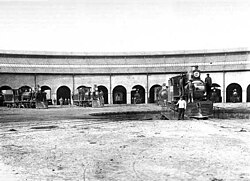
The French company continued to extend its reach into the Chaco Province, reaching Barranqueras in September 1907. Further developments included the line from Charaday to Oetling (1911) and the extension to Villa Angela by December 1914. Other notable additions included the Vera to Reconquista line and a branch to Villa Guillermina, both completed in 1913.
Beyond passenger and agricultural transport, the company developed specialized infrastructure. In 1911, a freight railway was constructed to connect Sorrento with the Sociedad de Electricidad del Rosario power plant in Barrio Sarmiento.
Modernization and Nationalisation
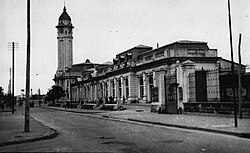
During the latter half of the 1920s, the company underwent a significant restructuring. This period saw the construction of new stations, including Capitán Bermúdez, and a grand new terminal station in Rosario, which opened in 1929. This terminal building serves as a historical landmark; after the railway's closure, it was refurbished and reopened as the city's bus terminal in 1950.
The era of private French ownership ended in 1948. Under the presidency of Juan Perón, the Argentine government nationalised the entire railway network. Consequently, the Province of Santa Fe Railway was integrated into the state-owned Belgrano Railway.
Railway Summary
| Feature | Details |
|---|---|
| Native Name | Ferrocarril Provincial de Santa Fe |
| Track Gauge | 1,000 mm (Metre Gauge) |
| Key Regions | Santa Fe, Chaco, Córdoba |
| French Ownership Period | 1900 – 1948 |
| Final Status | Merged into Belgrano Railway |
Frequently Asked Questions
What was the track gauge used by the Province of Santa Fe Railway?
The railway used a 1,000 mm metre gauge, which is narrower than the standard international gauge.
Who owned the railway before it was nationalised?
Before 1948, it was owned by a French consortium known as the Compañía Francesa de los Ferrocarriles de la Provincia de Santa Fe, which included Paribas and Fives Lille.
Which provinces did the railway network serve?
The network operated across the Argentine provinces of Santa Fe, Chaco, and Córdoba.
What happened to the Rosario terminal station?
The terminal station, opened in 1929, was closed following the railway's nationalisation and was later refurbished and reopened as a bus terminal in 1950.
When did the railway become part of the Belgrano Railway?
It became part of the state-owned Belgrano Railway in 1948 during the nationalisation of Argentina's railways under President Juan Perón.