Prosody: The Hidden Architecture of Human Speech
When we communicate, we do much more than just string vowels and consonants together. Beyond the literal meaning of words lies a complex layer of sound that conveys emotion, intent, and nuance. In linguistics, this phenomenon is known as prosody. It is the study of speech elements—such as intonation, stress, rhythm, and loudness—that occur simultaneously with individual phonetic segments.
Because these elements often extend across multiple sounds, they are frequently referred to as suprasegmentals. Prosody provides the musicality of language, allowing us to distinguish a question from a statement or to detect sarcasm and irony, even when the vocabulary remains identical.
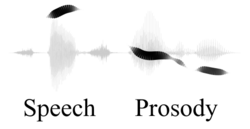
Key Facts
- Prosody includes elements like pitch, loudness, rhythm, and tempo.
- It functions as a suprasegmental, meaning it operates over groups of sounds rather than single segments.
- Prosody is a natural component of all human languages.
- Emotional prosody can be recognized even when the spoken text is neutral.
- Aprosodia refers to the impairment of prosodic abilities, which can be lexical, phrasal, or clausal.
The Core Attributes of Prosody
To understand how prosody works, we must look at it through two lenses: how we hear it (auditory) and how it is measured (acoustic).
Auditory and Acoustic Variables
Auditorily, we perceive prosody through several major variables:
- Pitch: The variation between high and low tones.
- Length: The duration of sounds, varying from short to long.
- Loudness: Also known as prominence, varying from soft to loud.
- Timbre: The specific quality of the sound, or phonatory quality.
Acoustically, these perceptions correspond to measurable scientific data:
- Fundamental frequency: Measured in hertz (Hz).
- Duration: Measured in time units like milliseconds or seconds.
- Intensity: Also called sound pressure level, measured in decibels (dB).
- Spectral characteristics: The distribution of energy across the audible frequency range.
| Auditory Perception | Acoustic Measurement |
|---|---|
| Pitch | Fundamental frequency (Hz) |
| Length | Duration (ms/s) |
| Loudness | Intensity/Sound pressure (dB) |
| Timbre | Spectral characteristics |
Linguistic Functions: Intonation and Stress
Prosody is not just a personal characteristic of an individual's voice; it is a vital tool used to communicate meaning. While a person's habitual pitch is a personal trait, the contrastive use of pitch to signal a question is a linguistic function.
Intonation
Intonation involves the use of pitch movement to create patterns. In English, intonation is generally built upon three pillars: the division of speech into units, the highlighting of specific words or syllables, and the choice of pitch movement (such as a rise or a fall).
Stress
Stress is the mechanism used to make a syllable prominent. This can occur at the word level (lexical stress) or the sentence level (prosodic stress). A stressed syllable is typically characterized by increased pitch prominence, increased duration, and increased loudness.
The Power of Emotional Prosody
Prosody is deeply tied to human emotion. Even Charles Darwin noted that emotional expression through tone likely predates the evolution of formal language. Research shows that listeners can identify emotions in actors reading neutral text with high accuracy: anger (95%), surprise (91%), and sadness (81%).
Interestingly, the way computers process this information differs from humans. While computers can identify happiness and anger through segmental features (the actual sounds/phonemes), they struggle with suprasegmental features. Conversely, for emotions like surprise, suprasegmental prosody is much more effective for recognition than segmental features.
In everyday conversation, the ability to decode emotional prosody is ubiquitous across cultures, though the specific nuances may vary. Listeners typically require at least 600 ms of prosodic information to accurately identify the affective tone of an utterance.
Types of Prosodic Impairment: Aprosodia
When the ability to produce or understand prosody is impaired, it is known as aprosodia. This can manifest in three distinct ways:
- Lexical prosody: Affecting the stress of specific syllables within a word (e.g., the difference between the noun "CONvert" and the verb "conVERT").
- Phrasal prosody: Affecting the rhythm and tempo of phrases (e.g., distinguishing between a "HOT dog" and a "hot DOG").
- Clausal prosody: Affecting emphasis and focus within a full sentence (e.g., "the HORSES were racing" vs "the horses were RACING").
Neurological Foundations
The production of prosody requires intact motor areas in the face, mouth, tongue, and throat. These are associated with Brodmann areas 44 and 45 (Broca's area) in the left frontal lobe. Damage to these areas in the right hemisphere can lead to motor aprosodia, disturbing rhythm and tone.
Understanding prosody, however, relies heavily on the right hemisphere. Specifically, the right perisylvian area (Brodmann area 22) is crucial for interpreting emotional emphasis. Damage to the right inferior frontal gyrus can diminish the ability to convey emotion, while damage to the right superior temporal gyrus can impair the ability to comprehend the emotions of others.
Frequently Asked Questions
What is the difference between prosody and phonology?
While phonology often deals with individual segments like vowels and consonants, prosody is suprasegmental, meaning it deals with features that span across groups of sounds.
How does stress change the meaning of a word?
Through lexical prosody, changing which syllable is stressed can change a word's grammatical category. For example, stressing the first syllable of "convert" makes it a noun, while stressing the second makes it a verb.
Can you recognize emotion without words?
Yes. Emotional prosody allows listeners to identify feelings like anger, happiness, or sadness through pitch and tone, even if the spoken words themselves are emotionally neutral.
What is the role of the right hemisphere in speech?
While the left hemisphere is heavily involved in linguistic rules and grammar, the right hemisphere is essential for the nonverbal elements of speech, such as interpreting emotion, emphasis, and body language.
How much time is needed to process emotional tone?
Research suggests that listeners need approximately 600 milliseconds of prosodic information to successfully identify the affective tone of an utterance.