Progressive Rock: The Evolution of Art Rock and Symphonic Sound
Emerging in the mid to late 1960s across the United Kingdom and the United States, progressive rock (commonly known as prog) represents a bold departure from the standard structures of popular music. By blending the energy of rock with the complexity of classical, jazz, and folk music, artists sought to elevate the genre into a form of high art. This movement transformed the recording studio into an instrument itself, paving the way for expansive compositions and conceptual storytelling.
From its roots in psychedelia to its modern iterations in metal and electronic music, progressive rock has always been defined by a desire to push boundaries. Whether through the use of unusual time signatures or the creation of the concept album—a record where all tracks contribute to a single overarching theme—prog rock challenged listeners to engage with music on a deeper, more intellectual level.

Key Facts
- Origins: Developed in the mid-to-late 1960s in the US and UK.
- Core Influences: Classical music, jazz, folk, and psychedelia.
- Defining Traits: Complex chord changes, long improvisations, and the use of synthesizers.
- Key Subgenres: Neo-prog, avant-prog, and progressive metal.
- Legacy: Influenced the birth of synth-pop, post-rock, and new-age music.
The Foundations of Prog: 1966–1970
The seeds of progressive rock were sown during the psychedelic era. Early groups that exhibited these experimental features are now retroactively described as proto-prog. A pivotal moment occurred with the release of landmark albums like Brian Wilson's Pet Sounds and The Beatles' Sgt. Pepper's Lonely Hearts Club Band, which demonstrated that pop music could be sophisticated and structurally ambitious.
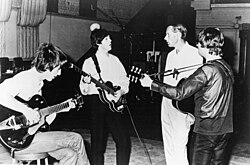
During this formative period, the Canterbury scene emerged in the late 1960s. This specific subset of bands was characterized by a heavy emphasis on wind instruments, complex chord progressions, and extended improvisational sections, bridging the gap between rock and jazz fusion.
The Golden Era and Peak Years (1971–1976)
The early to mid-1970s marked the commercial and creative peak of the genre. Bands moved toward symphonic rock, incorporating orchestral arrangements and epic song lengths. This era saw the rise of the rock opera, where music was used to tell a complete narrative story across an entire album.
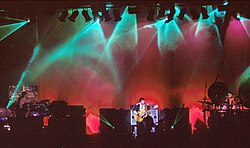
![Pink Floyd performing The Dark Side of the Moon (1973), the best-selling album of the entire progressive rock period[82]](/images/6e/b2/6eb22e11801f08a3f920b4dc17a71af272652adf5745d562c1633565ad082171.jpg)
While many bands achieved massive success, the movement also branched into more experimental directions. Avant-prog emerged from the combination of the Canterbury style and the more avant-garde Rock in Opposition movement of the late 1970s. However, as the decade progressed, some critics and musicians, including King Crimson's Robert Fripp, felt the movement had become too commercialized or had gone "tragically off course."
![Golden Earring released a number of Progressive rock albums from the late 1960s to the late 1970s, the most famous of which was the album Moontan, featuring the hit Radar Love.[101]](/images/d8/76/d876cef84a6c598d41e582e6a68094b3fa20b5b5405e1e0ac1c2c4c3ba503ddc.png)
![King Crimson's Robert Fripp believed that the prog movement had gone "tragically off course".[122]](/images/75/a4/75a4e62aebc345cdd3a7476f3f8bdff5739a370a3b471ac633737102145b5f7c.jpg)
Decline, Fragmentation, and the Rise of Neo-Prog
By the late 1970s and early 1980s, the dominance of progressive rock waned, partly due to the rise of punk and new wave. However, the spirit of prog persisted through neo-prog, a subgenre that enjoyed commercial success in the 1980s by updating the symphonic sound, though some critics viewed it as derivative.
Simultaneously, the genre fragmented into various derivative forms. The influence of prog can be seen in the development of Krautrock in Germany, as well as the later emergence of synth-pop and post-rock. The 1980s "shred" guitar movement also left a significant mark on the technical proficiency of future prog musicians.
The Modern Era: 1990s to Present
The 1990s saw a "third wave" of progressive rock. Bands like The Flower Kings, Spock's Beard, and Glass Hammer revived the 1970s symphonic style but utilized modern recording technology. Some artists began exploring the expanded storage capacities of the CD to create even longer works than were possible on vinyl LPs.
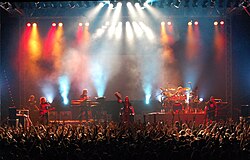
One of the most significant evolutions was the birth of progressive metal, which fused the technical complexity of prog with the power and aggression of heavy metal. This fusion created a new standard for virtuosity in modern rock music.
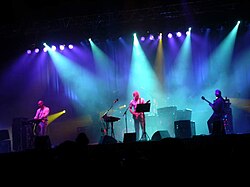
Summary of Progressive Rock Evolution
| Era | Primary Style/Subgenre | Key Characteristics |
|---|---|---|
| Late 1960s | Proto-prog / Canterbury | Psychedelia, wind instruments, jazz influence |
| 1971–1976 | Symphonic Rock | Concept albums, rock operas, orchestral scale |
| Late 1970s | Avant-prog / Rock in Opposition | Experimental, avant-garde, non-commercial |
| 1980s | Neo-prog | Updated symphonic sound, commercial appeal |
| 1990s–Present | Progressive Metal / Post-prog | Heavy metal fusion, high technical virtuosity |
Frequently Asked Questions
What is the difference between art rock and progressive rock?
While often used interchangeably, progressive rock typically emphasizes technical virtuosity and complex musical structures (like symphonic movements), whereas art rock often focuses more on experimentalism and the conceptual integration of visual arts and avant-garde theories.
What is a concept album?
A concept album is a record where the tracks are unified by a shared theme, narrative, or musical idea, rather than being a collection of unrelated songs.
How did the Canterbury scene influence the genre?
The Canterbury scene introduced a unique blend of jazz and rock, emphasizing the use of wind instruments and long, complex improvisations that differed from the more orchestral approach of symphonic prog.
What is neo-prog?
Neo-prog is a subgenre that emerged in the 1980s. It drew heavily from the 1970s symphonic rock sound but incorporated more modern production and song structures.
What is progressive metal?
Progressive metal is a fusion genre that combines the complex time signatures and song structures of progressive rock with the distorted guitars and heavy percussion of heavy metal.