Prince Frederick, Duke of York and Albany
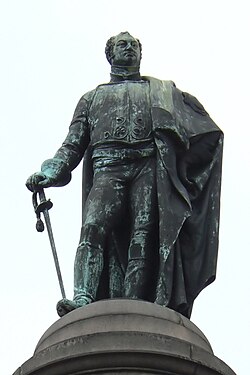
Prince Frederick, Duke of York and Albany (1763–1827), was a central figure in the British royal family and military establishment during the late 18th and early 19th centuries. As the second son of King George III and Queen Charlotte, Frederick balanced the expectations of his royal birth with a lifelong commitment to the British Army, eventually rising to the rank of Field Marshal.
Beyond his military service, Frederick held the unique position of Prince-Bishop of Osnabrück in the Holy Roman Empire, a role that provided him with significant income and international standing. His life was marked by high-stakes military campaigns, political controversy, and a lasting legacy in military education.
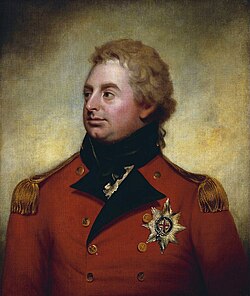
Key Facts
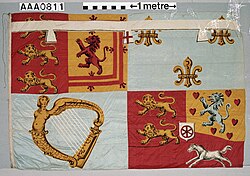
- Full Name: Frederick Augustus
- Royal House: House of Hanover
- Highest Rank: Field Marshal
- Key Role: Commander-in-Chief of the Forces
- Ecclesiastical Title: Prince-Bishop of Osnabrück (1764–1803)
- Notable Legacy: Founder of the Royal Military Asylum (now the Duke of York's Royal Military School)
Early Life and the Bishopric of Osnabrück
Born on 16 August 1763 at St. James's Palace, London, Frederick was immersed in the traditions of the House of Hanover. His early life took an unusual turn when, at just six months old, he became the Prince-Bishop of Osnabrück. This appointment was governed by the Peace of Westphalia, which required the city's rule to alternate between Catholic and Protestant leaders, with the latter chosen from the cadets of the House of Brunswick-Lüneburg.
Frederick retained the substantial income from this bishopric until 1803, when the city was incorporated into Hanover during the process of German mediatisation. During his youth, he was recognized with prestigious honors, becoming a Knight of the Order of the Bath in 1767 and a Knight of the Order of the Garter in 1771.
![Frederick's coat of arms, consisting of the royal arms differenced by a label of three points, the second point charged with a red cross. The Hanoverian inescutcheon showed the arms of Osnabrück (argent, a wheel of six spokes gules) en surtout.[39]](/images/3d/a2/3da28616af74f14b9c2b4008b4ea6ae6e2e1d76276a04b89c9818c77ba8876c2.webp)
Military Career and the Flanders Campaign
Following the wishes of King George III, Frederick pursued a professional military career. He was gazetted colonel in 1780 and spent several years studying at the University of Göttingen in Hanover. His ascent through the ranks was rapid: he became a major-general in 1782 and a lieutenant general in 1784, the same year he was created Duke of York and Albany.
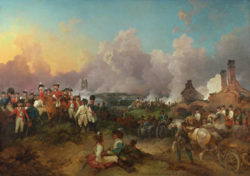
Frederick's first major test came in 1793 when he led the British contingent in the Flanders campaign during the French Revolutionary Wars. While he achieved success at the Siege of Valenciennes, the campaign was fraught with difficulty, leading to a defeat at the Battle of Hondschoote. Despite later successes at the Battle of Beaumont and the Battle of Willems, the British forces were eventually evacuated through Bremen in 1795.
Commander-in-Chief and Later Commands
In 1795, Frederick was promoted to Field Marshal and appointed Commander-in-Chief of the Forces. Haunted by the logistical failures of the Flanders campaign, he vowed that no officer under his command would suffer the same disadvantages he had faced.
His subsequent field command occurred during the Anglo-Russian invasion of Holland in 1799. This expedition was plagued by supply shortages and disasters, culminating in the Convention of Alkmaar, which forced the allied withdrawal. Despite these setbacks, Frederick remained a pivotal figure in army administration.
The Royal Military Asylum
Driven by the plight of children orphaned by the Napoleonic Wars, Frederick issued a Royal Warrant in 1801 to establish the Royal Military Asylum in Chelsea. This institution, later renamed the Duke of York's Royal Military School, provided essential education and care for the children of soldiers.
Scandal, Resignation, and Restoration
Frederick's career was nearly derailed by a high-profile scandal involving his mistress, Mary Anne Clarke. Clarke was accused of selling army commissions illicitly under the Duke's protection. Although a House of Commons committee eventually acquitted Frederick of receiving bribes, the significant number of votes against him led to his resignation as Commander-in-Chief in 1809.
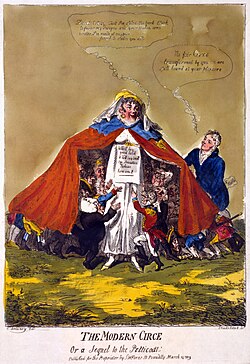
The Duke's reputation was restored two years later when it was revealed that his chief accuser, Gwyllym Wardle, had accepted payments from Clarke. Consequently, the Prince Regent reappointed Frederick as Commander-in-Chief on 29 May 1811.
Personal Life and Final Years
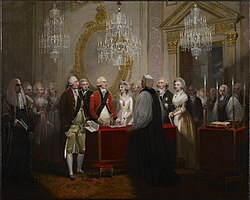
In 1791, Frederick married Princess Frederica Charlotte of Prussia. The marriage was unhappy, and the couple soon separated; Frederica lived at Oatlands Palace until her death in 1820.
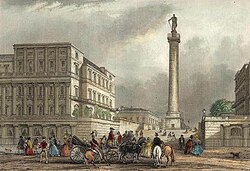
In his later years, Frederick became the heir presumptive to his brother, George IV, following the death of his father in 1820. He also commissioned the construction of York House (now Lancaster House) in London, though he died in 1827 before the palatial neo-classical residence was completed.
Summary of Prince Frederick's Life
| Category | Details |
|---|---|
| Lifespan | 16 August 1763 – 5 January 1827 |
| Parents | George III and Charlotte of Mecklenburg-Strelitz |
| Key Military Ranks | Colonel, Major-General, Lieutenant General, General, Field Marshal |
| Major Conflicts | French Revolutionary Wars, Napoleonic Wars |
| Key Honors | Order of the Garter, Order of the Bath, Order of the Black Eagle (Prussia) |
| Burial Site | Royal Vault, St George's Chapel, Windsor Castle |
Frequently Asked Questions
Why was Prince Frederick the Prince-Bishop of Osnabrück?
He held this title due to the Peace of Westphalia, which mandated that the bishopric of Osnabrück alternate between Catholic and Protestant rulers, with Protestant bishops being selected from the House of Brunswick-Lüneburg.
What was the cause of the Duke of York's resignation in 1809?
He resigned following a scandal involving his mistress, Mary Anne Clarke, who was accused of selling army commissions. Although he was acquitted of taking bribes, the political pressure led to his resignation.
What is the Duke of York's lasting contribution to education?
He founded the Royal Military Asylum in 1801 to support children orphaned by the Napoleonic Wars, which later became the Duke of York's Royal Military School.
Did Prince Frederick ever become King?
No. While he became the heir presumptive to his brother George IV after the death of George III in 1820, he died in 1827 before he could ascend the throne.
How did the Flanders campaign affect his leadership?
The hardships and logistical failures he experienced during the Flanders campaign led him to implement reforms as Commander-in-Chief to ensure future officers did not face the same disadvantages.