Preston Hollow History: From Early Settlers to Dallas Landmark
Preston Hollow stands today as one of Dallas's most prestigious neighborhoods, but its origins lie in the rugged landscape of the mid-19th century. Long before it became a hub for the city's elite, the area was defined by sprawling land grants, dairy farms, and a natural terrain of dark wooded areas, creeks, and hollows extending west from Preston Road.
The Early Settlers and Agricultural Roots
The story of Preston Hollow began in the 1850s when the first settlers received land grants. Among these early pioneers were the Lively family on Guernsey Lane, as well as the Howell and Meaders families. During this era, the land was primarily agricultural, featuring various small farms, including a notable dairy farm located at 6303 Meadow.
For much of the early 20th century, the area remained rural. The region that now houses the Preston Center was, until the mid-20th century, a working dairy farm. Infrastructure was minimal; for a long time, Preston Road served as the sole connection to Downtown Dallas, while Northwest Highway was described by The Dallas Morning News as nothing more than a "muddy right of way."
The Transition to a Residential Haven
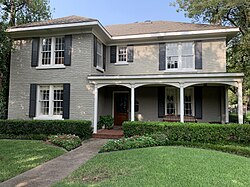
The shift toward residential development began in the 1920s. Ralph Stichter was the first to move to the area for residential purposes, purchasing significant acreage at the northeast corner of Preston and Walnut Hill. In 1922, he constructed two estates, one of which still stands today at 6126 Lakehurst.
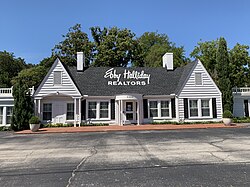
That same year, real estate developer Ira P. DeLoache recognized the area's potential. In 1924, DeLoache purchased a 56-acre farm, which provided the parcels for the neighborhood's first residential lots. By 1926, he established his real estate office in a building now known as Ebby’s Little White House.
Throughout the 1930s, DeLoache and Al Joyce drove the development of the area. This period saw the rise of monumental homes designed by the famous architect Charles Dilbeck. The developers envisioned Preston Hollow as more than just a "flatland suburb," attracting a demographic of doctors, lawyers, industrialists, entrepreneurs, and oil businesspeople. Many of these residents built country-style estates complete with stables for their horses.
The Rise of Old Preston Hollow
A pivotal moment in the neighborhood's growth occurred in the early 1930s during the Great Depression. Edward James Solon, a partner of Karl Hoblitzelle and treasurer of a company called Interstate, purchased a corner property at Douglas and Averill Way. DeLoache commissioned a Tudor-style home for Solon, designed by Dilbeck.
This specific estate is widely regarded as the catalyst for the "Old Preston Hollow" area. At the time, moving beyond Northwest Highway was considered a risky venture, often described as "going into the sticks." However, Solon's estate is credited with sparking the broader migration of affluent residents toward North Dallas.
Incorporation and Annexation
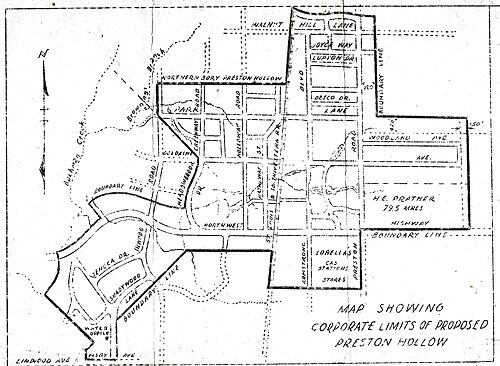
Preston Hollow was officially incorporated as its own municipality in 1939. During this brief period of independence, DeLoache’s real estate office served as the town hall.
The town's independence ended in 1945 when residents voted to join the city of Dallas. This decision contrasted with the neighboring University Park and Highland Park (the Park Cities), which voted that same year to remain independent municipalities. The neighborhood's boundaries were generally defined by Marsh Lane to the west.
Social Evolution and Modern Era
The history of Preston Hollow also includes a legacy of exclusion. Despite a 1948 U.S. Supreme Court ruling prohibiting race-based real estate restrictions, a covenant was enacted in 1956 for 17 lots in the James Meaders Estates. This covenant restricted residency to white individuals, except for non-white domestic servants. This restriction remained in place until it was repealed by residents in July 2000.
In more recent decades, the neighborhood has seen architectural shifts. Starting in the 1980s, rising land values led to the "teardown" of many mid-20th century ranch-style houses to make way for larger modern estates.
The area occasionally captures national attention, such as in September 2008, when a New York Post column erroneously claimed President George W. Bush had purchased a home there. The report was widely debunked by Dallas media due to glaring factual errors, including claims of "mountain views" in the flat Texas landscape.
| Period/Year | Key Event/Development |
|---|---|
| 1850s | First settlers (Lively, Howell, Meaders families) receive land grants. |
| 1922 | Ralph Stichter builds the first residential estates. |
| 1924-1926 | Ira P. DeLoache begins carving lots from farm parcels and opens his office. |
| 1930s | Major development period; Charles Dilbeck designs monumental homes. |
| 1939 | Preston Hollow is officially incorporated as a municipality. |
| 1945 | Residents vote to be annexed into the city of Dallas. |
| 1956 | Race-based covenant enacted in James Meaders Estates. |
| 2000 | The 1956 race-based restriction is officially repealed. |
Key Facts
- Founding: Settled in the 1850s by families including the Livelys, Howells, and Meaders.
- Key Developer: Ira P. DeLoache, who began developing the area in 1924.
- Architectural Influence: Charles Dilbeck designed many of the neighborhood's most iconic 1930s estates.
- Political History: Incorporated as a town in 1939 before joining Dallas in 1945.
- Geography: Named for the wooded hollows and creeks extending west from Preston Road.
Frequently Asked Questions
Who was the first person to move to Preston Hollow for residential purposes?
Ralph Stichter was the first residential settler, purchasing land at the northeast corner of Preston and Walnut Hill and building estates there in 1922.
What is "Old Preston Hollow"?
Old Preston Hollow refers to the area where large estates began to proliferate in the 1930s, a trend sparked by the construction of Edward James Solon's Tudor-style home.
Why did Preston Hollow join the city of Dallas?
Residents voted to join the city of Dallas in 1945, choosing annexation over remaining an independent municipality, unlike the neighboring Park Cities.
What was the significance of the James Meaders Estates covenant?
In 1956, a covenant was created for 17 lots in this subdivision that restricted residency to white people, unless they were domestic servants. This was not repealed until July 2000.
What happened to the original ranch-style homes in the area?
Many mid-20th century ranch-style houses were demolished (teardowns) starting in the 1980s as land values increased significantly.