Prague: The Eternal City of a Hundred Spires
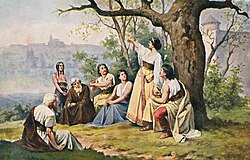
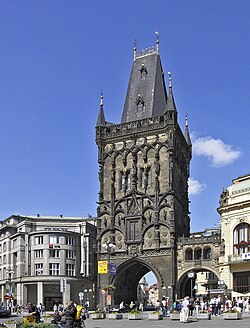
Known as the "City of a Hundred Spires," Prague is the capital and largest city of the Czech Republic. A breathtaking blend of Gothic, Baroque, and Art Nouveau architecture, the city serves as the political, cultural, and economic heart of the nation. From its legendary origins to its status as a modern European hub, Prague offers a timeless journey through Central European history.
The city is defined by its relationship with the Vltava River and its sprawling historic center, which was designated as a UNESCO World Heritage Site in 1992. Whether visiting the towering spires of its cathedrals or the bustling pedestrian lanes of its Old Town, visitors encounter a city that has remained a focal point of European power and art for over a millennium.
Key Facts
![Depiction of the "Prague Banner" (municipal flag dated to the 16th century)[45]](/images/db/74/db74a2cd97801c52d3232b31b9e71efe75feb1b47e4b1caffd08206d31aa6a15.png)
- Population: Approximately 1,407,084 (Capital city) and 2,267,817 (Metro area).
- Economic Power: Nominal GDP of €86.6 billion (2024).
- UNESCO Status: The Historic Centre of Prague is a protected Cultural World Heritage Site.
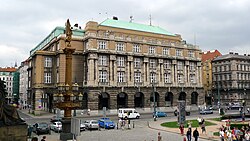
- Education: Home to Charles University, the first university in Central Europe (founded 1348).
- Global Standing: Ranked 12th largest city in the European Union.
A Journey Through History
![The coat of arms of Prague (1649)[1]](/images/14/8b/148bd264248319e219e61c1671f8d2fae4f5bfd2af8c904b3548300d32e4738e.webp)
Early Foundations and the Middle Ages
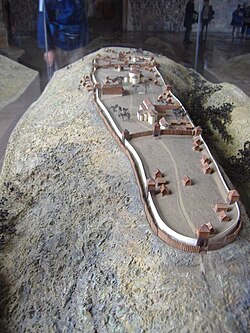
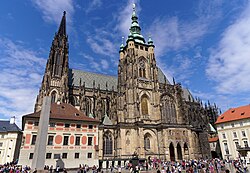
Founded in the 8th century, Prague grew from a strategic settlement into a royal powerhouse. By the late Middle Ages, it became a center of learning and religion. The foundation of Charles University in 1348 and the start of construction on the St. Vitus Cathedral in 1344 marked the city's ascent as a premier intellectual and spiritual capital.
From the Habsburgs to the Modern Era
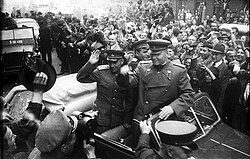
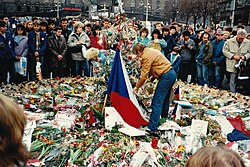
Prague navigated centuries of shifting rule, including the influential Habsburg era, before becoming the capital of the First Czechoslovak Republic in the 20th century. The city endured the hardships of the Second World War and the subsequent Cold War period under communist rule. The Velvet Revolution of November 1989 brought a peaceful transition to democracy, reshaping the city's political landscape and opening it to the world.
Geography and Urban Layout
![Monument to František Palacký, a significant member of the Czech National Revival, created by Stanislav Sucharda[50]](/images/6b/4c/6b4c1eed615d9cc81ef780e77a7d1556f435762bfaeb0eb85500ebb6b942ba51.jpg)
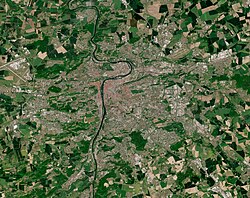
Prague spans an area of 496.21 km², with its urban core covering 298 km². The city's elevation ranges from 172 meters to 399 meters, creating a varied landscape of hills and river valleys. The climate is temperate, with average annual precipitation of 453.9 mm and a wide range of temperatures, from record lows of -27.6°C to record highs of 39.0°C.
City Administration and Economy
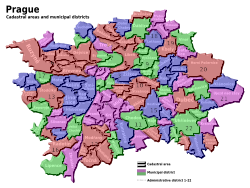
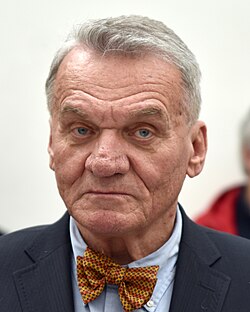
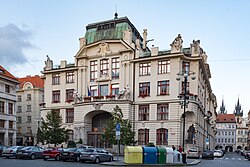
The city is currently led by Mayor Bohuslav Svoboda. Administratively, Prague is divided into several cadastral areas and districts, managing a highly developed infrastructure. Economically, the city is a powerhouse, with major companies like ČEZ and Agrofert reporting high turnovers. It also hosts critical national institutions, including the Czech National Bank and the Parliament of the Czech Republic.
Demographics and International Community
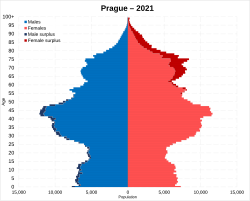
Prague is a cosmopolitan center with a diverse population. As of March 2025, the city hosts a significant number of foreign residents, with the largest communities hailing from Ukraine, Slovakia, and Russia. This international presence contributes to the city's vibrant cultural atmosphere.
Cultural Landmarks and Tourism
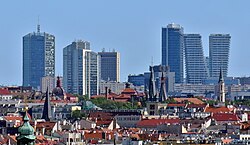
Tourism is a cornerstone of Prague's economy, attracting millions of visitors annually, primarily from Germany, the United States, and the United Kingdom.
Hradčany and Malá Strana
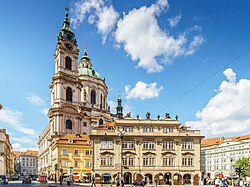
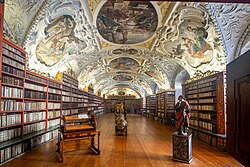
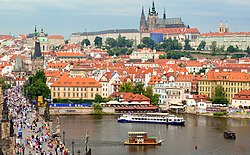
The Prague Castle complex is the city's most visited site, housing the Czech Crown Jewels. Nearby, the Charles Bridge connects the castle district to the Old Town, while the Baroque St. Nicholas Church stands as a masterpiece of architectural style in the Lesser Town (Malá Strana).
Old Town and New Town
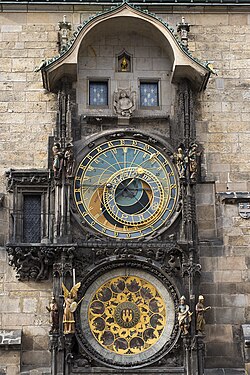
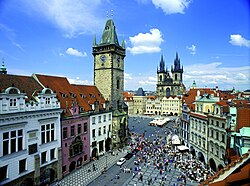
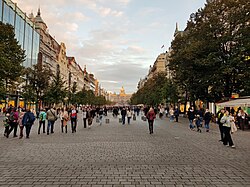
The Old Town Square is famous for the Prague Orloj (Astronomical Clock), installed in 1410 and remaining the oldest working astronomical clock in the world. In the New Town, the deconstructivist Dancing House and the historic Wenceslas Square offer a contrast between avant-garde modernism and traditional urban life.
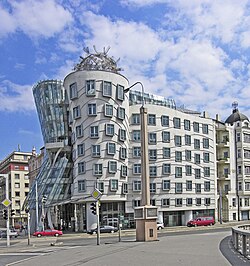
Other Notable Attractions
- Prague Zoo: Ranked among the best zoos globally.
- Žižkov Television Tower: A modern landmark featuring unique sculptures.
- Vyšehrad: An ancient fortress with a historic cemetery and basilica.
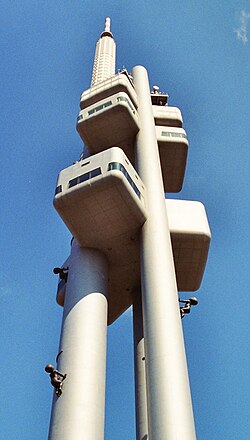
Infrastructure and Education
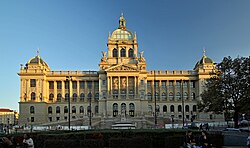
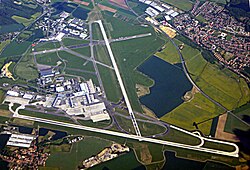
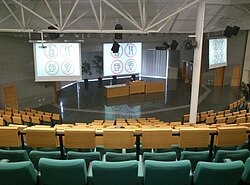
Prague is a hub of transportation and intellect. The Václav Havel Airport is one of Central Europe's busiest, and the city's tram system, featuring the Škoda 15 T, is renowned for its efficiency. Educationally, the city is a beacon, hosting nine public universities and thirty-six private institutions, fostering a high Human Development Index (HDI) of 0.975.
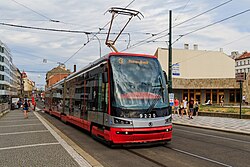
| Category | Detail |
|---|---|
| Official Nickname | City of a Hundred Spires |
| UNESCO Site | Historic Centre of Prague (since 1992) |
| Nominal GDP (2024) | €86.6 billion |
| Highest Elevation | 399 m |
| Most Visited Site | Prague Castle |
Frequently Asked Questions
What is the significance of the Prague Orloj?
The Prague Orloj is the astronomical clock installed in 1410. It is the third-oldest astronomical clock in the world and the oldest one that is still functioning.
Which university in Prague is the oldest in Central Europe?
Charles University, founded in 1348, holds the distinction of being the first university established in Central Europe.
How did the Velvet Revolution affect Prague?
The Velvet Revolution in November 1989 led to the peaceful end of communist rule in Czechoslovakia, transitioning the city and the nation toward a democratic system.
What are the most visited tourist destinations in the city?
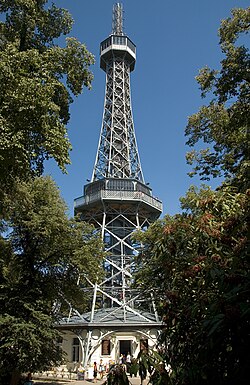
The most visited sites include Prague Castle, the Prague Zoo, the Jewish Museum, the Petřín Lookout Tower, and the Old Town Hall.
What is the HDI of Prague?
Prague has a very high Human Development Index (HDI) of 0.975, ranking 1st in the region as of 2023.