Post Office Boxes: Global Systems, Usage, and Regulations
A post office box (commonly abbreviated as P.O. box or known as a postal box) is a uniquely addressable, lockable box located on the premises of a post office. While many view them as a convenience for privacy or business, in various parts of the world, they are a fundamental necessity for receiving mail.
In certain regions, particularly across Africa, door-to-door mail delivery is non-existent. In countries like Kenya, renting a PO box has traditionally been the only method for individuals and businesses to receive correspondence.
Key Facts
- Purpose: Provides a secure, fixed location for mail collection, often used where home delivery is unavailable or undesired.
- Rental: Typically rented on a monthly or annual basis, with costs varying by box size and location (CBD boxes are generally more expensive than rural ones).
- Access: Usually mounted in post office walls; some lobbies offer 24/7 access via keypads, while others are restricted to business hours.
- Package Handling: Oversized items are held at the counter or placed in larger parcel lockers.
- Global Variation: Rules range from free boxes in Japan (with strict usage requirements) to mandatory boxes in rural South Africa.
How Post Office Boxes Work
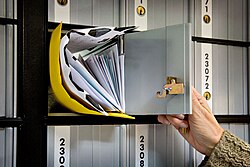
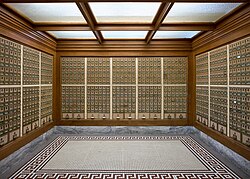
PO boxes are typically installed in the walls of a post office, either externally or within a lobby. This design allows postal staff to deposit mail from the inside while the key holder retrieves it from the outside. While most use keys, some older models utilize combination dials.
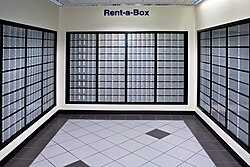
In the United States, the layout of the post office often separates the box lobby from the window-service area. This allows customers to access their mail outside of standard business hours. However, since the 1980s, some urban locations have restricted overnight access to prevent the lobbies from being used as sleeping quarters, implementing keypad codes for authorized entry.
Handling Packages and Large Mail
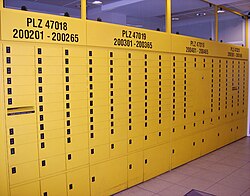
When a parcel is too large for a standard PO box, the postmaster typically leaves a notification for the customer to collect the item at the counter. Some facilities utilize parcel lockers—larger locked boxes. In these cases, a key is left in the customer's small PO box; once used to open the locker, the key often cannot be removed, and the locker door remains unsecured.
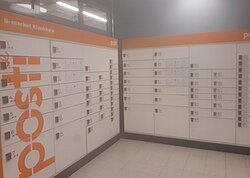
To modernize this process, the United States Postal Service (USPS) piloted "gopost" in 2011, a computerized kiosk system where multiple customers can use the same large box via unique delivery codes.
Specialized Mail Services
For those receiving massive volumes of mail, "locked bags" are available. In the U.S., this is known as caller service, where the user is assigned a caller number, though the mail is still addressed as a PO Box.
Regional Variations and Global Implementation
Postal box regulations vary significantly by continent and country, reflecting local infrastructure and administrative needs.
Africa
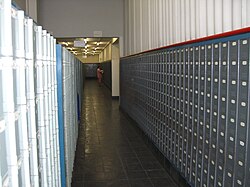
In Namibia, PO boxes are the sole form of mail delivery for private individuals, with boxes located not only in post offices but also in shopping malls and public pedestrian zones. In South Africa, PO boxes are often compulsory in rural areas where street delivery is unavailable; in these specific instances, the boxes are provided free of charge.
Asia
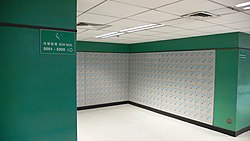
Asian systems vary from the highly regulated to the highly accessible. In Japan, PO boxes are free, but they come with strict requirements: renters must receive at least one item daily and visit the box regularly. Due to high demand in metropolitan areas, waitlists can last for years. In South Korea, boxes are also free, though a key fee (approximately 10,000 won) is required, and mail must be collected at least every 30 days.
Europe
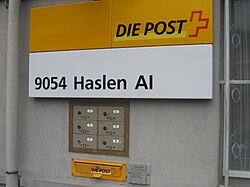
European services often integrate with home addresses. In Austria, four different versions of PO boxes exist, catering to both individuals and businesses. In the United Kingdom, Royal Mail PO boxes are often "pigeon-holes" located in secure sorting offices; they are not always lockable by the user and may require staff assistance for retrieval.
North America
In Canada and the U.S., boxes generally come in five sizes (A through E). A significant evolution in the U.S. occurred in 2012 with the introduction of Street Addressing (PBSA). This allows PO box holders to use the post office's physical street address combined with their box number as a "unit number." This enables the receipt of packages from private carriers like FedEx and UPS, which previously could not deliver to standard PO boxes.
Comparison of Global PO Box Features
| Region/Country | Rental Cost | Primary Access Method | Key Feature |
|---|---|---|---|
| United States | Variable (Fee Groups) | Key/Keypad | Street Addressing for private carriers |
| Japan | Free | Key | Strict daily retrieval requirements |
| Namibia | Variable | Key | Only form of private mail delivery |
| United Kingdom | Variable | Staff-assisted/Key | Often formatted as pigeon-holes |
| South Korea | Free (Key fee applies) | Key/Automated | 30-day retrieval mandate |
Frequently Asked Questions
Can I receive UPS or FedEx packages in a PO Box?
Generally, private carriers cannot deliver to a standard PO box. However, in the U.S., the USPS Street Addressing service allows users to use the post office's street address and a unit number to receive these packages.
What happens if a package is too big for my PO box?
The postmaster will typically leave a notification slip in your box. Depending on the facility, you may be directed to the service counter or provided a key to a larger parcel locker.
Do I need identification to rent a PO box?
Yes, most countries require verification. In the United States, two forms of identification are required, one of which must be a valid photo ID.
Are PO boxes always located inside a post office?
While most are, some countries place them in other public areas. For example, in Namibia, PO boxes can be found in shopping malls and pedestrian zones.
What is the difference between a PO box and a virtual mailbox?
A PO box is a physical lockbox at a postal facility. A virtual mailbox is a service that receives physical mail but often provides digital additions, such as scanning the mail or forwarding it to another address.