Non-Denominated Postage: How NVI Stamps Simplify Global Mailing
In the world of philately and daily logistics, a non-denominated stamp is a postage stamp designed to meet a specific postal rate without having the actual price printed on it. Often referred to in English-speaking countries as non-value indicator (NVI) postage, these stamps allow postal services to maintain validity regardless of price fluctuations. This system reduces the immense cost of reprinting millions of low-value "make-up" stamps every time a rate increase occurs.
While some NVI stamps retain their full validity for the intended service regardless of future price hikes, others may only remain valid for the original purchase price. The Universal Postal Union officially approved the use of these stamps for international mail in 1995, paving the way for widespread global adoption.
Key Facts
- NVI Definition: Stamps printed without a monetary value, indicating a service class instead.
- Primary Benefit: Eliminates the need to reprint massive quantities of stamps during rate changes.
- Global Standard: Approved for international mail by the Universal Postal Union in 1995.
- Common Examples: The U.S. "Forever" stamp and Canada's "Permanent" stamp.
Non-Denominated Postage by Country
United States
The U.S. began experimenting with non-denominated postage in 1975. During a period of rate uncertainty, Christmas stamps were issued without a price to avoid reprinting hundreds of millions of stamps when the rate rose from 10 cents to 13 cents.
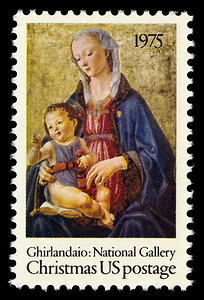
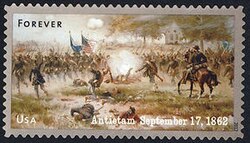
The U.S. also used letter denominations (A, B, etc.) during transitions before moving toward class-based indicators. In 2007, the USPS introduced the Forever stamp, which remains valid for first-class postage regardless of future price increases. By 2011, all first-class stamps were converted to this format. This concept expanded in 2013 to include the Global Forever stamp for international mail, and in 2015 to include postcards and additional-ounce stamps.
Canada
Canada's first NVI was the 1981 "A" Definitive, featuring a stylized maple leaf. In 2006, Canada Post introduced the trademarked "Permanent" stamp, which covers the cost of a standard domestic letter up to 30g. The adoption of this system was driven by necessity; following a 2005 price increase, Canada Post had to print over 60 million one-cent stamps to help customers make up the new rates.
United Kingdom
The Royal Mail introduced non-denominated postage in 1989 to combat fast-changing rates. They utilized "non-value indicated" Machins stamps with textual inscriptions such as "1ST" and "2ND" to denote the class of service. This system eventually expanded to include worldwide and European rates, as well as specific stamps for postcards.
The Netherlands
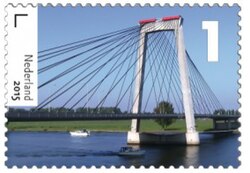
PostNL issues all first-class stamps as NVIs, marked with a large numeral "1". Previously, stamps were distinguished by "Europa" (Europe) or "Wereld" (World) markings, but currently, all stamps for destinations outside the Netherlands are simply marked "Internationaal".
Scandinavia and Northern Europe
- Sweden: Introduced non-denominated stamps in 1979. Since 1997, they have issued "Forever-stamps" for domestic mail (Brev) and international mail. They also offer "Julpost" for Christmas mail at a slightly lower price.
- Finland: Launched its first NVI (ikimerkki) on March 2, 1992, with denominations for 1st and 2nd class domestic letters up to 50g.
- Norway: Introduced "Valørløse frimerker" (Value free stamps) on September 1, 2005, covering domestic, European, and World rates.
- Åland: Uses a variety of NVI denominations including Lokalpost, Inrikes (Finland), Europa, and Världen.
Other International Examples
- Republic of Ireland: An Post uses "N" stamps for domestic mail (valid in both the Republic and Northern Ireland) and "W" stamps for international mail.
- Singapore: Uses "1st Local" (up to 20g) and "2nd Local" (up to 40g) NVIs.
- Czech Republic: Uses letter codes: "A" (domestic priority), "B" (domestic non-priority), "E" (European international), and "Z" (non-European international).
- Russia: Uses pre-printed NVI stamps on envelopes and postcards: "A" for regular domestic, "B" for postcards, and "D" for registered mail.
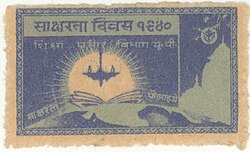
- India: Issued an early non-denominated stamp for Literacy Day in 1940.
Summary of NVI Systems
| Country | Common NVI Term/Label | Primary Use Case | Key Feature |
|---|---|---|---|
| United States | Forever | First-Class Mail | Valid regardless of future rate hikes |
| Canada | Permanent | Domestic First-Class | Covers standard letters up to 30g |
| United Kingdom | 1ST / 2ND | Class of Service | Introduced in 1989 to manage rate changes |
| Netherlands | Numeral "1" | First-Class Mail | Unified "Internationaal" marking for foreign mail |
| Sweden | Brev / Julpost | Domestic Mail | Specific stamps for Christmas delivery |
Frequently Asked Questions
What is the difference between a denominated and a non-denominated stamp?
A denominated stamp has a specific monetary value printed on it (e.g., 50 cents). A non-denominated stamp (NVI) indicates a service level or class (e.g., "First Class" or "Forever") and remains valid for that service regardless of the current price.
Do Forever stamps actually never expire?
Yes, in the United States, Forever stamps remain valid for the cost of a first-class postage stamp regardless of how many times the price increases over time.
Why do postal services use NVI stamps?
They are primarily used to reduce the cost and logistical burden of printing new stamps every time postal rates increase, especially for low-value stamps used to make up price differences.
Can NVI stamps be used for international mail?
Yes, many countries offer specific NVI stamps for international mail. For example, the U.S. has the Global Forever stamp, and the Republic of Ireland uses "W" stamps for international letter mail.
Are there risks associated with buying NVI stamps online?
Yes, because of their lasting value, Forever stamps have been targeted by counterfeiters who sell fraudulent versions at discounted prices online.