Poseurs and Subcultural Authenticity: The Battle for Street Cred
In the world of niche communities, there is often a sharp divide between the "true believers" and the pretenders. Central to this conflict is the term poseur—a pejorative label used to describe someone who adopts the dress, speech, or mannerisms of a subculture to gain popularity or acceptance, without actually sharing the underlying values or philosophy of that group.
From the gritty clubs of early punk to the high-stakes world of modern sneaker collecting, the quest for authenticity serves as a gatekeeping mechanism. It separates those who have "paid their dues" from those who are merely wearing a costume.
Key Facts
- Definition: A poseur is someone who mimics a subculture's aesthetic for social gain but lacks a genuine understanding of its core beliefs.
- Core Value: Authenticity (or "street cred") is the primary currency used to validate membership in most subcultures.
- Common Targets: Commercialized artists, "fashionistas," and those who adopt symbols (like the anarchy sign) without knowing their meaning.
- Cross-Genre Prevalence: The term is widely used in punk, heavy metal, hip hop, skateboarding, jazz, and goth communities.
The Punk Subculture: Militancy and DIY Ethics
Punk rock was built on a foundation of immersive identity. In early London and New York scenes, the distinction between a participant and a "hanger-on" was stark. Those who deviated from the movement's orthodoxy were often labeled as sellouts or poseurs. This militancy created a social barrier that protected the scene from corporate infiltration.
Over time, the definition of a poseur evolved. By the late 1970s, some critics argued that punk itself had become a "pure pose," where a black leather jacket and short hair became mandatory uniforms. This led to the rise of hardcore punk in the 1980s, which emphasized a strict DIY (Do-It-Yourself) ethic, rejecting those who moved on to the next fashion trend, such as the New Romantic style.
Even into the 2000s, veteran punks continued to target "pop punk" fans and bands, arguing that the genre had become too safe and escapist, stripping away the social and political danger that originally defined the movement.
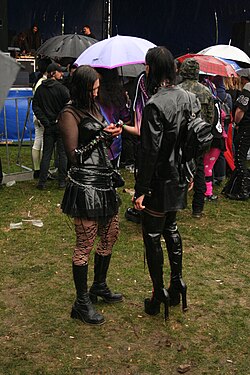
Heavy Metal: Purists vs. the Mainstream
In heavy metal, the divide often falls between "authentic metalheads" and those deemed fake. This conflict is frequently centered on the tension between underground genres and commercial success.
Thrash vs. Glam Metal
In the 1980s Bay Area thrash scene, fans of "hair metal" (such as Mötley Crüe or Ratt) were viewed as poseurs. This animosity sometimes manifested physically; for example, Paul Baloff of the band Exodus was known to tear the shirts off suspected hair metal fans as a form of ritualistic "sacrifice."
The Nu Metal Controversy
The emergence of nu metal in the late 90s and early 2000s sparked similar debates. Detractors used terms like "mallcore" to describe bands like Korn and Slipknot, claiming they diluted the genre's credibility by appealing to a mainstream audience. However, artists like Jonathan Davis have pushed back, stating that they never intended to fit into the rigid definitions of "true metal."
Hip Hop and the Importance of Street Cred
In hip hop, authenticity is often tied to street cred—the perceived legitimacy of an artist's background and experiences. The subculture is particularly sensitive to those who mimic the "gangsta" lifestyle without having lived it.
This scrutiny extends to both racial and social boundaries. The term "wigger" is used for Caucasians mimicking Black hip-hop culture, while "hipster rap" has been criticized for adopting the aesthetic of the genre while avoiding the social realities associated with it. Even established figures have faced accusations; for instance, the father of Ol' Dirty Bastard claimed his son was a poseur because his stable upbringing contradicted the "hood" narrative promoted by record labels.
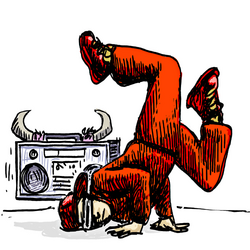
Beyond Music: Skateboarding, Fashion, and Beyond
The concept of the poseur extends far beyond the music industry into various lifestyle communities:
- Skateboarding: Authentic skaters often identify poseurs by the "mall grab"—a specific way of holding a skateboard as an accessory rather than a tool for riding.
- Biker Culture: "Poseur bikers" are those who wear the leather gear but lack the lived experience (and scars) of lifelong riders.
- Jazz: Since the 1940s, "jazz poseurs" have been described as critics or fans who name-drop famous performers without understanding the technical aspects of bebop or music theory.
- Fashion: The modern term hypebeast describes a specific type of poseur who collects high-end sneakers and clothing solely to impress others and gain social media validation, rather than out of a genuine love for the design.
| Subculture | Marker of Authenticity | Marker of a 'Poseur' |
|---|---|---|
| Punk | DIY Ethics / Political Activism | Following fashion trends / Commercialism |
| Heavy Metal | Knowledge of genre history | Preference for 'Hair Metal' or 'Mallcore' |
| Hip Hop | Street Cred / Lived Experience | Faux-thug posturing / Mimicry |
| Skateboarding | Technical Skill / Riding | The 'Mall Grab' / Using board as accessory |
| Sneaker Culture | Genuine appreciation for shoes | Hypebeast / Buying for social likes |
Frequently Asked Questions
What exactly is a poseur?
A poseur is a person who adopts the outward appearance, style, or mannerisms of a specific subculture to fit in or appear "cool," but does not actually subscribe to the core values, philosophy, or history of that group.
Why is authenticity so important in subcultures?
Authenticity serves as a way for a community to protect its identity and ensure that its members are genuinely committed to the group's values, rather than just using the subculture as a temporary fashion statement.
What is the difference between a sneakerhead and a hypebeast?
A sneakerhead collects shoes because they genuinely like the design or history of the footwear. A hypebeast collects shoes primarily to impress others and increase their social status, often buying only what is currently popular.
How does the term 'sellout' differ from 'poseur'?
While a poseur is someone who enters a scene falsely, a sellout is typically an authentic member of the subculture who is perceived to have betrayed their values in exchange for money or mainstream success.
Can someone be a poseur in non-artistic fields?
Yes. For example, in Canada, "military posers" are individuals who wear uniforms and medals without ever having served in the armed forces, sometimes leading to legal charges for impersonation.