Portulaca oleracea: The Resilient and Nutritious Edible Succulent
Commonly known as purslane, little hogweed, or pursley, Portulaca oleracea is a remarkable succulent that thrives where many other plants struggle. Belonging to the Portulacaceae family, this widespread plant is much more than a common weed; it is a highly nutritious edible that has been utilized by cultures across the globe for millennia.
Botanical Characteristics and Growth
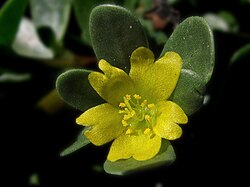
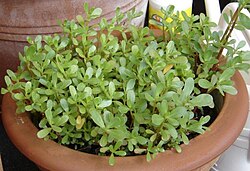
Purslane is characterized by its smooth, reddish, and mostly prostrate (creeping) stems. It grows from a central taproot supported by fibrous secondary roots, typically reaching heights of up to 40 centimeters (16 inches). The leaves, which can appear in alternate or opposite arrangements, are clustered at the stem joints and ends.
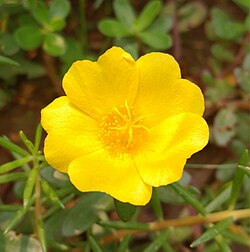
The plant produces small yellow flowers, measuring up to 6 millimeters (1/4 inch) wide, featuring five regular parts. These flowers are notable for their brief blooming period, opening singly at the center of leaf clusters for only a few hours on sunny mornings. Depending on rainfall, flowering can occur at any time of the year.
Seed Production and Germination
The reproductive capacity of purslane is immense. The plant produces many-seeded capsules, and a single large plant can produce as many as 240,000 seeds. These tiny seeds are light germinators; they require temperatures above 25 °C (77 °F) to thrive and can be negatively affected by even a thin layer of soil cover (5 mm).
Unique Biological Adaptations
One of the most scientifically fascinating aspects of P. oleracea is its metabolic flexibility. It is one of the rare plants capable of utilizing both C4 and Crassulacean Acid Metabolism (CAM) photosynthesis pathways. While these two pathways were long thought to be incompatible, purslane can switch between them during periods of drought, demonstrating a sophisticated physiological response to environmental stress.
This adaptability extends to its habitat. Purslane is highly tolerant of poor soils and drought. Furthermore, it possesses a high tolerance for soil salinity. In agricultural settings, it can act as a "biodesalinating" plant, removing chloride and sodium from the soil, which can actually benefit companion crops like tomatoes.
Nutritional Profile and Culinary Uses
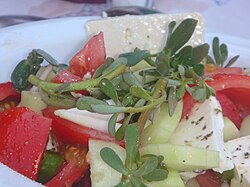
Every part of the purslane plant—stems, leaves, flower buds, and even the seeds—is edible, whether consumed raw or cooked. It has a distinct slightly sour and salty flavor, a profile attributed to the presence of oxalic and malic acids. Because malic acid production is linked to its CAM pathway, the plant's sourness is often most intense when harvested in the early morning.
Culinary applications are diverse: it can be used fresh in salads, stir-fried, or added to soups and stews due to its mucilaginous (thickening) quality. The seeds can also be processed into flour.
Nutritional Summary (per 100g)
| Nutrient | Amount | % Daily Value (DV) |
|---|---|---|
| Energy | 20 kcal | - |
| Protein | 2.03 g | - |
| Vitamin E | High | 81% |
| Vitamin C | High | 23% |
| Magnesium | Moderate | 16% |
| Iron | Moderate | 11% |
| Potassium | Moderate | 16% |
Beyond standard vitamins, purslane is a significant source of alpha-linolenic acid, an essential omega-3 fatty acid.
Key Facts
- Edibility: All parts of the plant are edible, raw or cooked.
- Metabolism: Unique ability to switch between C4 and CAM photosynthesis.
- Nutrients: Exceptionally high in Vitamin E (81% DV) and Vitamin C (23% DV).
- Resilience: Highly tolerant of drought, poor soil, and high salinity.
- Seed Output: Large plants can produce up to 240,000 seeds.
- Flavor: Slightly sour and salty due to oxalic and malic acids.
Frequently Asked Questions
Is purslane safe to eat?
Yes, all parts of P. oleracea are edible. However, it is important to note that the leaves are very high in oxalates, which should be considered by individuals sensitive to them.
How does purslane help in salty soil?
Purslane is highly salt-tolerant and can actually remove salt from the cultivation medium. It can remove approximately 210 kg/ha of chloride and 65 kg/ha of sodium, helping to prepare soil for more salt-sensitive plants.
What is the difference between purslane and moss rose?
While Portulaca grandiflora (moss rose) is an ornamental plant grown for its bright flowers, Portulaca oleracea is a widespread edible species. In Japan, they are often distinguished by the name "Hana-suberihiyu" for the ornamental types.
Can purslane be used as a companion plant?
Yes, purslane has a positive effect on certain companion plants, such as tomatoes, particularly when growing in saline conditions.
Why is purslane so hard to kill in gardens?
Its resilience comes from its taproot, which helps it endure drought, and its waxy cover, which provides protection against many pests and diseases.