Portuguese Football Federation: Governing the Beautiful Game in Portugal
The Portuguese Football Federation (Portuguese: Federação Portuguesa de Futebol, FPF) serves as the ultimate governing body for football in Portugal. From managing professional leagues to overseeing amateur grassroots play, the FPF ensures the sport's growth and regulation across the nation. Based in the state-of-the-art City of Football in Oeiras, the federation acts as the primary link between Portuguese football and global entities like FIFA and UEFA.
Key Facts
- Founded: March 31, 1914, as the Portuguese Football Union (UPF).
- FIFA Affiliation: Joined in 1923.
- UEFA Affiliation: Founding member in 1954.
- Current President: Pedro Proença.
- Headquarters: Cidade do Futebol, Oeiras, Portugal.
- Major Competitions: Oversees the Campeonato de Portugal, Taça de Portugal, and Supertaça Cândido de Oliveira.
History and Evolution
Early Days and Formation
The federation began on March 31, 1914, as the Portuguese Football Union (UPF), established by the regional associations of Lisbon, Porto, and Portalegre. In its early years, the UPF focused on organizing matches between Lisbon and Porto teams. A pivotal moment occurred in May 1923 when Portugal became a full member of FIFA during the XII FIFA Congress in Geneva.
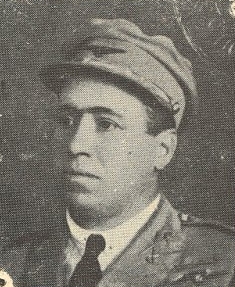
The first national championship, the Campeonato de Portugal—a knockout tournament and precursor to the Taça de Portugal—was launched in 1921 after delays caused by the First World War. The organization officially adopted the name Portuguese Football Federation on May 28, 1926, though this change was legally formalized in the statutes on December 3, 1938. João Luís de Moura was elected as the federation's first president during this transition.
Growth and International Recognition
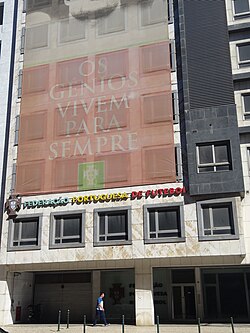
Portugal expanded its international influence in 1954 by becoming a founding member of UEFA in Basel, Switzerland. Over the decades, the FPF moved its headquarters seven times before settling at Praça da Alegria in 1968.
Controversies and Modernization
The federation's history has not been without turmoil. During the presidency of Silva Resende in 1986, the national team was embroiled in the "Saltillo Affair" during the FIFA World Cup in Mexico. This period was marked by doping suspicions, player strikes, and disputes over unpaid advertising endorsements for brands like Adidas. Despite these challenges, the FPF continued to evolve, eventually winning the bid to host UEFA Euro 2004.
Recent Developments
Under the leadership of Fernando Gomes (elected in 2011), the FPF has focused on infrastructure and international hosting. Portugal hosted the 2019 UEFA Nations League Finals and has successfully partnered with Spain and Morocco as a joint candidate to host the 2030 FIFA World Cup.
Institutional Structure and Governance
The FPF is organized into several governing bodies to ensure sports ethics, combat corruption, and manage the technical aspects of the game.
Governing Bodies
- General Assembly: The primary deliberative body composed of Ordinary Members.
- Board: Led by the President, three vice-presidents (administrative, financial, and sports), and five Directors.
- Council of Justice & Disciplinary Board: Composed of law graduates who assess and punish offenses according to regulations.
- Arbitration Council: Manages the technical aspects of refereeing and arbitration in FPF competitions.
- Fiscal Council: Provides financial oversight and meets quarterly.
Territorial Organization
The FPF is supported by 22 territorial federations that govern football within Portugal's districts. This includes federations in the Azores and Madeira, which remain active despite the abolition of their respective districts in 1976.
The City of Football
Inaugurated on March 31, 2016, the City of Football (Cidade do Futebol) is the FPF's modern headquarters and national team training center. Built with a budget of 15 million euros over 17 months without state financial support, the complex includes three and a half pitches, two gyms, and 11 changing rooms.
Equipment and Partnerships
After a 27-year partnership with Nike that began in 1997, the FPF signed a new multi-year agreement with PUMA in November 2024. Starting in 2025, PUMA will supply kits for all male, female, and youth squads, as well as futsal, beach soccer, and E-Sports teams.
| Category | Details |
|---|---|
| Founding Date | March 31, 1914 |
| FIFA Membership | Since 1923 |
| UEFA Status | Founding Member (1954) |
| Headquarters | Cidade do Futebol, Oeiras |
| Current Kit Supplier | PUMA (Starting 2025) |
| Key Competitions | Campeonato de Portugal, Taça de Portugal |
Frequently Asked Questions
When was the Portuguese Football Federation founded?
It was founded on March 31, 1914, originally under the name Portuguese Football Union (UPF).
What is the City of Football?
The City of Football is the FPF's headquarters and national training center in Oeiras, featuring high-performance gyms and multiple pitches.
Who is the current president of the FPF?
The current president is Pedro Proença.
Which national teams does the FPF manage?
The FPF is responsible for the men's, women's, and youth national football teams, as well as the national futsal and beach soccer teams.
Who will be the official kit supplier for Portugal starting in 2025?
PUMA will become the official kit supplier in 2025, ending a 27-year partnership with Nike.