Port of Rio Grande: A Strategic Hub for Brazilian Trade
The Port of Rio Grande stands as one of the most critical maritime gateways in Brazil and Latin America. Located in the city of Rio Grande within the state of Rio Grande do Sul, it serves as a vital link between the interior of the continent and global markets. As the third largest port in Brazil, it facilitates a massive volume of trade, supporting the economic vitality of the southern region.
Geographically, the port is situated on the right bank of the North Channel, the essential waterway connecting the Atlantic Ocean with the Lagoa dos Patos. To ensure the port bar remains open and navigable for large vessels, two breakwaters have been constructed at the mouth of the access channel.
Key Facts
- Rank: Third largest port in Brazil.
- Location: Rio Grande, Rio Grande do Sul, Brazil.
- Annual Cargo: 45.1 million tonnes (as of 2021).
- Administration: Managed by the Superintendency of Ports of Rio Grande do Sul (SUPRG).
- Influence: Serves Rio Grande do Sul, Santa Catarina, Uruguay, southern Paraguay, and northern Argentina.
Historical Development
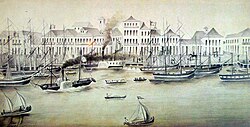
Maritime activities in the town of Rio Grande date back to the city's founding in 1737. However, the formal infrastructure of the port evolved over several decades. The construction of Porto Velho do Rio Grande began in 1869 and was officially inaugurated on October 11, 1872.
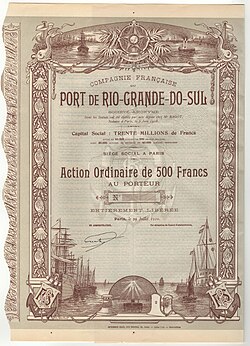
As trade demands grew, the execution of Porto Novo began on June 2, 1910. This modern expansion came into operation on November 15, 1915, marked by the delivery of the first 500 meters of dock for traffic.
Administration and Logistics
While the port belongs to the Union, its administration and exploitation were granted to the State of Rio Grande do Sul in 1997. This is managed through the Superintendency of Ports of Rio Grande do Sul (SUPRG), a state body linked to the Secretariat of Logistics and Transport. Since 2017, SUPRG has expanded its remit to manage the entire gaucho hydroport system.
Land access to the facility is highly efficient, utilizing three major highways: BR-392, BR-471, and BR-116, ensuring a seamless flow of goods from the hinterland to the coast.
Trade and Cargo Statistics
The Port of Rio Grande is a powerhouse of agricultural and industrial movement. In 2009, the port handled approximately 150 million tons, representing 3% of all national handling in Brazil. More recent data from 2021 shows an annual cargo tonnage of 45.1 million tonnes.
The port's trade profile is diverse, focusing heavily on agricultural commodities and chemical inputs. The following table summarizes the primary goods moving through the port.
| Export Categories | Import Categories |
|---|---|
| Soybeans, soybean meal, and soybean oil | Wheat, barley, and rice |
| Corn, wheat, and rice | Fertilizers (Urea, Phosphates, Potassium Chloride, Ammonium Sulphate, Ammonium Nitrate) |
| Wood chips, cellulose, and cerrado wood | Chemicals (Sulfuric acid, Phosphoric acid, Ammonia, Benzene) |
| Benzene | Energy (Crude oil, LPG, Petroleum coke) |
| - | Salt and sea shells |
Frequently Asked Questions
Where is the Port of Rio Grande located?
It is located in the city of Rio Grande, in the state of Rio Grande do Sul, Brazil, specifically on the right bank of the North Channel connecting the Atlantic Ocean to Lagoa dos Patos.
Who manages the port's operations?
The port is managed by the Superintendency of Ports of Rio Grande do Sul (SUPRG), which is a state body linked to the Secretariat of Logistics and Transport.
What is the port's significance in Brazil?
It is the third largest port in the country and serves as a primary logistics hub for southern Brazil and neighboring countries like Uruguay, Paraguay, and Argentina.
What are the main products exported through the port?
The primary exports include soybeans, soybean meal, soybean oil, corn, wheat, rice, wood chips, cellulose, cerrado wood, and benzene.
Which highways provide land access to the port?
The port is accessed via the BR-392, BR-471, and BR-116 highways.