Politics: The Dynamics of Governance and Social Order
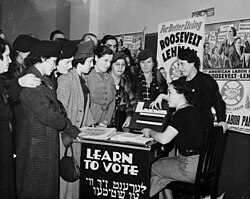
At its core, politics is the activity of settling affairs within an organized society. While often associated with elections and government, it is more broadly the process of resolving societal issues and managing collective interests. Those who engage in this activity are known as politicians, while the academic study of these processes is called political science, a branch of social science dedicated to analyzing government and power.
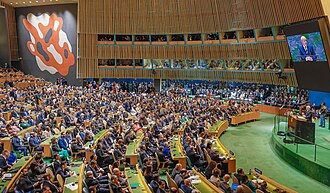
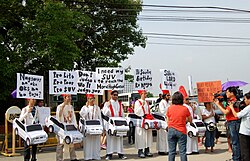
Politics manifests through various methods, including the promotion of specific views, negotiation between parties, the creation of laws, and the exercise of force—ranging from internal policing to international warfare. This activity occurs across all social levels, from small clans and tribes to local governments, corporate institutions, sovereign states, and global international bodies.
Key Facts
- Etymology: The term derives from the Ancient Greek politiká, meaning "affairs of the cities."
- Scope: Politics operates at multiple levels: macropolitics (large-scale/national), mesopolitics (intermediate/regional), and micropolitics (small-scale/local).
- Core Function: It serves as the primary mechanism for resolving conflicts and organizing society via government.
- Diverse Methods: Tools of politics include diplomacy, legislation, negotiation, and the application of force.
The Evolution of Political Thought
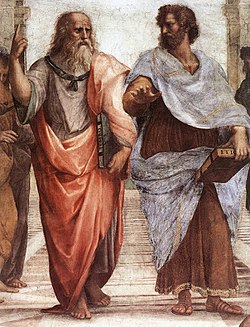
Political philosophy has evolved from ancient inquiries into the ideal city-state to modern analyses of global governance. In Ancient Greece, philosophers like Plato and Aristotle laid the groundwork. While Aristotle criticized some of Plato's ideas as impractical, both valued balance, moderation, and the rule of law to achieve a harmonious society.
Over time, political approaches have diverged into several key frameworks:
- Moralism vs. Realism: Moralism focuses on how politics should be conducted based on ethics, while realism examines how politics actually operates, often emphasizing power and national interest.
- Conflict vs. Co-operation: Some views see politics as an inherent struggle for power and resources, while others view it as a collaborative effort to reach consensus.
- Extensive vs. Limited: This distinguishes between expansive government intervention in society and limited government focused on basic protections.
![The Greek philosopher Aristotle criticized many of Plato's ideas as impracticable, but, like Plato, he admires balance and moderation and aims at a harmonious city under the rule of law.[27]](/images/65/a9/65a9a26ad6cd14836b5f6c6ad3fef358f84dd3350f0d3ae5c5d2a2b2336ae95c.jpg)
Political Systems and Governance
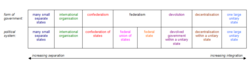
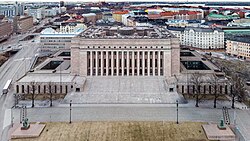
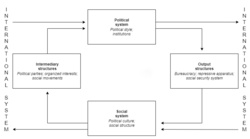
A political system is the set of formal institutions and informal processes that constitute the government of a state. Central to this is the state, a political entity that possesses a monopoly on the legitimate use of force within a territory. Most states operate under a constitution, which serves as the fundamental set of principles or established precedents according to which a state is governed.
Forms of Government and Ideology
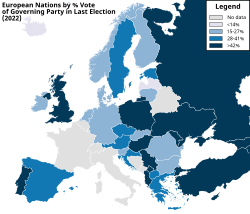
Governments vary widely in how they distribute power. Democracy emphasizes equality and the participation of the citizenry, often evolving into a polyarchy (a system with multiple centers of power) or utilizing deliberation to reach decisions. In contrast, authoritarianism concentrates power in a central authority, limiting political freedoms.
The political spectrum is often visualized as a left-right axis, though modern models use multi-axis charts to map socio-economic and socio-cultural views, distinguishing between libertarian and authoritarian leanings.
![Two-axis political compass chart with a horizontal socio-economic axis and a vertical socio-cultural axis and ideologically representative political colours, an example for a frequently used model of the political spectrum[98][99][100][101][102][103][104][105]](/images/63/19/6319eb3b717d0da44f507ed4d10120b796eaaa3fe88c5078b81cbf26b94a0458.webp)
Political Dysfunction and Corruption
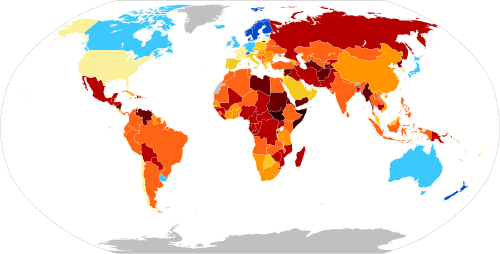
Not all political systems function efficiently. Political corruption occurs when those in power abuse their position for private gain, undermining transparency and public trust. This dysfunction can lead to instability or the rise of proxy politics, where external powers influence a local government to serve their own interests.
Levels and Scales of Politics
Politics is not a monolithic activity; it scales according to the size of the group involved:
- Macropolitics: Focuses on national and international levels, including sovereign states and global organizations.
- Mesopolitics: Concerns intermediate levels, such as regional governments or large institutional bodies.
- Micropolitics: Deals with small-scale interactions, such as those within a company, a local community, or a family.
| Concept | Definition | Primary Focus |
|---|---|---|
| Political Science | The social science study of politics | Analysis and Theory |
| Sovereign State | A self-governing political entity | Authority and Territory |
| Democracy | Government by the people | Equality and Participation |
| Authoritarianism | Strong central power and limited freedom | Control and Order |
| Corruption | Abuse of entrusted power for private gain | Dysfunction and Ethics |
Frequently Asked Questions

What is the difference between politics and political science?
Politics is the actual activity of settling affairs and managing power within a society, whereas political science is the academic and scientific study of those activities and the systems of government that facilitate them.
What does the "left-right spectrum" represent?
The left-right spectrum is a way of classifying political positions. Generally, the "left" is associated with social equality and reform, while the "right" is associated with tradition, social hierarchy, and limited government intervention in the economy.
What is a sovereign state?
A sovereign state is a political entity that has a defined territory, a permanent population, and the independent authority to govern itself without interference from external powers.
How does political corruption affect a society?
Political corruption undermines the rule of law and erodes public trust in institutions. It often leads to the inefficient allocation of resources, as decisions are made for private benefit rather than the public good.
What is the role of a constitution in politics?
A constitution provides the legal framework for a state, defining the structure of the government, the distribution of power, and the fundamental rights of the citizens, ensuring that governance follows a set of established rules.