Police Ranks in the United Kingdom: Structure, Authority, and Insignia
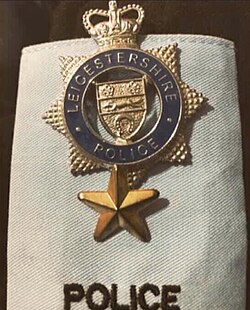
Police ranks are a hierarchical system used to define authority, responsibility, and the internal culture of law enforcement organizations. In the United Kingdom, these ranks are primarily denoted by specific insignia—visual markers such as pips, crowns, and bars—affixed to the officer's uniform, typically on the epaulettes (the shoulder straps of a uniform).
While most forces across the UK, including those in the Crown Dependencies and British Overseas Territories, follow a standardized set of ranks, the system is not entirely uniform. Because law enforcement is managed separately across England and Wales, Northern Ireland, and Scotland, variations in insignia and responsibilities exist. These differences are most notable in the Metropolitan Police and the City of London Police, as well as within UK-wide agencies like the British Transport Police.
Key Facts
- Non-Military Origin: Unlike many global police forces, British ranks were deliberately designed by Home Secretary Sir Robert Peel under the Metropolitan Police Act 1829 to avoid mirroring military structures.
- Legal Powers: Rank determines specific legal authorizations, such as the ability to order PACE searches or extend prisoner detention.
- Special Constables: These are volunteer officers who generally follow the regular rank structure but do not hold legal authority over regular officers.
- Regional Variation: The Metropolitan Police and Police Scotland use specific alphanumeric collar number systems to identify officers and their divisions.
Rank Authority and Legal Powers
In the UK, rank is not merely a title; it grants specific legal powers under the Police and Criminal Evidence Act 1984 (PACE). These powers ensure that high-stakes decisions are made by officers with sufficient experience and seniority.
- Inspectors and above: Authorized to conduct section 18 (1) PACE searches of premises.
- Superintendents and above: Authorized to extend the length of a prisoner's detention to 36 hours.
Trainee, Acting, and Interim Ranks
Under section 107 of PACE (applicable in England and Wales), certain officers may be designated to exercise the powers of a higher rank. For example, a sergeant may be designated to exercise the powers of an inspector. While acting ranks often mirror substantive ranks in operational terms, they may differ in pay, pensions, and insignia. Notably, under section 36 of the act, only substantive sergeants may be appointed as custody officers.
Special Constables and Other Rank Types
Special constables are volunteer officers who assist in the management and tasking of the constabulary. Historically, their rank titles shifted in the 1980s toward terms like "divisional officer," but since 2000, the National Policing Improvement Agency has encouraged a return to regular rank titles (prefixed with "special").
It is important to note that senior special constables do not have authority over regular officers. However, highly experienced specials may be granted administrative supervision of mixed units during specific events if no regular supervisory officer is available.
Comparison of Rank Structures
The following table provides a general overview of the standard rank hierarchy found across most UK territorial forces.
| Rank Level | Typical Title | General Responsibility |
|---|---|---|
| Senior Leadership | Chief Constable / Commissioner | Overall force strategic command |
| Senior Management | Chief Superintendent / Superintendent | District or departmental command |
| Middle Management | Chief Inspector / Inspector | Operational supervision and PACE authorizations |
| First-line Supervision | Sergeant | Direct team leadership and custody duties |
| Frontline | Constable | Primary patrol and investigative duties |
Regional and Specialized Variations
The Metropolitan Police and Police Scotland
These forces utilize a distinct identification system involving borough or division codes combined with numbers:
- Metropolitan Police: Sergeants use a borough code and 1-3 digits; Constables use a borough code and 3-4 digits; PCSOs use a borough code and 4 digits (starting with 7).
- Police Scotland: Sergeants and Constables use a division letter and 3-4 digits; Special Constables use a division letter and 4 digits (starting with 7).
Special Constabulary Insignia
There is significant variation in how special constabularies display rank. While some use regular insignia, others use a combination of bars, pips, crowns, and laurel wreaths. The Special Constabulary National Strategy 2018–2023 has aimed to standardize these markings to reduce confusion across Great Britain.
Frequently Asked Questions
Do police ranks in the UK follow a military model?
No. While many international police forces are based on military logic, Sir Robert Peel specifically designed the British police ranks under the Metropolitan Police Act 1829 to be distinct from military ranking.
What is the difference between a substantive rank and an acting rank?
A substantive rank is the officer's permanent grade. An acting rank is a temporary designation that allows an officer to exercise the powers of a higher rank, though it may differ in terms of pay and pension.
Can a Special Constable give orders to a regular police officer?
Generally, no. Senior special constables have no authority over regular officers, although they may provide administrative supervision of mixed units in specific scenarios where no regular supervisor is present.
Who is authorized to extend prisoner detention to 36 hours?
Under current regulations, this power is granted to officers holding the rank of superintendent or above.
How are Police Community Support Officers (PCSOs) identified in the Met Police?
In the Metropolitan Police, PCSOs are identified by a borough code followed by four digits, where the first digit of the number sequence is always a 7.