Poaching: History, Legal Impacts, and Global Conservation Efforts
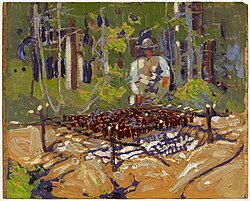
Poaching is the illegal hunting or capturing of wild animals, typically involving a violation of land use rights. While modern discussions often focus on the extinction of endangered species, poaching has deep historical roots. In the past, it was frequently practiced by impoverished peasants as a means of subsistence to supplement meager diets, directly clashing with the exclusive hunting privileges held by nobility and territorial rulers.
Over time, the definition of poaching has expanded. Since the 1980s, the term has included the illegal harvesting of wild plants. In an agricultural context, poaching also refers to the damage caused to soil or grass by the feet of livestock, which can lead to water pollution via increased runoff and reduced land productivity. It is important to distinguish poaching from cattle raiding, which is classified as theft rather than poaching.

Key Facts
- Definition: The illegal hunting, capturing, or harvesting of wild animals and plants.
- Historical Context: Originally a conflict between peasant subsistence and noble privilege.
- Agricultural Meaning: Soil or grass degradation caused by livestock hooves.
- Global Drivers: Motivated by subsistence, status symbols, and perceived medicinal properties.
- Severe Penalties: Some nations have implemented shoot-to-kill policies or the death penalty to deter poachers.
Legal Evolution and Regional Perspectives
Continental Europe
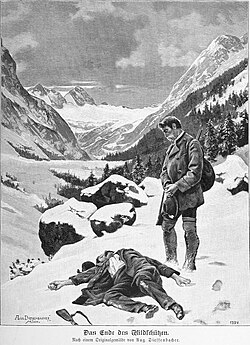
In Germany and Austria, poaching is viewed as an intrusion into third-party hunting rights rather than simple theft. Historically, ancient Germanic law allowed free men to hunt on common land, but Roman law restricted this right to rulers. During the medieval period, feudal rulers enforced exclusive hunting and fishing rights. By the 16th century, these rights shifted from nobility to land ownership. Due to the low quality of early firearms, poachers often had to approach game within 30 meters (98 ft). In the Salzburg region, poachers were typically unmarried men around 30 years of age working alone.
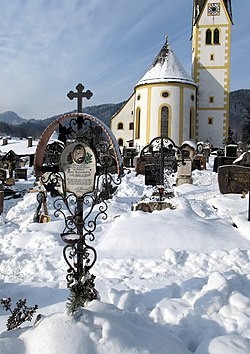
![Marterl at the Riederstein, near Baumgartenschneid, Tegernsee. The remains of a poacher, who had never returned from a hunting expedition in 1861, were found at the site in 1897.[11]](/images/c8/dc/c8dc0d942bd5ce3e4025b5036caee284bde33ff88fbe27414194aed5a1190dc8.jpg)
North America and Other Regions
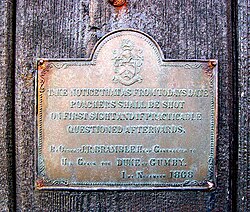
In the United States, poaching manifests in various forms, including canned hunting (hunting animals in confined spaces), night hunting, and trespassing. These activities challenge federal and state environmental regulations aimed at preserving biodiversity.
Motivations Behind Illegal Wildlife Trade
The drivers of poaching vary by region and species. In China, for example, tigers remain highly sought after. A survey of 1,058 Beijing residents—including 381 university students and 677 citizens—explored public attitudes toward tiger conservation. The findings indicated that tigers are still demanded in illegal trade because they serve as status symbols of wealth for the upper class and are believed to possess mysterious medicinal and healthcare effects.

Environmental and Health Effects
Poaching has devastating consequences for global ecosystems. Beyond the immediate loss of biodiversity, it can lead to the emergence of zoonotic diseases—illnesses that jump from animals to humans—caused by the transmission of highly variable retrovirus chains.
Global Anti-Poaching Strategies
Governments have adopted increasingly aggressive measures to combat the mass killing of wildlife, particularly in Africa.
- Tanzania: In 2013, the Minister of Natural Resources and Tourism urged that poachers be shot on sight to protect elephants.
- Namibia: Since December 2016, anti-poaching police units are permitted to return fire if attacked.
- Botswana: The government adopted a shoot-to-kill policy in 2013, describing it as a "necessary evil." This strategy has reportedly reduced poaching to near-nonexistent levels.
- Kenya: In May 2018, the government announced the death penalty for poachers, arguing that fines and life imprisonment were insufficient deterrents. This move is supported by wildlife advocates but opposed by human rights organizations. Between 2016 and 2017, 23 rhinos and 156 elephants were killed in Kenya.
| Country | Policy/Measure | Primary Target/Goal |
|---|---|---|
| Botswana | Shoot-to-kill policy | General wildlife conservation |
| Kenya | Proposed death penalty | Rhinos and Elephants |
| Namibia | Right to return fire | Police unit safety and deterrence |
| Tanzania | Shoot on sight (urged) | Elephant protection |
Frequently Asked Questions
What is the difference between poaching and theft?
While stealing livestock (cattle raiding) is classified as theft, poaching is specifically the illegal hunting or capturing of wild animals or the illegal harvesting of wild plants, often involving a violation of land use or hunting rights.
How does poaching affect human health?
Poaching can facilitate the emergence of zoonotic diseases, which are infections that spread from animals to humans, often through the transmission of variable retrovirus chains.
Why are tigers still poached despite conservation efforts?
In some cultures, such as in China, tigers are viewed as status symbols of wealth for the upper class and are believed to have medicinal and healthcare properties.
What is "agricultural poaching"?
In farming, poaching refers to the damage caused to soil or grass by the hooves of livestock. This can lead to increased water pollution through runoff and a decrease in productive land.
Are anti-poaching laws the same everywhere?
No, they vary significantly. Some countries use fines and imprisonment, while others, like Botswana and Kenya, have implemented or proposed more extreme measures such as shoot-to-kill policies or the death penalty.