Po' Boy Sandwiches: A Taste of New Orleans History
The po' boy (also written as po-boy or poor boy) is more than just a sandwich; it is a culinary icon of New Orleans, Louisiana, and the American Deep South. Defined by its unique bread and a vast array of hearty fillings, this sandwich represents the intersection of French influence and local ingenuity.
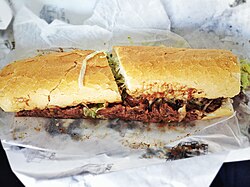
At its core, a po' boy consists of a filling—typically roast beef, ham, or fried seafood—served on a New Orleans French bread roll cut lengthwise. This specific bread is prized for its crisp crust and fluffy crumb, providing the perfect structural support for heavy fillings.
Key Facts
- Origin: New Orleans, Louisiana.
- Signature Bread: A local French bread with a high water-to-flour ratio for a lighter, less chewy texture.
- "Dressed": A term meaning the sandwich includes shredded lettuce, sliced tomato, pickles, and mayonnaise.
- Common Fillings: Roast beef, fried shrimp, oysters, crawfish, and catfish.
- Historical Link: Strongly associated with the 1929 New Orleans streetcar strike.
The Art of the Po' Boy: Ingredients and Preparation
The Essential Bread
The foundation of any authentic po' boy is the bread. Unlike a traditional baguette, New Orleans-style French bread uses less flour and more water. This recipe, developed in the 1700s, was a response to the humid Gulf South climate, which made wheat difficult to grow and forced locals to rely on imported flour. The result is a wetter dough that produces a lighter, fluffier interior.
Diverse Fillings
While seafood is a staple, the variety of fillings is extensive. Popular options include:
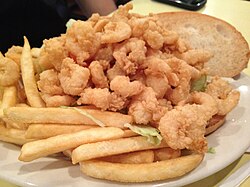
- Fried Seafood: Shrimp, crawfish, oysters, crab, and catfish.
- Meats: Roast beef, ham, Louisiana hot sausage, fried chicken, alligator, duck, boudin, and rabbit.
For those ordering roast beef, there are several regional styles. "Sloppy roast beef" features thick cuts with gravy, while "CrockPot tender" beef is stewed until it melds with the sauce. Some prefer thinner slices dipped in beef jus. A local specialty is the addition of debris—small bits of meat that fall during the cooking process and are rendered into a rich, near-gravy consistency.
Customizing Your Order
When ordering, the term "dressed" is crucial. A dressed po' boy includes shredded lettuce, sliced tomato, sliced pickles, and mayonnaise. Seafood versions may substitute mayonnaise for melted butter. Depending on the meat, customers often add Louisiana-style hot sauce or Creole mustard. While cheese became a common addition after the Great Depression, it was not part of the original early recipes.
Origins and Etymology
The history of the po' boy is steeped in local lore. While fried oyster sandwiches (known as "oyster loaves") existed in the 19th century, the specific term "po' boy" is widely attributed to the 1929 New Orleans streetcar strike. According to local theory, brothers Benjamin and Clovis Martin, former streetcar conductors, served free sandwiches to the striking workers. They reportedly referred to the strikers as "poor boys," giving the sandwich its name.
However, some historians question this narrative, noting that the story did not appear in the press until decades later and that the Martins' earlier claims suggested the sandwich was created for dock workers and farmers near the French Market.
Regional Variations and Culture
The po' boy has spread across the Gulf Coast, from Houston to the Florida Panhandle. In Houston, a unique variation emerged in 1962 via Lebanese American Jalal Antone, who added chowchow to ham, salami, and provolone cheese to make the sandwich more appealing to local tastes.
In New Orleans, the po' boy remains a cultural pillar. From convenience stores to dedicated po' boy shops, it is a ubiquitous sight. The city even hosts the annual Oak Street Po'Boy Festival every November in the Carrollton neighborhood, where chefs compete for "best-of" awards with creative new recipes.
| Feature | Standard Detail | Variation/Option |
|---|---|---|
| Bread | New Orleans French Bread | Lighter and fluffier than a baguette |
| "Dressed" | Lettuce, Tomato, Pickle, Mayo | Melted butter (for seafood) |
| Seafood | Shrimp, Oysters, Crawfish | "Peacemaker" (Shrimp & Oyster) |
| Beef | Roast Beef | Served with "debris" (meat bits) |
Frequently Asked Questions
What does it mean to have a po' boy "dressed"?
A "dressed" po' boy is topped with shredded lettuce, sliced tomato, sliced pickles, and mayonnaise.
What is a "peacemaker" po' boy?
A peacemaker (or La Médiatrice) is a sandwich that contains both fried shrimp and fried oysters.
What is "debris" on a roast beef po' boy?
Debris refers to the small bits of meat that break off during the slow-cooking process, which are then incorporated into a thick, gravy-like sauce.
How is po' boy bread different from a baguette?
Po' boy bread is made with more water and less flour than a traditional baguette, resulting in a lighter, fluffier interior and a less chewy texture.
Where did the name "po' boy" come from?
The most popular theory is that it was coined during the 1929 New Orleans streetcar strike by the Martin brothers, who served free sandwiches to the "poor boy" strikers.