Playing Cards: A Global History of Design and Evolution
From the imperial courts of ancient China to the modern gaming tables of the world, playing cards have evolved from simple printed slips of paper into a universal medium of entertainment. Their journey is one of cultural exchange, where artistic styles and game mechanics traveled across continents, adapting to local customs and technological advancements.
The Origins of Cards in China
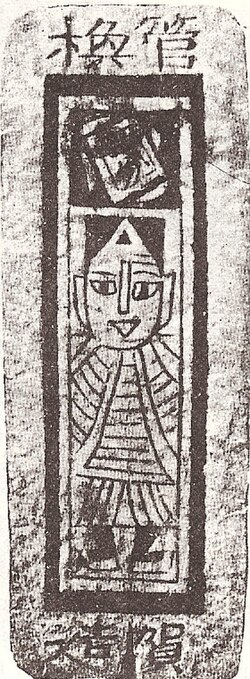
Playing cards likely originated during the Tang dynasty around the 9th century, fueled by the invention of woodblock printing. Early references point to a "leaf game" mentioned in the 9th-century text Collection of Miscellanea at Duyang, written by Su E. While some scholars dispute the direct link, the Song dynasty scholar Ouyang Xiu suggested that these "leaves" were printed sheets used in board games with dice.
Beyond formal games, the Tang dynasty also used cards for drinking games, though these lacked suits and numbers, instead featuring instructions or forfeits. By the late 13th century, evidence of gambling with paper cards became more explicit; in 1294, the Ming Department of Punishments impounded woodblocks and cards from two gamblers.
Some historians, including William Henry Wilkinson, suggest that early cards may have been actual paper currency used as both tools and stakes. This evolved into "money cards" to reduce risk. A notable early game was madiao, a trick-taking game from the Ming Dynasty (1368–1644). It used 38 cards divided into four suits: coins, strings of coins, myriads (10,000), and tens of myriads. The latter two suits featured characters from the Water Margin.
Expansion Through Persia and Egypt
As card games spread across Asia, they reached Persia, where they evolved into structured decks. Persian suits typically contained twelve cards: ten pip cards (numbered cards) and two court cards (the king and vizier). Some decks, such as those for Ganjifa, expanded to eight suits, totaling 96 cards.
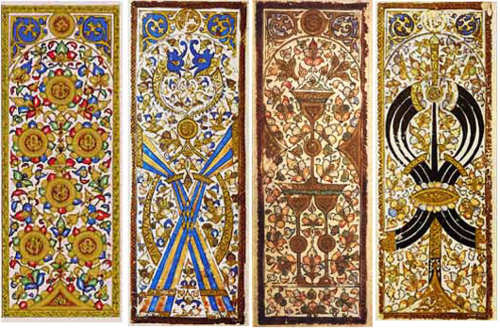
By the 11th century, cards arrived in Egypt. The oldest surviving fragments in the world date to the 12th and 13th centuries. A more complete 15th-century Mamluk deck discovered in the Topkapı Palace reveals a 52-card structure with four suits: polo-sticks, coins, swords, and cups.
Mamluk court cards used calligraphy or abstract designs rather than human figures, likely due to Sunni Islamic prohibitions on depicting persons. The Mamluk term for deputy king, nā'ib, eventually entered European languages as naibi (Italian) and naipes (Spanish). Interestingly, the Mamluk "cups" were called tuman (myriad), suggesting a linguistic link to Chinese origins.
The Arrival and Adaptation in Europe
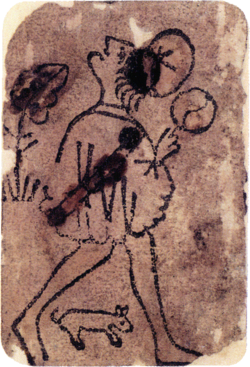
Playing cards likely entered Europe via Mamluk trade, first appearing in Spain and Catalonia. The earliest record is a 1371 Catalan rhyme dictionary listing naip. By 1377, cards were mentioned in Florence and Switzerland, and by 1413, they had reached England.
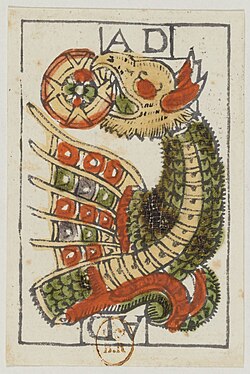
Early European decks mirrored Mamluk suits (cups, coins, swords, and polo-sticks). Because polo was unknown in Europe, polo-sticks were reimagined as batons or cudgels. These became the Latin suits. As cards moved into Germanic regions, these were replaced by leaves (shields), hearts (roses), bells, and acorns.
Around 1480, French manufacturers simplified these symbols to facilitate mass production, creating the French suits we recognize today: trèfles (clovers), carreaux (tiles), cœurs (hearts), and piques (pikes). England eventually adopted these, though they renamed clovers as "clubs" and pikes as "spades."
The Evolution of Court Cards
Europeans replaced abstract Mamluk designs with royal figures. Early decks featured a king and two marshals (Ober and Unter). Italy and Iberia later introduced the Knight and Fante/Sota. In England, the lowest court card was the knave (originally meaning male child). Queens appeared sporadically in the late 14th century and were permanently adopted by the French.
Modern Design Innovations
Over the centuries, several practical changes improved the playing experience:
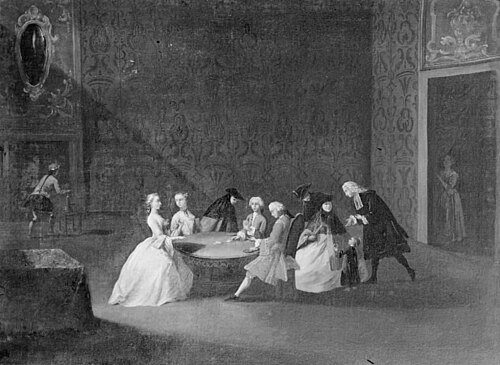
- Indices: Corner and edge indices allowed players to fan their cards with one hand. While early examples exist from 1693, they became common in the late 18th century.
- Reversible Courts: Double-ended court cards, appearing around 1745, eliminated the need to turn cards upright.
- Physical Durability: Sharp corners were rounded to prevent wear and cheating, and blank backs were replaced with designs to hide markings.
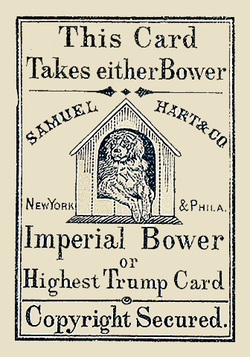
- The Joker: Invented around 1860 in the U.S. for the game of euchre, the Joker served as the "best bower" (highest trump) before becoming a wild card in poker by 1875.
The Rise of Industrial Production and Nintendo
The 19th century brought standardized packaging, moving from paper sleeves to cardboard tuck-flap boxes and eventually cellophane wrappers by 1937.
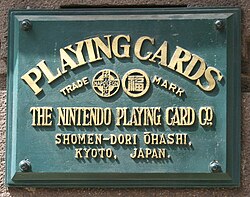
In Japan, Portuguese traders introduced cards in the 16th century, leading to the creation of Tenshō karuta. In 1889, Fusajiro Yamauchi founded Nintendo to produce hanafuda (flower cards). Despite gambling bans in 1882, hanafuda remained popular, particularly in yakuza-run parlors in Kyoto. Nintendo overcame early financial struggles by introducing a cheaper line called Tengu and expanding into Osaka to meet the demand for frequently replaced decks.
Key Facts
- Origin: Likely Tang dynasty China (9th century) using woodblock printing.
- Mamluk Influence: Introduced the 52-card structure and suits that influenced Latin decks.
- French Suits: Developed around 1480 to simplify mass production.
- The Joker: Created c. 1860 in the U.S. for the game of euchre.
- Nintendo: Founded in 1889 as a hanafuda (flower card) manufacturer.
| Region/Culture | Primary Suits | Notable Characteristics |
|---|---|---|
| China (Ming) | Coins, Strings, Myriads, Tens of Myriads | Used Water Margin characters; reverse ranking in coins. |
| Mamluk (Egypt) | Polo-sticks, Coins, Swords, Cups | Abstract designs; 52-card deck. |
| Germanic | Leaves, Hearts, Bells, Acorns | Replaced Latin suits in Central Europe. |
| French | Clovers, Tiles, Hearts, Pikes | Simplified for mass production; global standard. |
Frequently Asked Questions
Where did playing cards originate?
Playing cards most likely originated in China during the Tang dynasty (around the 9th century), utilizing woodblock printing technology.
How did the French suits become the global standard?
Around 1480, French manufacturers simplified the complex Germanic and Latin symbols into the clover, tile, heart, and pike designs to make mass production easier and faster.
What is the origin of the Joker card?
The Joker was invented around 1860 in the United States for the game of euchre, where it served as the highest trump card (the imperial bower).
What is the connection between Nintendo and playing cards?
Nintendo was founded in 1889 specifically to produce and distribute hanafuda (flower cards), which were popular in Japan despite gambling restrictions.
Why did Mamluk cards use abstract designs instead of people?
The use of calligraphy and abstract patterns instead of human figures was likely due to religious proscriptions against depicting persons in Sunni Islam.