Platine War: The Struggle for Hegemony in the Río de la Plata
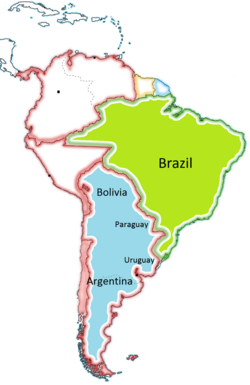
The Platine War (1851–1852) was a pivotal conflict that reshaped the geopolitical landscape of South America. Fought between the Argentine Confederation and a powerful alliance comprising the Empire of Brazil, Uruguay, and the rebellious Argentine provinces of Entre Ríos and Corrientes, the war was the culmination of decades of tension. At its heart was a struggle for hegemony—the dominant political and military influence—over the Platine region, the strategic areas bordering the Río de la Plata.
This conflict was not an isolated event but was deeply intertwined with the internal instabilities of neighboring nations, most notably the Uruguayan Civil War (known as La Guerra Grande). The outcome of the war would ultimately end the dominance of Buenos Aires over the region and establish the Empire of Brazil as the primary power in the south.
Key Facts
- Duration: August 18, 1851, to February 3, 1852.
- Primary Belligerents: The Argentine Confederation vs. an alliance of Brazil, Uruguay, and Argentine rebels (Entre Ríos and Corrientes).
- Key Outcome: A decisive victory for the Brazilian-led alliance, resulting in the fall of Juan Manuel de Rosas.
- Strategic Shift: Ended the clout of Buenos Aires in the Platine region and initiated Brazilian hegemony.
- Decisive Battle: The Battle of Caseros on February 3, 1852.
The Ambitions of Juan Manuel de Rosas
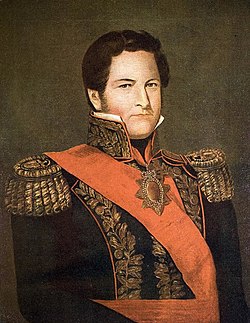
The catalyst for the conflict was the vision of Juan Manuel de Rosas, the governor of Buenos Aires and head of the Argentine Confederation. Rosas sought to recreate the former Viceroyalty of the Río de la Plata, a Spanish administrative district established in 1776. His goal was to build a powerful republican state with Argentina at its center, which required the annexation of Bolivia, Uruguay, and Paraguay, as well as portions of southern Brazil.
Tensions with Paraguay
Paraguay, which had considered itself sovereign since 1811, was viewed by Rosas as a rebellious province. To maintain independence, Paraguayan leader José Gaspar Rodríguez de Francia initially isolated the country. However, his successor, Carlos Antonio López, sought diplomatic ties with Argentine dissidents in Corrientes. Rosas responded by refusing to recognize Paraguayan independence and imposing a blockade on the Paraná River, leading to a series of military clashes between 1845 and 1850.
The Uruguayan Conflict
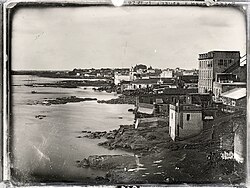
Rosas intervened heavily in Uruguay to restore Argentine suzerainty. He supported the Blancos faction, leading to the Great Siege of Montevideo. The resulting violence was immense, with thousands of casualties. The conflict spilled over into southern Brazil, where Oribe's forces looted ranches and stole hundreds of thousands of cattle, prompting retaliatory raids by Brazilians known as Califórnias.
The Formation of the Allied Coalition
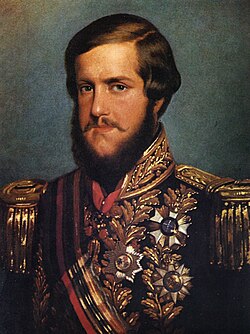
The Empire of Brazil, under Emperor Dom Pedro II, viewed Rosas' expansionism as a direct threat. Brazil began by formally recognizing Paraguayan independence in 1844 to secure an ally. By 1850, a defensive alliance was signed with Paraguay, though the latter remained cautious of joining active combat due to suspicions regarding Justo José de Urquiza, a former general under Rosas who had turned against him.
Brazil also deepened its support for the Colorados government in Montevideo. By March 1851, the Empire openly declared its support for the Colorados, and by August, Brazilian troops landed in Uruguay to protect Fuerte del Cerro. This intervention prompted Rosas to officially declare war on Brazil on August 18, 1851.
Course of the War
The Invasion of Uruguay
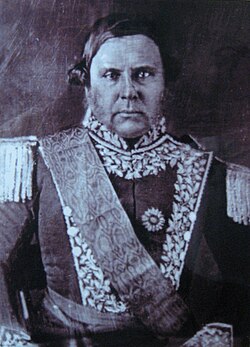
The Count of Caxias led a professional Brazilian army of 16,200 men into Uruguay in September 1851. Simultaneously, the forces of Justo José de Urquiza and Eugenio Garzón surrounded the army of Manuel Oribe near Montevideo. Recognizing the hopelessness of his position, Oribe surrendered on October 19, 1851.
The Advance into Argentina
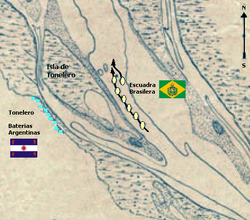
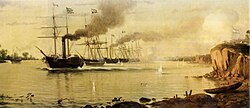
The Allied forces reunited at Diamante in December 1851. While the infantry and artillery were transported via Brazilian warships, Urquiza's cavalry moved overland. The Allies pushed toward Buenos Aires, defeating Argentine forces at the Battle of Alvarez Field and the Battle of Marques Bridge in January 1852.
The Battle of Caseros
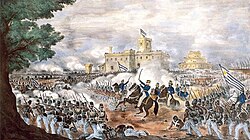
The war reached its climax on February 3, 1852, at the Battle of Caseros. The Allied army, totaling 26,000 men (including 20,000 Argentines, 4,000 Brazilians, and 2,000 Uruguayans), faced a similarly sized Argentine force led by Rosas. Despite Rosas holding the high ground, the Allied victory was decisive, leading to his downfall.
Aftermath and Legacy
The defeat of Rosas led to the San Nicolás Agreement, intended to establish a constitutional assembly. However, the province of Buenos Aires, fearing a loss of power, seceded from the confederation in September 1852. This sparked a secondary civil war between the Federalists (led by Urquiza) and the State of Buenos Aires.
The division persisted until 1861, when Bartolomé Mitre led Buenos Aires to victory at the Battle of Pavón, eventually reunifying the country as the Argentine Republic in 1862.
| Category | Allied Forces (Brazil, Uruguay, Rebels) | Argentine Confederation |
|---|---|---|
| Key Leaders | Pedro II, Count of Caxias, Justo J. de Urquiza | Juan Manuel de Rosas, Ángel Pacheco |
| Total Strength | Approx. 28,500 (Combined) | Approx. 34,500 (Combined) |
| Casualties | 6,500+ dead and wounded | 11,000+ dead and wounded |
| Outcome | Victory; established regional hegemony | Defeat; fall of the Rosas regime |
Frequently Asked Questions
What was the primary cause of the Platine War?
The war was primarily caused by Juan Manuel de Rosas' ambition to recreate the Viceroyalty of the Río de la Plata, which would have meant annexing Uruguay, Paraguay, and parts of Brazil to establish Argentine dominance over the region.
Who were the main allies of the Empire of Brazil?
Brazil's main allies were the Uruguayan Colorado government and the Argentine provinces of Entre Ríos and Corrientes, led by Justo José de Urquiza. Paraguay also acted as a co-belligerent and ally, providing horses and diplomatic support.
What was the significance of the Battle of Caseros?
The Battle of Caseros was the decisive engagement of the war. The victory of the Allied forces led to the immediate overthrow of Juan Manuel de Rosas and ended his long-standing authoritarian rule over the Argentine Confederation.
How did the war affect the internal politics of Argentina?
Following the war, Argentina split into two rival states: the Argentine Confederation and the State of Buenos Aires. This division lasted until 1861, when the Battle of Pavón led to the reunification of the country under Bartolomé Mitre.
What role did Paraguay play in the conflict?
Paraguay provided critical support to Brazil, including the supply of horses. While they fought their own campaign against Rosas to secure their independence, they maintained a defensive role during the final Allied advance due to suspicions of Urquiza's intentions.