Plastic Arts: History, Materials, and Theoretical Evolution
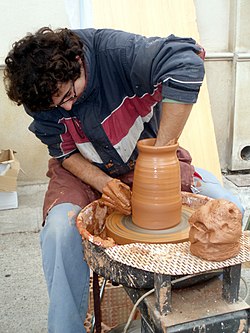
The plastic arts encompass art forms that rely on the physical manipulation of a plastic medium—materials that can be molded, shaped, or altered—to create a tangible work of art. While the word "plastic" is commonly associated with synthetic polymers today, in the context of art, it refers to the quality of being ductile or malleable.
In a broad sense, the term is used to describe the visual arts, including painting, sculpture, ceramics, architecture, film, and photography, distinguishing them from auditory or textual arts like music and literature. In a narrower definition, it specifically refers to materials that can be carved or shaped, such as stone, wood, concrete, glass, metal, clay, and wax.
Key Facts
- Etymology: Derived from the Ancient Greek plastikós, meaning "to mold" or "to shape."
- Ancient Origins: The oldest known examples of plastic art date back to 30,000–34,000 BP.
- Scope: Includes both traditional materials (stone, clay) and modern synthetic polymers.
- Distinction: Historically separates visual, spatial arts from literature and music.
The Evolution of Plasticity in Art
Historical Roots and Terminology
Long before the invention of synthetic plastics, the term "plastic arts" was used to denote the creation of three-dimensional forms. The concept of plasticity—the quality of being easily shaped—became a central point of discussion for art critics in the early 20th century. This was particularly evident in analyses of modern painting, specifically the works of Paul Cézanne, where critics used "plasticism" to describe the structural and spatial qualities of the art.
Theoretical Applications in Literature
While most associate plastic arts with physical objects, some theorists expanded the definition. In 1807, Friedrich Wilhelm Joseph Schelling limited the term to sculpture and architecture. However, the German critic August Wilhelm Schlegel (1767–1845) proposed a broader application, extending the concept to poetry.
In his lectures delivered in Vienna between 1809 and 1811, Schlegel contrasted "plasticism" with "picturesque" (pittoresk) qualities. He argued that the spirit of antique culture and poetry was plastic—characterized by being finite, closed, and accomplished—whereas modern culture was more picturesque. He specifically identified "plastic isolation" within the lines of classical poetry.
Materials and Examples of Plastic Arts
The diversity of the plastic arts is best seen through the materials used across different eras and cultures. From prehistoric ivory carvings to modern architectural marvels, the ability to manipulate a medium is the defining characteristic of the craft.
| Work | Material/Medium | Origin/Artist |
|---|---|---|
| Venus de Brassempouy | Mammoth ivory | 25th millennium BC |
| Moai | Stone | Rapa Nui people |
| Benin Bronze Sculpture | Bronze | 16th-century Kingdom of Benin |
| Taj Mahal | Architecture/Stone | Ustad Ahmad Lahori |
| Hastings Visit to the Great Plains | Linen and cotton tapestry | Sheila Hicks (1979) |
Frequently Asked Questions
What does "plastic" mean in the context of art?
In art, "plastic" refers to the Greek plastikós, meaning to mold or shape. It describes materials that are malleable or ductile, allowing the artist to physically manipulate the medium into a specific form.
Does the plastic arts include painting?
Yes. In a general sense, the term is used to refer to the visual arts as a whole, which includes painting, as well as sculpture, ceramics, and photography.
How old is the earliest known plastic art?
The oldest known examples of plastic art are estimated to date back to between 30,000 and 34,000 BP.
Can literature be considered a plastic art?
While generally excluded, the critic August Wilhelm Schlegel argued that classical poetry exhibited "plastic" qualities, contrasting the structured nature of antique poetry with the "picturesque" nature of modern culture.
What is the difference between plastic arts and visual arts?
Visual arts is a broad umbrella term for all art forms based on sight. Plastic arts is often used interchangeably with visual arts, but in a narrower sense, it specifically refers to art involving the physical molding or carving of materials.