Understanding the Plant Crown: Structure, Function, and Classification
In the study of botany and forestry, the crown of a plant refers to the sum of its aboveground parts. This includes the stems, leaves, and any reproductive structures. While an individual plant possesses a single crown, a canopy is formed when one or more plant crowns grow together within a specific area.
For woody plants—such as trees, shrubs, and lianas (woody vines)—the crown consists of the branches, leaves, and reproductive structures that extend outward from the main stem or trunk. The physical characteristics of these crowns, including their width, depth, surface area, volume, and density, are vital metrics used to assess plant health, growth stages, and biological efficiency.
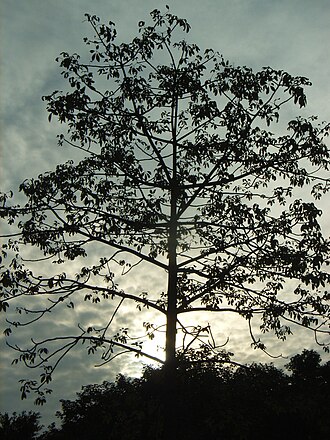
Crown Shapes and Biological Functions
Tree crowns exhibit a wide variety of shapes depending on their growth habits. Two major types of branching patterns define these shapes:
- Excurrent branching: This habit results in conoid (cone-like) shapes.
- Decurrent (deliquescent) branching: This habit results in more round shapes.
The crown serves as the primary engine for a plant's survival, with the leaves performing several critical biological processes. Through photosynthesis, the leaves assimilate light energy, absorb carbon dioxide, and release oxygen. Additionally, the crown facilitates respiration to release energy and transpiration, which is the movement of water from the plant to the atmosphere.
Classifying Tree Crowns
To better understand forest structures, scientists use different classification systems to describe how trees interact with one another and their environment. These are generally divided into "social classes" or more complex ecological and silvicultural codes.
Kraft's Social Classes
Developed by Kraft based on temperate and boreal forests in Central Europe, these "social classes" describe the position of a tree within its environment. While widely used, they may not apply to every forest type globally. The original German classifications include:
- Predominant (vorherrschend)
- Dominant (herrschend)
- Co-dominant (mitherrschend)
- Dominated or Suppressed (beherrscht)
- Inferior (unterständig), which is further divided into:
- 5a: Shade tolerant trees
- 5b: Dying crowns or dying trees
In many modern applications, these classes are simplified to Dominant, Co-dominant, and Suppressed.
The IUFRO Classification System
The International Union of Forest Research Organizations (IUFRO) developed a more complex classification system. This system uses numerical components to create a coded description based on two main criteria: ecological and silvicultural.
Ecological CriteriaThis component focuses on the tree's position and health within the ecosystem:
- Height component (Stand layer): 100 (Overstorey), 200 (Middlestorey), or 300 (Understorey).
- Vitality component (Tree vigor): 10 (Lush), 20 (Normal), or 30 (Retarded).
- Future growth potential: 1 (High), 2 (Average), or 3 (Lagging).
This component focuses on the practical and commercial aspects of the tree:
- Commercial worth: 400 (Valuable, outstanding tree), 500 (Usable wood), or 600 (Poor to unusable quality).
- Trunk class: 40 (Valuable wood, ≥50% high-quality), 50 (Normal wood, ≥50% normal-quality), or 60 (Substandard wood, <50% normal-quality).
- Crown class: 4 (Deep crown, >½ the tree length), 5 (Medium crown), or 6 (Shallow crown, <¼ the tree length).
While both Kraft and IUFRO systems are designed to describe individual crowns, they are also frequently used to describe entire forest layers or storeys.
Summary of Classification Systems
| System | Primary Focus | Key Components |
|---|---|---|
| Kraft's Classes | Social hierarchy within the forest | Predominant, Dominant, Co-dominant, Suppressed, and Inferior |
| IUFRO (Ecological) | Biological standing and vigor | Height, Vitality, and Future growth potential |
| IUFRO (Silvicultural) | Commercial and physical utility | Commercial worth, Trunk quality, and Crown depth |
Key Facts
- The crown includes all aboveground parts: stems, leaves, and reproductive structures.
- A canopy is the collective area formed by multiple plant crowns.
- Photosynthesis, respiration, and transpiration are the three major functions performed by the crown's leaves.
- Excurrent branching creates cone-shaped crowns, while decurrent branching creates round crowns.
- Classification systems like Kraft's and IUFRO's help quantify plant health and forest structure.
Frequently Asked Questions
What is the difference between a crown and a canopy?
A crown refers to the aboveground parts of a single individual plant, whereas a canopy is the layer formed by the crowns of one or more plants in a given area.
What are the main functions of a plant crown?
The crown is responsible for light energy assimilation, carbon dioxide absorption, oxygen release (via photosynthesis), energy release (via respiration), and the movement of water to the atmosphere (via transpiration).
How do branching habits affect tree shape?
The branching habit determines the crown's silhouette. Excurrent branching leads to a conoid or cone-like shape, while decurrent (or deliquescent) branching results in a round shape.
What does the IUFRO classification measure?
The IUFRO system uses a coded method to measure both ecological factors (such as height, vitality, and growth potential) and silvicultural factors (such as commercial worth, trunk quality, and crown depth).
Are Kraft's social classes used for all types of forests?
Not necessarily. Kraft's classifications were specifically designated based on temperate and boreal forests in Central Europe, so they may not be applicable to every forest type in the world.