Plant Collecting: Techniques, History, and Ethics of Botanical Preservation
Plant collecting is the practice of acquiring plant specimens for research, cultivation, or personal hobby. While some collectors maintain live plants, the scientific community primarily relies on dried and pressed specimens to preserve botanical quality over long periods. This ancient practice dates back over 5,000 years, with early records showing a Chinese botanist collecting roses.
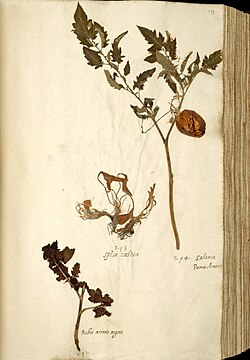
Central to this practice are herbaria—organized collections of preserved plant specimens and their associated data used for scientific study. The world's largest herbarium is located at the Muséum National d'Histoire Naturelle in Paris, France. These institutions use detailed reference sheets to allow horticulturists and researchers to track and update information about specific species.
Historically, the act of gathering live specimens from the wild is known as plant hunting. This activity dates back to 1495 BC, when botanists were dispatched to Somalia to collect incense trees for Queen Hatshepsut. During the Victorian era, botanical adventurers like Joseph Hooker, Robert Fortune, and George Forrest explored the globe at great personal risk to bring exotic species back to private gardens and botanical institutions.
Key Facts
- Longevity: Properly pressed and mounted specimens can last for hundreds of years.
- Storage: Ideal conditions are cool (50–65°F) with low light and low humidity.
- Identification: While apps like Google Lens and Seek are popular, dichotomous keys remain necessary for accuracy above 90%.
- Vouchers: Voucher specimens are expertly identified representative samples used as official scientific references.
- Ethics: Plant poaching is illegal and has led to the extinction of species in certain regions.
The Process of Plant Pressing and Mounting
To ensure a specimen lasts for centuries, precise pressing and mounting techniques are required. For example, the New York Botanical Garden preserves samples from the Lewis and Clark Expedition (1804–1806).
Compression
Before pressing, samples are cleaned of dirt. Some plants are left to wilt for a few days, though they must not decompose. A plant press typically consists of two smooth pieces of wood tightened by bolts, straps, or weights. Alternatively, a heavy book can serve as a press.
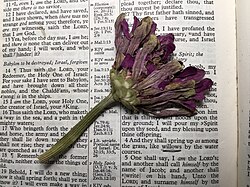
Samples are sandwiched between absorbent blotter materials, such as newspaper or cardboard. Because dried plants become fragile and inflexible, they must be positioned exactly as they should appear in the final mount. Blotters are replaced every 24 hours, with total drying times ranging from 1 to 10 days, though succulents require longer.
Mounting and Storage
Once dried, specimens are mounted on acid-free, pH-neutral paper, such as 100% alpha cellulose or cotton "rag" paper. They are secured using linen tape or Grade A methyl cellulose glue mixed with water.
To prevent deterioration, specimens are stored in cool (10–18°C), low-humidity environments. To protect against pests, sheets are often kept in sealed plastic bags. If an infestation occurs, samples are frozen for three to four days; freezing is also used as a preventative measure for new additions.
Alternative Preservation Methods
Not all plants can be pressed. Large fruits or seeds are stored in boxes without compression, while aquatic plants are kept in liquid preservatives. Cacti are often preserved in ethanol.
When a researcher needs to preserve tissue samples without altering their structure, 50-75% ethanol is used for up to four weeks. For those wishing to maintain a flower's natural three-dimensional shape, a desiccant—most commonly silica gel—is used. Flowers are buried in the gel for 2 to 7 days to remove moisture while preserving form.
Plant Collecting as a Hobby
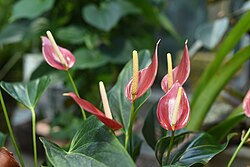
Modern hobbyists often use digital photography to "collect" plants without removing them from nature. Others build private botanical gardens, focusing on specific groups like roses or orchids. The rise of identification apps, including Plant Snap, Google Lens, and Seek by iNaturalist, has made the hobby more accessible, though professional identification still requires dichotomous keys (step-by-step identification tools).
Ethics, Poaching, and Prevention
Plant poaching is the illegal collection of plants. Research in Shenandoah National Park suggests that poaching increases in high-quality environments with easy access, such as those near roads and trails.
Historical Impacts
Over-collecting has historically driven species toward extinction. The Victorian "Fern Craze" (Pteridomania) decimated various fern species in the UK, including the Woodsia genus. Similarly, "Orchidelirium" led to the decline of orchids; the lady's slipper orchid (Cypripedium calceolus) was declared extinct in the UK in 1917, only to be rediscovered in 1930 as a single plant that required 24-hour guarding.
Modern Theft
Botanical gardens remain targets for theft. Notable incidents include:
- Kew Royal Botanic Gardens (2014): Theft of the world's smallest water lily, Nymphaea thermarum.
- Kirstenbosch National Botanical Garden (2014): Theft of 24 cycads, including critically endangered Albany cycads, valued at over $45,000.
- Christchurch Botanic Gardens (2020): Theft of a Monstera deliciosa 'Variegata'.
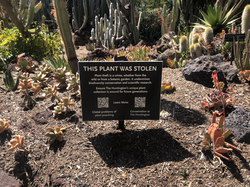
- San Diego Botanic Garden (2021): Attempted theft of clippings, attributed to the surge in houseplant market prices.
On a smaller scale, "prop-lifting"—taking clippings from private or public property for propagation—is considered unethical. In California, Penal Code § 384a prohibits the unauthorized removal of plant material from public or private land.
Terminology and Safety
| Term | Definition | Example |
|---|---|---|
| Discovery | The first time a plant is recorded for science (often via herbarium specimen). | Père David discovering the handkerchief tree in 1869. |
| Introduction | The first time living matter (seeds/cuttings) is brought to a new region. | Ernest Wilson introducing the handkerchief tree to Britain in 1901. |
| Voucher Specimen | An expertly identified representative sample associated with research. | Samples used to compare new species discoveries. |
Collectors must be mindful of legal boundaries. In US National Parks, collection is prohibited without special permission. International collection requires official permits to transport plants across borders, a process where major herbaria can often provide guidance.
Frequently Asked Questions
How long does it take to dry a plant specimen?
The drying process generally takes between 1 and 10 days, depending on the plant type. Fleshier plants, such as succulents, typically require more time.
What is the difference between a discovery and an introduction?
A discovery occurs when a plant is first recorded for science, often through a dried specimen. An introduction occurs when living material, such as seeds or cuttings, is first brought to a new location, such as Europe.
Can I use a phone app to accurately identify a plant?
Apps like Google Lens and Seek are helpful for field identification, but they have not reached 90% accuracy. For definitive scientific identification, the use of dichotomous keys is still required.
What is the best way to preserve a flower's shape?
To preserve a flower in its natural 3D shape rather than pressing it flat, use a desiccant like silica gel. Cover the flowers in the gel for 2 to 7 days.
Why are voucher specimens important?
Voucher specimens serve as official, expertly identified references. They are essential for scientists to compare new finds or distinguish between species with very minute differences.