Piscivores: The Biology and Ecology of Fish-Eating Animals
In the natural world, animals are often categorized by their diet. Among the most specialized of these are piscivores—carnivorous animals that primarily consume fish. The term is derived from the Latin words piscis (fish) and vorō (to devour). In scientific literature, these creatures are also referred to as ichthyophages, a term rooted in Greek that carries the same meaning.
Piscivory has played a fundamental role in evolutionary history. During the Devonian period, early tetrapods (four-limbed vertebrates) relied on fish as their primary food source via water-bound amphibians. As life transitioned to land, insectivory became more common, eventually leading to the evolution of herbivory in more terrestrially adapted reptiles and synapsids.
Key Facts
- Definition: A piscivore is a carnivore that primarily eats fish.
- Diversity: Piscivores span multiple taxa, including fish, birds, mammals, reptiles, and arachnids.
- Specialization: Some animals are obligated piscivores (strictly dependent on fish), while others are generalists.
- Ecological Role: Piscivores can trigger trophic cascades that affect non-aquatic species.
- Development: Primary piscivores adopt the habit early in life, while secondary piscivores shift to fish later for energy efficiency.
Types of Piscivores
Not all fish-eaters are the same. Scientists distinguish between those who are strictly dependent on fish and those who include them as part of a broader diet.
Obligate vs. Generalist Predators
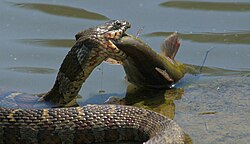
Many predatory fish, such as tuna, sharks, pikes, and billfishes, are obligated piscivores. Similarly, the gharial and the bulldog bat are strictly dependent on fish for survival. In contrast, generalist predators like whales, sea lions, and crocodilians may eat fish but also prey on invertebrates, marine mammals, waterbirds, and land animals.
Other animals, such as grizzly bears, jaguars, wolves, octopuses, and sea gulls, may have fish as a dominant or significant portion of their diet without being exclusively piscivorous.
Primary and Secondary Piscivores
Ecologists also classify piscivores based on when they adopt their diet:
- Primary Piscivores: Also known as specialists, these animals shift to eating fish within the first few months of their lives.
- Secondary Piscivores: These animals transition to a fish-based diet later in life, a change hypothesized to be an adaptation to maintain energy efficiency during growth.
Ecological Impact
The influence of piscivores extends beyond the water's edge. Because they sit high on the food chain, their presence can create a trophic cascade—an ecological phenomenon where a change at the top of the food chain ripples down to affect other levels.
For example, research on cutthroat trout stocking demonstrated that adding these piscivores affected non-aquatic organisms, specifically bats that fed on insects emerging from the water. In other contexts, such as the management of invasive lionfish, the density of native piscivores is used as a biological indicator to measure the success and health of coral reefs.
Examples of Piscivorous Species
| Class | Examples |
|---|---|
| Fish | Barracuda, Piranha, Lionfish, African tigerfish, Lemon shark |
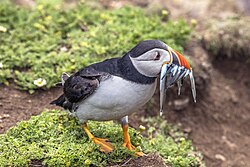
| Birds | Osprey, Bald eagle, Penguin, Merganser |
| Mammals | Orca, Bottlenose dolphin, Giant otter, Fishing cat, Bulldog bat |
| Reptiles | Gharial, Green anaconda, Komodo dragon, Asian water monitor |
| Arachnids | Fishing spider |
Prehistoric Piscivores
Fossil evidence and anatomical analysis allow paleontologists to identify prehistoric fish-eaters. Some were specialists, while others were opportunistic generalists.
Ancient Fish
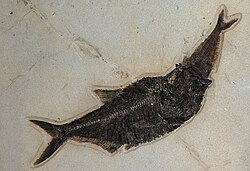
The Diplomystus, a relative of the herring, is known from fossils showing individuals attempting to swallow other fish. Similarly, Xiphactinus specimens have been found with the perfectly preserved skeleton of a relative, Gillicus, in their stomachs.
Prehistoric Reptiles and Dinosaurs
- Spinosaurus: Hypothesized to be a piscivore due to its pressure-sensitive snout for detecting swimming prey and the presence of giant coelacanthids in its environment.
- Baryonyx: An opportunistic predator with a crocodile-like skull; fish scales (Scheenstia) have been found in its stomach region.
- Elasmosaurus: Possessed a long neck and stereoscopically positioned eyes, adaptations ideal for stalking schooling fish.
- Titanoboa: Cranial and biochemical characteristics suggest this giant snake was primarily piscivorous.
- Laganosuchus: Its flattened head suggests it waited passively for fish to swim within reach.
Frequently Asked Questions
What is the difference between a piscivore and an ichthyophage?
There is no functional difference; both terms mean "fish eater." Piscivore is derived from Latin, while ichthyophage is derived from Greek.
Can humans be piscivores?
Yes, humans can maintain fish-based diets, as can domesticated carnivorous pets like dogs and cats.
How do secondary piscivores differ from primary ones?
Primary piscivores begin eating fish in the first few months of life, whereas secondary piscivores transition to a fish-based diet later in their lifespan to optimize energy use during growth.
How does a piscivore affect animals that don't live in water?
Through trophic cascades, piscivores can change the population of aquatic insects, which in turn affects land-based predators, such as bats, that rely on those insects for food.
Which prehistoric dinosaur is most famous for eating fish?
The Spinosaurus is one of the most notable, featuring a pressure-sensitive snout and anatomical adaptations specifically suited for hunting aquatic prey.