Piano History, Evolution, and Engineering
The piano is a sophisticated chordophone—a musical instrument that produces sound via vibrating strings—characterized by a keyboard that triggers hammers to strike those strings. From its humble beginnings in the early 18th century to the massive concert grands of today, the piano has evolved through centuries of mechanical innovation to become one of the most versatile instruments in music history.
Originally designed to overcome the dynamic limitations of its predecessors, the piano's ability to play both softly (piano) and loudly (forte) gave it its original name: the pianoforte.
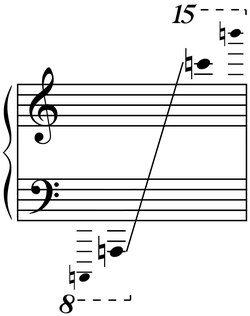
Key Facts

- Inventor: Bartolomeo Cristofori developed the instrument in the early 18th century.
- Standard Range: Most modern pianos feature 88 keys (seven octaves plus a minor third).
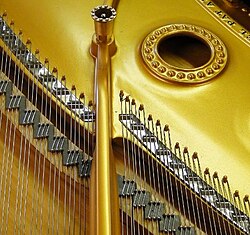
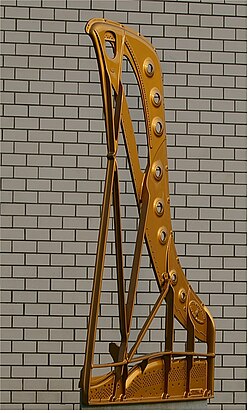
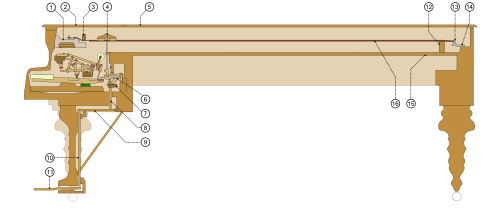
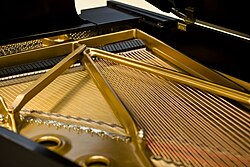
- Structural Core: Modern pianos use a cast iron frame (plate) to withstand string tension exceeding 20 tons.
- Key Innovation: The double escapement action allows for rapid repetition of notes.
- Weight: Instruments range from small uprights (approx. 136 kg) to massive concert grands (up to 570 kg).
The Evolution of the Pianoforte
Early Invention and the Bach Era
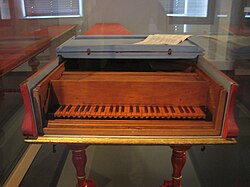
The piano was invented by Bartolomeo Cristofori in the early 1700s. Early versions were scrutinized by the great composers of the time. In the 1730s, Johann Sebastian Bach expressed dissatisfaction with Gottfried Silbermann's early instruments, noting that the higher notes were too soft. However, by 1747, Bach approved of improved models and even helped sell them, using the phrase "Instrument: piano et forte genandt" to highlight the instrument's dynamic range.
Expanding the Range and Action
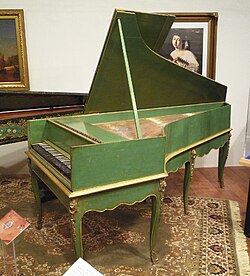
By the late 18th and early 19th centuries, manufacturers began expanding the keyboard's range. Broadwood was the first firm to exceed five octaves, reaching six octaves by 1810 and seven by 1820. This expansion allowed composers like Ludwig van Beethoven to utilize more notes in their later compositions.
Innovation shifted to Paris in the 1820s. In 1821, Sébastien Érard invented the double escapement action. This mechanism uses a repetition lever (balancier) that allows a note to be repeated without the key returning to its full resting position, a feature essential for the virtuosic style of Franz Liszt.
Material and Structural Breakthroughs
To support increasing string tension and create a more powerful sound, the industry moved toward the cast iron frame (or plate). Patented in various forms between 1821 and 1843, the iron frame acts as a bulwark against tension that can exceed 180 kilonewtons in modern grands.
Other critical improvements included:
- Felt Hammers: Introduced by Jean-Henri Pape in 1826, felt replaced leather and cotton for a more consistent tone.
- Steel Wire: The transition from iron to cast steel wire in the 1830s and 1840s provided superior strength and stability.
- Sostenuto Pedal: Invented in 1844 by Jean-Louis Boisselot, this pedal allows for selective sustain of specific notes.
Types of Pianos and Design Variations
Acoustic Pianos
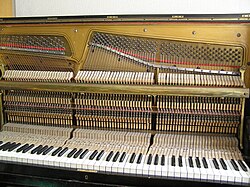
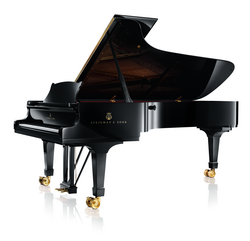
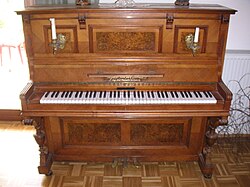
Acoustic pianos are generally categorized by their shape and the orientation of their strings.
| Category | Type | Approximate Size/Feature |
|---|---|---|
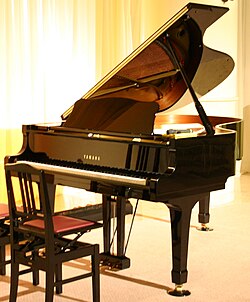
| Grand | Baby Grand | Around 1.5 m (4 ft 11 in) |
| Parlor/Boudoir Grand | 1.7 to 2.2 m (5 ft 7 in to 7 ft 3 in) | |
| Concert Grand | 2.2 to 3 m (7 ft 3 in to 9 ft 10 in) | |
| Upright | Studio Piano | 107 to 114 cm tall |
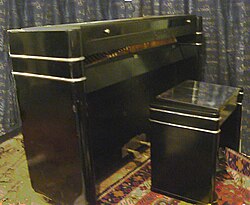
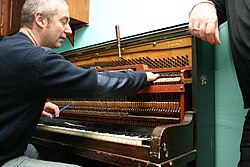
While grand pianos have horizontal strings, upright pianos feature strings perpendicular to the keys. Variations include the pianino (cottage upright) and the spinet, the latter of which uses a "drop action" to maintain keyboard height despite a shorter cabinet.
Electric and Digital Innovations
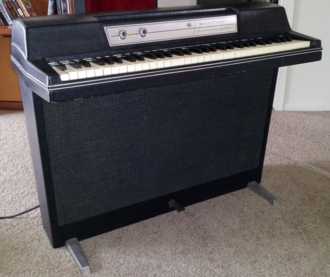
The 20th century introduced electronic alternatives. Amplified electric pianos appeared in 1929, followed by electronic pianos in the 1970s and digital pianos in the 1980s. Instruments like the Fender Rhodes use metal tines and electromagnetic pickups rather than traditional strings, making them staples of jazz fusion and rock music.
Anatomy and Construction
The Keyboard and Pedals
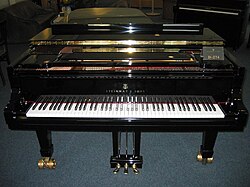
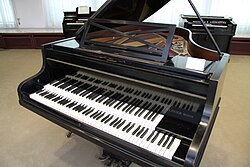
A standard modern piano consists of 88 keys: 52 white and 36 black. However, some manufacturers push these boundaries; Stuart & Sons created a 108-key model in 2018 and a 112-key model delivered in 2024.
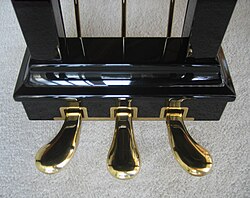
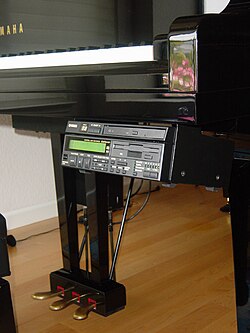
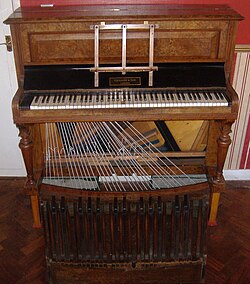
Pedals modify the sound in various ways. The most common are the una corda (soft), sostenuto, and sustain (damper) pedals. Historically, some pianos featured specialized pedals, such as the "Orchestral" pedal by Wing and Son, which used beads to mimic the sound of a mandolin or harp.
Materials and Weight
Pianos are heavy due to the combination of hardwood (maple, beech, or hornbeam) and metal. A Steinway Model D weighs 480 kg, while the Fazioli F308 is one of the heaviest on the market at 570 kg. Modern manufacturing has also introduced synthetic materials, such as Teflon, to reduce friction in the action mechanism.
Frequently Asked Questions

Who invented the piano?
The piano was invented by Bartolomeo Cristofori in Italy during the early 18th century.
What is the difference between a grand and an upright piano?
The primary difference is the orientation of the strings and action. Grand pianos have horizontal strings and a gravity-based action, while upright pianos have vertical strings and a spring-based action to save space.
What does the double escapement action do?
Invented by Sébastien Érard, the double escapement action allows a pianist to repeat a note rapidly without the key having to return to its original resting position.
Why do pianos have a cast iron frame?
The cast iron frame, or plate, is necessary to support the immense tension of the strings, which can exceed 20 tons in a modern concert grand, preventing the wooden structure from collapsing.
How many keys does a standard piano have?
A standard modern piano has 88 keys, though some specialized instruments range from 85 to as many as 112 keys.