Phrygians: The Indo-European Architects of Ancient Anatolia
The Phrygians were an ancient Indo-European speaking people who established a sophisticated presence in central-western Anatolia (modern-day Turkey). While ancient Greek authors often used "Phrygian" as a broad umbrella term for a diverse ethno-cultural complex rather than a single tribe, their impact on the music, fashion, and politics of the ancient world was profound.
Their origins are a subject of historical debate. According to Herodotus, they originally dwelt in the southern Balkans as the Bryges before migrating to Anatolia via the Hellespont. While many historians suggest a major migration around 1200 BC, some archaeologists argue the movement occurred much earlier and in multiple stages.
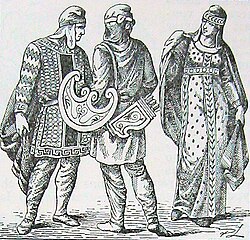
Key Facts
- Location: Central-western Anatolia (modern Turkey).
- Language: An Indo-European language closely related to Greek.
- Capital: Gordium, the center of the Phrygian state in the 8th century BC.
- Famous Figures: King Midas, known in myth for the "golden touch."
- Cultural Legacy: The Phrygian cap and the aulos (double-pipe reed instrument).
- Religion: Worship of the goddess Cybele.
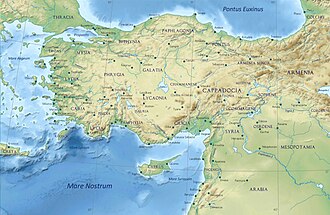
The Rise and Fall of the Phrygian State
Early Foundations and the Kingdom of Midas
The transition from tribal villages to a centralized state occurred in the 8th century BC, with the capital established at Gordium. During this era, the Phrygians developed a distinct pottery style known as Polished Ware. Under kings named Gordias and Midas, the kingdom maintained robust trade links with Greek neighbors to the west and eastern powers.
Assyrian records from 709 BC identify a King Mita of the Mushki as an ally of Sargon of Assyria, a figure widely identified as the legendary King Midas. This period marked the height of Phrygian independence and regional influence.
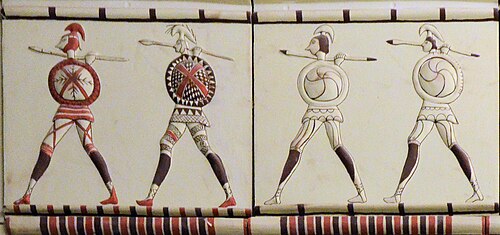
Conquest and Foreign Dominion
The stability of the Phrygian state was shattered around 690 BC by an invasion of the Cimmerians. Following this upheaval, Phrygia was briefly absorbed by the neighboring Lydian Empire. Under the wealthy King Croesus (reigned 560–546 BC), Phrygia remained part of a Lydian realm that extended to the Halys River.
The geopolitical landscape shifted again in 546 BC when Cyrus the Great conquered Croesus, bringing Phrygia under Persian rule. The Persians implemented administrative reforms, dividing the region into two satrapies (provinces): Greater Phrygia and Hellespontine Phrygia (Lesser Phrygia), the latter with its capital at Dascylium. The region later passed through the hands of Alexander the Great, the Attalids of Pergamon, and finally the Roman Empire.
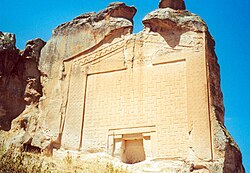
Cultural and Linguistic Legacy
The Phrygian Language
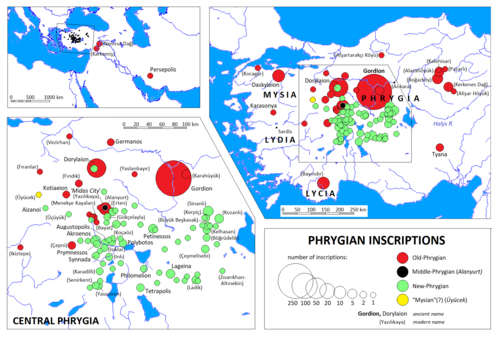
The Phrygian language is a member of the Indo-European family. While early scholars categorized it as a satem language (similar to Armenian), modern consensus identifies it as a centum language, making Greek its closest relative. Research indicates that 34 of 36 recorded Phrygian isoglosses (linguistic features) are shared with Greek, leading some scholars to propose a common "Proto-Greco-Phrygian" ancestral stage.
Music, Art, and Symbolism
Phrygia significantly influenced early Greek music. The Phrygian mode was regarded by the Greeks as a warlike musical scale. They also introduced the aulos, a double-piped reed instrument. In mythology, King Midas was said to have been tutored in music by Orpheus.
One of the most enduring symbols of the culture is the Phrygian cap. In classical Greek art, this headgear was used to identify non-Greeks, such as the Trojan Paris. Centuries later, this cap evolved into the "liberty cap" used by revolutionaries in France and the United States.
Religion
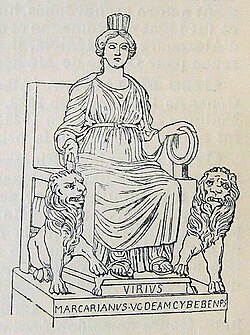
The Phrygians are closely associated with the worship of the goddess Cybele, a powerful deity of nature and fertility whose cult eventually spread throughout the Greco-Roman world.
Summary of Phrygian History
| Period/Era | Key Event/Status | Dominant Power |
|---|---|---|
| c. 1200–1180 BC | Migration from Balkans (Bryges) to Anatolia | Independent Tribes |
| 8th Century BC | Establishment of state at Gordium | Phrygian Kingdom |
| c. 690 BC | Cimmerian Invasion | Cimmerian Raiders |
| 7th–6th Century BC | Absorption into Lydian Empire | Lydian Empire |
| 546 BC onwards | Persian Conquest and Satrapies | Persian Empire |
| Hellenistic/Roman | Successive rule by Alexander and Rome | Macedonian/Roman Empire |
Frequently Asked Questions
Who were the Phrygians?
The Phrygians were an Indo-European speaking people who lived in central-western Anatolia. They are best known for their powerful kingdom centered at Gordium and their influence on Greek music and culture.
Is the legendary King Midas a real person?
Yes, historical evidence suggests he existed. Assyrian inscriptions from 709 BC mention a King Mita of the Mushki, who is widely identified by historians as King Midas of Phrygia.
What is the significance of the Phrygian cap?
Originally a cultural marker of the Phrygians and other non-Greeks in antiquity, the cap later became a symbol of freedom and liberty, appearing in the iconography of the French and American Revolutions.
How is the Phrygian language related to other languages?
Phrygian is an Indo-European language. While once thought to be close to Armenian, modern linguistic research shows it is most closely related to Greek, sharing the vast majority of its recorded linguistic features.
When did the Phrygian culture disappear?
While the Phrygian state fell centuries earlier, the language persisted in some forms until the 5th century AD and likely became extinct by the 7th century AD.