Phoenix: The Dynamic Evolution of the Valley of the Sun
Known affectionately as the Valley of the Sun, Phoenix is the capital of Arizona and a sprawling metropolis that serves as the heart of the American Southwest. From its origins as a small settlement in the Sonoran Desert to its current status as one of the most populous cities in the United States, Phoenix represents a triumph of urban planning and adaptation in an arid environment.
Today, Phoenix is a hub of economic diversity, cultural richness, and architectural innovation, balancing its rapid urban growth with the rugged beauty of the surrounding desert landscapes.
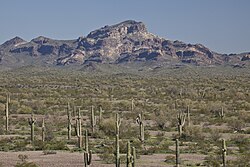
Key Facts

- Status: Capital of Arizona and the most populous city in the state.
- Population: Approximately 1,608,139 (2020 Census), with a metro population of over 4.8 million.
- Geography: Located in Maricopa County within the Sonoran Desert.
- Economy: A diverse GDP of $398.129 billion (2023 metro area).
- Climate: Characterized by extreme summer heat and mild winters.
- Nickname: The Valley of the Sun.
History and Growth
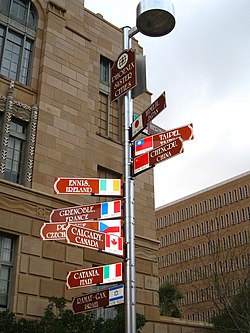
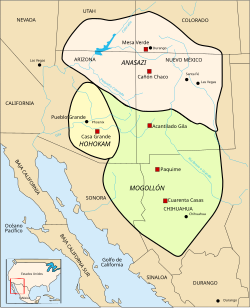
The history of Phoenix is one of resilience and expansion. Long before the modern city, the region was inhabited by the Hohokam people, who developed sophisticated irrigation systems to farm the desert.
The modern city was settled in 1867 and officially incorporated on February 25, 1881. Founded by Jack Swilling and named after the mythical phoenix bird—symbolizing a city rising from the ruins of the Hohokam canals—the settlement grew steadily through the early 20th century.
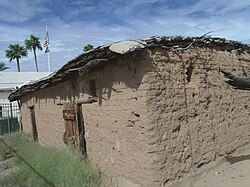
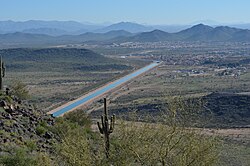
Following World War II, Phoenix experienced explosive growth. The introduction of widespread air conditioning and the development of the Central Arizona Project (CAP), a massive canal system designed to bring water from the Colorado River, allowed the city to expand rapidly into the desert.
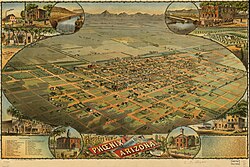
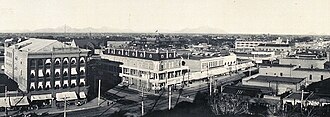
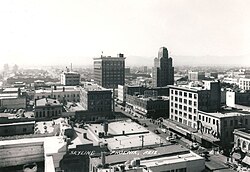
By the mid-20th century, the cityscape shifted from a small agricultural town to a major urban center, as seen in the development of Central Avenue and the rising skyline of the 1940s.
Geography and Climate
Phoenix is situated in the Sonoran Desert, an ecosystem known for its unique flora and fauna. The city is characterized by its flat valley floor punctuated by dramatic mountain ranges, such as the South Mountains and Camelback Mountain.
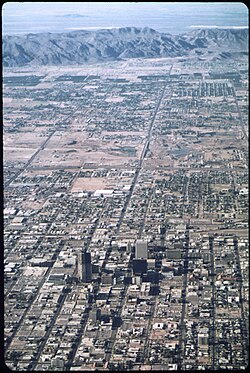
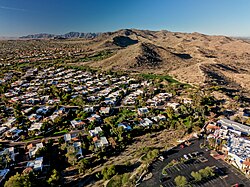
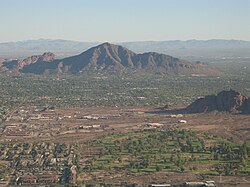
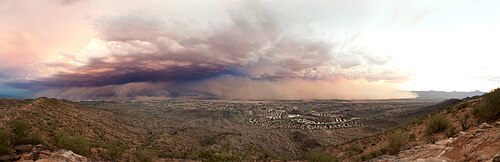
The climate is arid and extreme. Summer temperatures frequently exceed 110°F, while winters remain mild. A notable weather phenomenon in the region is the haboob—a massive wall of dust pushed by monsoon thunderstorms that can sweep across the valley.
Climate Data Summary
| Metric | Winter (Jan) | Summer (Jul) | Annual Average |
|---|---|---|---|
| Mean Maximum Temp | 78.2°F (25.7°C) | 114.6°F (45.9°C) | 115.7°F (Record High) |
| Mean Minimum Temp | 36.0°F (2.2°C) | 74.4°F (23.6°C) | 33.8°F (Record Low) |
| Avg Precipitation | 0.87 in (22 mm) | 0.93 in (24 mm) | Variable by month |
| Sunshine Hours | 256.0 | 378.5 | 3,871.6 (Annual) |
Demographics and Society
Phoenix is a multicultural city with a diverse population. According to the 2020 Census, the city's racial composition includes a significant Hispanic or Latino population (41.1%) and a White population (49.7%, with 42.2% non-Hispanic). Other groups include Black or African Americans (7.8%), Asians (4.1%), and Native Americans (2.6%).
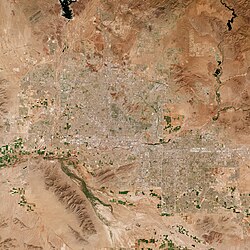
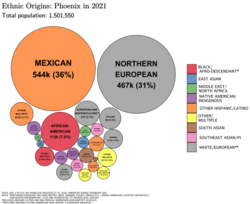
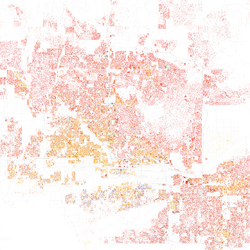
The city is organized into several urban villages to manage its vast scale, with economic disparities visible in household income and poverty concentrations across the metro area.
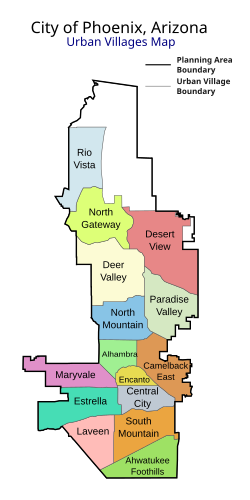
![Median household income across metro Phoenix; the darker the green, the higher the income.[142]](/images/fc/e4/fce4665f4bbd116767905c27ae40bd2c15a6989092fe2e46186173fe83951c4e.png)
![Percent of people living in poverty across metro Phoenix; the darker the red, the higher the concentration of poverty.[143]](/images/ea/fb/eafbbd436417368fe6f517e2a61405b6dc7069bf737a5f8853d19712c2d72f6f.png)
Economy and Employment
The economy of Phoenix is robust, with a metro GDP of $398.129 billion as of 2023. The employment landscape is dominated by healthcare, government, and logistics.
As of 2024, the top employers in the city include:
- Banner Health: The largest employer with 46,602 employees.
- State of Arizona: 41,531 employees.
- Amazon: 40,000 employees.
- Walmart: 37,648 employees.
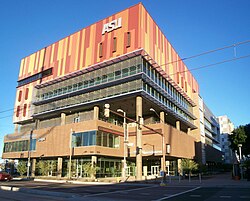
- Arizona State University: 37,402 employees.
Culture, Arts, and Recreation
Phoenix offers a rich array of cultural experiences, from world-class museums to unique architectural landmarks. The Musical Instrument Museum houses over 15,000 instruments, while Taliesin West serves as a testament to the genius of Frank Lloyd Wright.
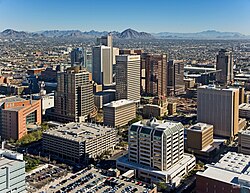
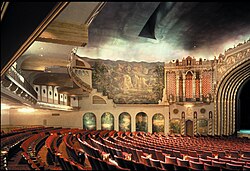
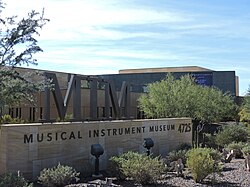

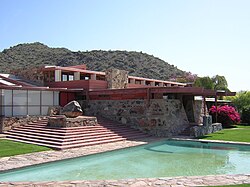
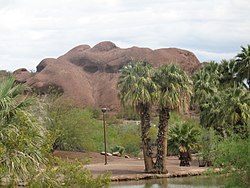
For nature lovers, Papago Park provides access to the Desert Botanical Garden and the Phoenix Zoo, offering a glimpse into the region's natural heritage.
Professional Sports
Phoenix is a major sports destination, hosting several professional franchises:
- Arizona Cardinals (NFL): Play at State Farm Stadium.
- Arizona Diamondbacks (MLB): Play at Chase Field.
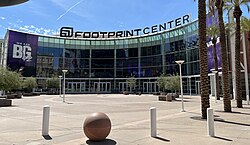
- Phoenix Suns (NBA) & Phoenix Mercury (WNBA): Play at the Mortgage Matchup Center.
- Phoenix Rising FC (USLC): Play at the Phoenix Rising Soccer Stadium.

Government and Infrastructure
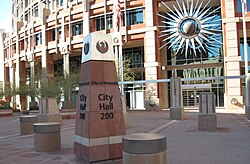
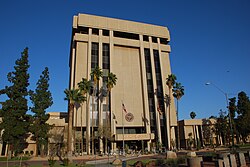
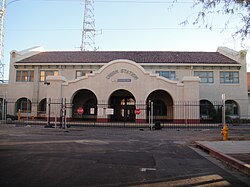
As the state capital, Phoenix is the center of Arizona's political life. The Arizona State Capitol and the Executive Tower house the state's administrative functions, while Phoenix City Hall manages municipal affairs under a council-manager government.

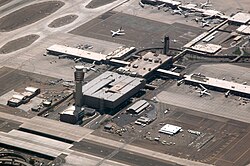
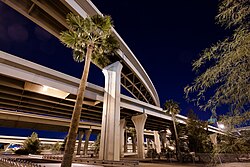
The city's infrastructure is designed for high mobility. Phoenix Sky Harbor International Airport is a primary gateway to the Southwest, and the Valley Metro Rail provides essential urban transit. The city is also bisected by major freeways, including the complex "Stack" interchange of Interstates 10 and 17.

Water security is managed through the Central Arizona Project (CAP) canal, which is vital for sustaining the city's population and industry in the desert.
Frequently Asked Questions
What is the "Valley of the Sun"?
The Valley of the Sun is the popular nickname for the Phoenix metropolitan area, referring to its location in a desert valley and its abundance of sunny days throughout the year.
Who founded the city of Phoenix?
Jack Swilling is credited with founding the modern settlement of Phoenix in 1867.
What is a haboob?
A haboob is a violent dust storm common in the Phoenix area, typically occurring during the monsoon season when strong winds push a wall of dust across the landscape.
What are the primary economic drivers in Phoenix?
The economy is driven by a mix of healthcare (led by Banner Health), government services (State of Arizona), education (Arizona State University), and logistics/retail (Amazon and Walmart).
Which professional sports teams are based in Phoenix?
Phoenix is home to the Arizona Cardinals (NFL), Arizona Diamondbacks (MLB), Phoenix Suns (NBA), Phoenix Mercury (WNBA), and Phoenix Rising FC (USLC).
How does Phoenix get its water in the desert?
While it relies on local groundwater, a significant portion of its water is supplied by the Central Arizona Project (CAP), a canal system that transports water from the Colorado River.