Exploring Arizona: The Grand Canyon State
Known by the evocative nicknames The Grand Canyon State, The Copper State, and The Valentine State, Arizona is a land of dramatic landscapes, rich cultural heritage, and rapid urban growth. From the depths of the Colorado River to the heights of Humphreys Peak, the state offers a diverse tapestry of environments and histories.
Key Facts

- Capital: Phoenix
- Statehood: Admitted to the Union on February 14, 1912
- Motto: Ditat Deus ("God enriches")
- Total Area: 113,998 sq mi (6th largest in the U.S.)
- Population: Approximately 7,623,818 (2025 estimate)
- Highest Point: Humphreys Peak (12,638 ft)
Geography and Climate

Arizona spans a vast area, stretching from 31°20′ N to 37° N latitude. Its geography is defined by extreme elevations, ranging from just 72 feet at the Colorado River near the Mexico border to 12,638 feet at Humphreys Peak.

The state's climate varies significantly depending on the region. While much of the state experiences arid conditions, the diverse topography creates various microclimates. For instance, while Phoenix and Yuma experience intense summer heat, often exceeding 100°F, higher elevations like Flagstaff remain much cooler.


Regional Climate Comparison
| City | July Max (°F) | July Min (°F) | December Max (°F) | December Min (°F) |
|---|---|---|---|---|
| Phoenix | 106 | 83 | 66 | 19 |
| Tucson | 100 | 74 | 65 | 18 |
| Yuma | 107 | 82 | 68 | 20 |
| Flagstaff | 81 | 51 | 42 | −8 |
Demographics and Culture

Arizona is a culturally diverse state with a significant Hispanic or Latino population, which accounted for 30.7% of the population in recent census data. The state's ancestry is deeply rooted in Mexican, German, English, and Irish lineages.

The state is also home to many Native American tribes, including the Navajo, Apache, Akimel O'odham, and Tohono O'odham. The Navajo Nation, in particular, maintains a distinct presence within the state's borders.

Religious diversity is also a hallmark of Arizona. While many residents identify as unaffiliated (31%), there are significant populations of Protestants, Catholics, and members of The Church of Jesus Christ of Latter-day Saints.
Language and Ethnicity
While English is the primary language, Spanish is widely spoken, used by approximately 19.5% of the population as of 2010. Other indigenous languages, such as Navajo, also play a role in the state's linguistic landscape.
History and Governance

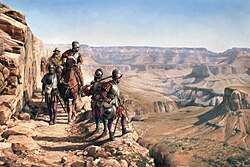
Before becoming the 48th state in 1912, Arizona was organized as a territory. Its history is marked by various eras, from early Spanish expeditions to the complexities of the 20th century.


Today, Arizona is governed by a state legislature consisting of a Senate (upper house) and a House of Representatives (lower house). The executive branch is led by the Governor, currently Katie Hobbs (D).

Political Landscape
As of 2026 voter registration data, the state shows a competitive political environment, with Republican voters making up 35.39% and Democratic voters representing 28.11%.

Economy and Urbanization

Arizona's economy is driven by several key sectors, including trade, transportation, and utilities, as well as education and health services. Major private employers include healthcare giants like Banner Health and retail leaders.

Urbanization is concentrated heavily in the Phoenix metropolitan area. Maricopa County is the state's most populous county, housing the capital, Phoenix, and several rapidly growing cities like Mesa, Chandler, and Gilbert.


Major Cities by Population
| Rank | Name | County | Population |
|---|---|---|---|
| 1 | Phoenix | Maricopa | 1,624,569 |
| 2 | Tucson | Pima | 543,242 |
| 3 | Mesa | Maricopa | 509,475 |
| 4 | Chandler | Maricopa | 279,458 |
| 5 | Gilbert | Maricopa | 273,136 |
Education and Sports

Higher education is a cornerstone of Arizona's identity, with major institutions including Arizona State University, the University of Arizona, and Northern Arizona University.


The state also boasts a vibrant sports culture, hosting professional teams in the NFL, MLB, NBA, and WNBA, as well as various soccer and hockey clubs.


Frequently Asked Questions


What is the capital of Arizona?
The capital of Arizona is Phoenix, which is also the state's largest city.
When did Arizona become a state?
Arizona was admitted to the Union on February 14, 1912, becoming the 48th state.
What are the major industries in Arizona?
Key employment sectors include trade, transportation, utilities, education, health services, government, and professional services.
What is the highest point in Arizona?
The highest elevation in the state is reached at Humphreys Peak, which stands at 12,638 feet.
Which Native American tribes are located in Arizona?
Arizona is home to many tribes, including the Navajo, Apache, Akimel O'odham, Tohono O'odham, Yaqui, and Hopi, among others.