Philosophical Transactions: The History of the Royal Society's Scientific Journal
The Philosophical Transactions stands as one of the most influential publications in the history of science. As a multidisciplinary journal published by the Royal Society, it has served for over three centuries as a primary vehicle for the dissemination of scientific discovery, evolving from a personal venture by a dedicated secretary into a professionalized global institution.
Key Facts
- Founded: March 6, 1665, in London.
- Publisher: The Royal Society.
- First Editor: Henry Oldenburg.
- Scope: Multidisciplinary science.
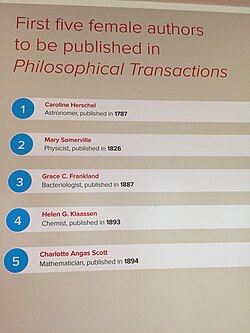
- Milestone: Caroline Herschel was the first and only woman published in the journal during the 18th century (1787).
- Digital Transition: First published online in 1997.
Origins and Early History
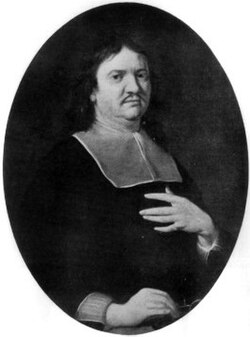
The journal was launched on March 6, 1665, edited by Henry Oldenburg, the first secretary of the Royal Society. Its original, expansive title was "Philosophical Transactions, Giving some Accompt [sic] of the present Undertakings, Studies, and Labours of the Ingenious in many considerable parts of the World."
In its infancy, the journal was a financial risk. Oldenburg published the first 136 issues at his own personal expense, with an agreement that he could keep any profits. However, the publication performed poorly financially, barely covering his rent in Piccadilly. Following Oldenburg's death in 1677, the editorial role became an unofficial responsibility passed between successive secretaries.
Between 1679 and 1682, the journal was briefly renamed Philosophical Collections under the editorship of Robert Hooke before reverting to its original title.
Evolution of Editorial Control
The Eighteenth Century
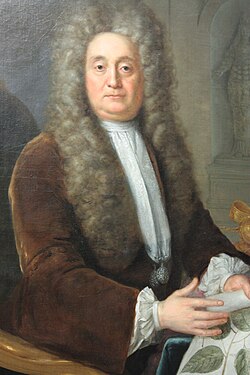
By the 1700s, the Royal Society took over management, though secretaries still handled the logistics of printing and bookselling. Editorial decisions were managed by the Committee of Papers, which typically decided whether to publish a work based on 300 to 500-word abstracts. Despite its prestige, the journal remained a financial burden, often costing over £300 annually to produce while recouping less than £150.
The Nineteenth Century and the Rise of Peer Review
The early 19th century saw a push for reform to protect the society's reputation from "gentleman dilettantes." This led to the demand for systematic, expert evaluation of papers by named referees—a precursor to modern peer review (the process of having a scholarly work evaluated by experts in the same field before publication).
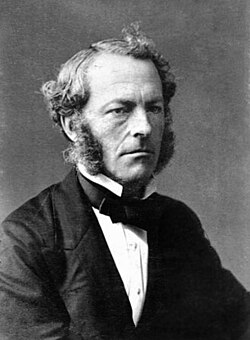
Sir George Gabriel Stokes, secretary from 1854, was instrumental in formalizing this refereeing process. His influence over the journal's content lasted until his presidency ended in 1890, after which editorial practices became more collective.
Modernization and Global Expansion
In the 20th century, the journal shifted toward standardization. By 1896, authors were encouraged to submit typed manuscripts on foolscap-folio paper to reduce errors. Between 1907 and 1914, the society even attempted to limit production costs by requiring authors to reduce the number of tables or illustrations.
Financial stability finally arrived after World War II. By 1948, the journal began regularly ending the year with a surplus, driven largely by institutional subscriptions from universities, government bodies, and industry. By the 1970s, the journal had a massive international reach; in 1973, 50% of institutional subscriptions came from the United States.
The demographic of contributors also shifted. While 69% of authors were from the UK in 1974, the proportion of non-UK authors rose to approximately 50% by the early 2000s and exceeded 80% by 2017.
Notable Contributors and Legacy
The Philosophical Transactions has published some of the most significant names in science, including Isaac Newton, Anton van Leeuwenhoek, Benjamin Franklin, Michael Faraday, James Clerk Maxwell, Alan Turing, and Stephen Hawking.
Some contributions are remembered for their errors as much as their insights. Charles Darwin's 1837 paper on the "parallel roads" of Glen Roy, which he argued were of marine origin, was later proven to be the result of ice-age lakes. Darwin later described the paper as "one long gigantic blunder." Other pioneers, such as Dorothy Crowfoot Hodgkin, used the journal to share breakthroughs in X-ray crystallography to elucidate the structures of insulin and Vitamin B-12.
| Era | Editorial Model | Financial Status | Key Characteristic |
|---|---|---|---|
| 17th Century | Personal venture (Oldenburg) | Loss-making / Personal expense | Founding and early experimentation |
| 18th Century | Committee of Papers | Subsidized by Royal Society | Abstract-based selection |
| 19th Century | Formalized Refereeing (Stokes) | High production costs | Introduction of expert peer review |
| 20th Century+ | Professional staff & Associate Editors | Institutional surplus | Globalized authorship and digital access |
Public Access and Cultural Impact
The journal's historical archives have occasionally been the center of controversy regarding open access. In 2011, programmer Greg Maxwell released nearly 19,000 articles published before 1923 via The Pirate Bay, arguing that these public domain works should not be hidden behind a paywall.
Beyond science, the journal has appeared in literature, mentioned in Nathaniel Hawthorne's "The Birthmark" and H.G. Wells' The Time Machine (1895).
Frequently Asked Questions
Who founded the Philosophical Transactions?
The journal was founded by Henry Oldenburg, the first secretary of the Royal Society, who published the first issue on March 6, 1665.
How did the peer review process start in the journal?
Reformers in the late 1820s and early 1830s pushed for expert evaluation to protect the society's reputation. This was later formalized into a systematic refereeing process by George Gabriel Stokes during his tenure as secretary starting in 1854.
Was the journal always profitable?
No. For centuries, it was a money-losing proposition. It only began to regularly generate a surplus after 1948, thanks to a surge in institutional subscriptions.
Who was the first woman published in the journal?
Caroline Herschel became the first woman published in the Philosophical Transactions in 1787, and she remained the only woman published in the journal throughout the 18th century.
How has the authorship of the journal changed over time?
Initially dominated by British scientists (69% in 1974), the journal has become increasingly international. By 2017, more than 80% of the authors were from outside the United Kingdom.