Royal Society: The UK's National Academy of Science
The Royal Society serves as the national academy of science for the United Kingdom, acting as a cornerstone of scientific inquiry and excellence for over three centuries. Founded on the principle of empirical evidence, the society is dedicated to the improvement of natural knowledge and the promotion of scientific achievement globally.
At the heart of the society is its famous motto, Nullius in verba, which translates to "Take nobody's word for it." This philosophy emphasizes the importance of experimentation and observation over blind adherence to authority, a standard that continues to guide its members today.
Key Facts
- Founded: 28 November 1660.
- Headquarters: London, SW1, United Kingdom.
- Current President: Paul Nurse.
- Membership: Approximately 1,600 Fellows and 225 Foreign Members.
- Patron: King Charles III.
- Core Mission: The improvement of natural knowledge.
History and Evolution
Founding and Early Years
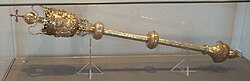
The society's origins date back to 1660. Following early gatherings, Sir Robert Moray announced royal approval, leading to the first royal charter signed on 15 July 1662, which established the "Royal Society of London" with Lord Brouncker as its first president.
A second charter was signed on 23 April 1663, expanding the name to "the Royal Society of London for the Improvement of Natural Knowledge." During this period, Robert Hooke was appointed as the Curator of Experiments. Since its inception, every British monarch has served as the society's patron.
Notable Figures and Milestones
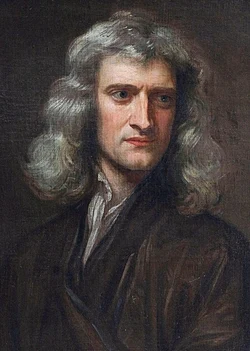
Throughout the centuries, the society has been led and shaped by some of the most influential minds in science. Sir Isaac Newton, elected as a Fellow in 1672, later served as President from 1703 to 1727.
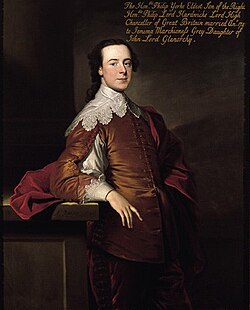
The 18th century saw the influence of the "Hardwicke Circle," led by Lord Hardwicke, who dominated the society's politics during the 1750s and 1760s.
In the 20th century, the society underwent significant social changes. Following a 1944 statutory amendment stating that women were not ineligible for candidacy, the first female Fellows—Marjory Stephenson and Kathleen Lonsdale—were elected on 22 March 1945. This decision was reached via a postal ballot during World War II, with 336 Fellows in favor and 37 opposing.
Governance and Membership
The Royal Society is governed by a Council, which is chaired by the President. Both the President and the Council members are elected by the Fellows. The basic members of the society are the Fellows, who are themselves elected by existing Fellows.
Fellowship Tiers
Membership is highly prestigious and limited. As of 2020, there are approximately 1,700 Fellows. Each year, up to 73 new Fellows are appointed from a pool of roughly 800 candidates. Those elected are entitled to use the postnominal title FRS (Fellow of the Royal Society).
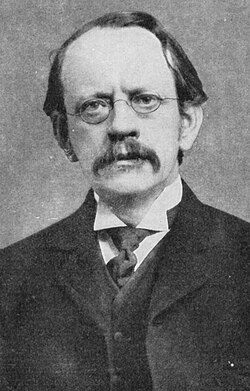
Additionally, the society appoints up to 24 Foreign Members annually from the same candidate pool, who use the title ForMemRS (Foreign Member of the Royal Society). Other categories include Royal Fellows and Honorary Fellows.

Current Leadership
The society's current administrative structure includes:
- President: Paul Nurse (succeeded Sir Adrian Smith in December 2025).
- Treasurer: Jonathan Keating.
- Foreign Secretaries: Mark Walport and Alison Noble (jointly).
- Biological Secretary: Sir David Baulcombe.
- Physical Secretary: Sheila Rowan.
Scientific Publishing and Facilities
Academic Journals
The society is a major contributor to scientific literature through Royal Society Publishing. Its most historic publication, the Philosophical Transactions of the Royal Society, first appeared in 1665 and remains one of the world's oldest scientific journals.
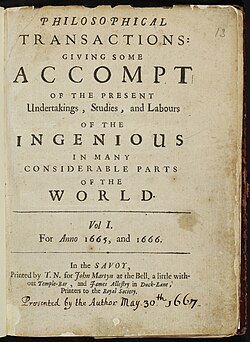
Current publications include:
- Philosophical Transactions of the Royal Society A (Mathematics and Physical Sciences)
- Philosophical Transactions of the Royal Society B (Biological Sciences)
- Proceedings of the Royal Society A and B
- Biology Letters and Open Biology
- Royal Society Open Science
- Journal of the Royal Society Interface and Interface Focus
- Notes and Records
- Biographical Memoirs of Fellows of the Royal Society
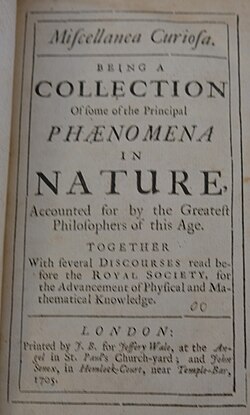
Premises and Centers
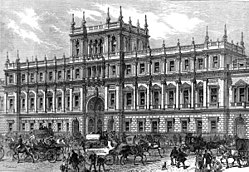
The society has occupied several notable locations in London. Between 1873 and 1967, it was based at Burlington House.
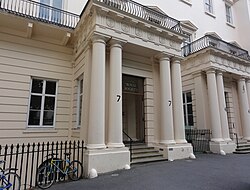
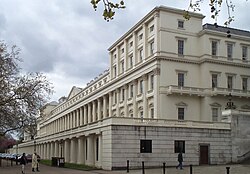
The current headquarters are located at 6–9 Carlton House Terrace, London.
From 2010 to 2020, the society operated the Kavli Royal Society International Centre at Chicheley Hall near Milton Keynes. This venue, funded in part by the Kavli Foundation, hosted residential science seminars before the building was sold in 2021.
Summary of the Royal Society
| Category | Details |
|---|---|
| Founded | 1660 |
| Motto | Nullius in verba ("Take nobody's word for it") |
| Fellowship Titles | FRS (Fellow), ForMemRS (Foreign Member) |
| Governance | Council (chaired by the President) |
| Key Publications | Philosophical Transactions, Proceedings |
| Headquarters | Carlton House Terrace, London |
Frequently Asked Questions
What does the motto "Nullius in verba" mean?
The motto translates to "Take nobody's word for it," reflecting the society's commitment to empirical evidence and the scientific method over tradition or authority.
Who are the Fellows of the Royal Society?
Fellows are scientists elected by their peers based on their contributions to science. They are entitled to use the postnominal letters FRS.
When were women first admitted to the Royal Society?
The first female Fellows, Marjory Stephenson and Kathleen Lonsdale, were elected on 22 March 1945, following a statutory change in 1944.
What is the Philosophical Transactions of the Royal Society?
Established in 1665, it is one of the oldest scientific journals in the world and continues to publish research in biological, physical, and mathematical sciences.
How is the Royal Society governed?
The society is governed by a Council, which is chaired by the President. Both the Council and the President are elected by the Fellows from among their own number.