Pheromones: Functional Categorization and Biological Roles
Pheromones are chemical signals released by organisms to communicate with members of their own species. These substances trigger specific behavioral or physiological responses, acting as a sophisticated biological language that governs everything from mating and foraging to defense and territoriality. Because these signals are highly specific, they are often used in ecological research and sustainable pest management.
Key Facts
- Aggregation pheromones help organisms find mates, overcome host defenses through mass attack, or defend against predators.
- Alarm pheromones trigger immediate reactions, such as flight in aphids or aggression in bees and ants.
- Trail pheromones are used by social insects like ants and wasps to guide colony members to food or new nests.
- Sex pheromones signal breeding availability and can be detected by some insects from up to 10 kilometers away.
- Epideictic pheromones act as markers to discourage other females from laying eggs in the same location.
- Territorial pheromones define boundaries and identity, often deposited via urine in mammals.
Aggregation Pheromones
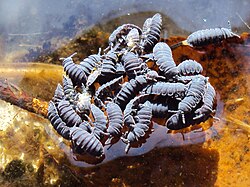
An aggregation occurs when a group of individuals—of one or both sexes—gathers at a single location. Aggregation pheromones facilitate this by attracting conspecifics (members of the same species) to a specific site. While most sex pheromones are produced by females, some male-produced attractants function as aggregation pheromones by drawing both sexes to a calling site.
These chemicals are found across various insect orders, including Coleoptera (beetles), Collembola (springtails), Diptera (flies), Hemiptera (true bugs), Dictyoptera (cockroaches and termites), and Orthoptera (grasshoppers and crickets).
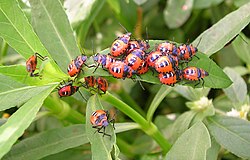
In agriculture, these pheromones are vital for non-toxic pest suppression. They are effective at very low concentrations and are used to manage pests such as the boll weevil (Anthonomus grandis), the pea and bean weevil (Sitona lineatus), and stored product weevils like Sitophilus zeamais, S. granarius, and S. oryzae.
Alarm Pheromones
Alarm pheromones are volatile substances released during a predator attack to alert others. In aphids, this triggers flight, whereas in ants, bees, termites, and wasps, it triggers aggression. For example, Vespula squamosa and Polistes exclamans use these signals to warn the colony of incoming threats.
Interestingly, plants also utilize alarm pheromones. When grazed, certain plants emit chemicals that prompt neighboring plants to produce tannins, which make the foliage less appetizing to herbivores.
Mammals also employ this mechanism. The pronghorn (Antilocapra americana) flares its white rump hair to expose glands that release 2-pyrrolidinone. This compound, which smells like buttered popcorn, can be detected by humans 20 to 30 meters downwind and warns other pronghorns of danger.
Territorial and Epideictic Pheromones
Territorial pheromones are used to mark boundaries and establish identity. Cats and dogs commonly deposit these via urine on landmarks. In social seabirds, the preen gland is used to mark nests and territory boundaries through behaviors previously categorized as displacement activity.
![Dogs communicate using pheromones and olfactory signals in urine.[20]](/images/c2/45/c245b4d3cb49e3fbca68bad34e909c05c326bea787e7ac0f4c498090f7c633b2.jpg)
Epideictic pheromones serve a different purpose, specifically regarding egg-laying. As observed by Fabre, some females deposit these substances near their clutches to signal to other females of the same species to lay their eggs elsewhere, reducing competition for the offspring.
Trail Pheromones
Social insects rely heavily on trail pheromones to coordinate group movement. Ants use volatile hydrocarbons to mark paths from a food source back to the nest. Because these chemicals evaporate quickly, the trail must be continuously renewed as long as the food is available.
Some species use more complex signaling. Pharaoh ants (Monomorium pharaonis) use repellent pheromones to mark trails that no longer lead to food, encouraging more efficient collective exploration. Similarly, the army ant Eciton burchellii uses pheromones to maintain foraging paths, and wasps like Polybia sericea use them to lead the colony to new nesting sites.
Beyond social insects, gregarious caterpillars, such as the forest tent caterpillar, utilize pheromone trails to achieve synchronized group movement.
Sex Pheromones
Sex pheromones primarily indicate a female's availability for breeding, though males may also emit signals regarding their species and genotype.

In the microscopic world, bacteria such as Bacillus subtilis and Streptococcus pneumoniae release chemicals to induce a "competent" state. Competence allows cells to undergo transformation, a sexual process where they incorporate DNA from other cells into their own genome. Eukaryotic microorganisms, including the yeast Saccharomyces cerevisiae and various fungi and algae, also use pheromones to promote sexual interaction.
Among higher animals, the range of sex pheromones is vast. Some lepidopterans (moths and butterflies) can detect mates from 10 kilometers away. In Tenebrio molitor (mealworm beetles), female preference is influenced by the nutritional condition of the male. In bees and wasps, such as R. marginata, some pheromones are used to suppress the sexual behavior of others to maintain a reproductive monopoly.
Other unique examples include sea urchins, which release pheromones to trigger the simultaneous ejection of sex cells across a colony, and homosporous ferns, which release antheridiogen to affect sex expression.
Summary of Pheromone Functions
| Pheromone Type | Primary Function | Example Organisms |
|---|---|---|
| Aggregation | Mass gathering for mating or defense | Boll weevil, Springtails |
| Alarm | Warning of predators/threats | Ants, Bees, Pronghorn |
| Trail | Navigation to food or nests | Pharaoh ants, Army ants |
| Sex | Attracting mates/synchronizing spawning | Moths, Sea urchins, Yeast |
| Territorial | Boundary marking | Dogs, Cats, Seabirds |
| Epideictic | Egg-laying site deterrence | Various fruit-laying insects |
Other Specialized Pheromones
Beyond the primary categories, pheromones serve various niche roles:
- Nasonov and Royal pheromones: Used by bees for colony organization.
- Calming pheromones: Used by mammals for appeasement.
- Necromones: Composed of oleic and linoleic acids, these allow crustaceans and hexapods to identify dead conspecifics.
- Suckling pheromones: TAA in rabbit milk induces suckling behavior in newborns.
Frequently Asked Questions
How do aggregation pheromones help in pest control?
Aggregation pheromones are used as ecologically selective, non-toxic tools to monitor or suppress pest populations, such as weevils, by attracting them to specific traps at very low concentrations.
What is the difference between territorial and epideictic pheromones?
Territorial pheromones mark the boundaries of a living organism's space (e.g., a dog's territory), while epideictic pheromones are specifically used to signal other females to avoid laying eggs in a particular spot.
How do plants use alarm pheromones?
When grazed by herbivores, some plants release alarm pheromones that signal neighboring plants to produce tannins, making the surrounding vegetation less palatable.
What is bacterial competence in the context of pheromones?
Competence is a physiological state induced by specific chemicals that allows bacteria to take up foreign DNA from their environment and incorporate it into their own genome through transformation.
Why must ant trail pheromones be continuously renewed?
Trail pheromones consist of volatile hydrocarbons that evaporate quickly; therefore, ants must continuously deposit new pheromones as they travel to keep the path active for the colony.