Pheromones: The Chemical Language of Nature
In the natural world, communication extends far beyond sight and sound. Many organisms rely on a sophisticated system of chemical signaling to convey critical information. These chemicals, known as pheromones, are substances secreted or excreted by an individual that trigger a specific social or physiological response in other members of the same species.
From the simplest unicellular prokaryotes to complex multicellular eukaryotes, pheromones serve as invisible messengers. While they are most extensively documented in insects, they are also utilized by various vertebrates, plants, and ciliates. The study of these signals falls under the field of chemical ecology, which examines how these substances influence the evolution and ecological functions of species.
Key Facts
- Definition: Chemical signals released by an organism to trigger a response in conspecifics (members of the same species).
- Scope: Used by a vast range of life, including bacteria, insects, vertebrates, and plants.
- First Characterization: Bombykol, released by female silkworms to attract mates, was the first chemically characterized pheromone.
- Mechanism: They affect the recipient's neurocircuits, autonomous nervous system, and can induce behavioral or physiological changes.
- Terminology: The term was coined in 1959 by Peter Karlson and Martin Lüscher, derived from the Greek words for "to bear" and "stimulating."
The Science and History of Pheromones
Before the term "pheromone" was officially coined in 1959, scientists like Jean-Henri Fabre, Joseph A. Lintner, and Karl von Frisch had already observed these phenomena, often referring to them as "alarm substances." Pheromones are sometimes classified as ecto-hormones because, unlike traditional hormones that act within a single body, pheromones act outside the organism to communicate with others.
These chemical messengers are transported through the environment and, upon detection, can trigger a variety of responses. These include hormone-mediated physiological changes, inflammatory signaling, immune system adjustments, or immediate behavioral shifts.
Functional Categorization
Pheromones are generally categorized by the specific purpose they serve within a population:
Social and Survival Signals
- Alarm Pheromones: Alert others to a threat, prompting defensive or evasive action.
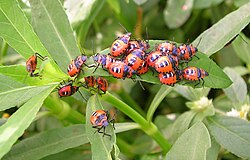
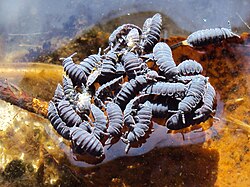
- Aggregation Pheromones: Bring individuals together for feeding, mating, or protection.
- Trail Pheromones: Used primarily by social insects to lead colony members to food sources.
- Territorial Pheromones: Mark boundaries to warn others to stay away.
- Epideictic Pheromones: Used to space out individuals, often to reduce competition for resources.
Reproductive and Specialized Signals
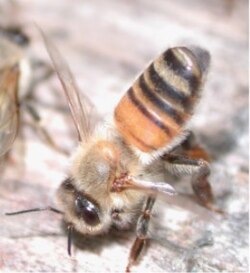
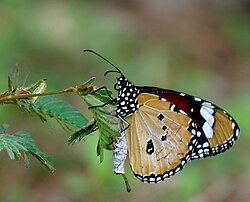
Sex pheromones are among the most potent, used to attract mates and ensure species propagation. Beyond reproduction, some species use specialized signals, such as the Nasonov pheromones used by worker bees to guide a swarm into a new hive, or royal pheromones used by queen bees.
In mammals, some pheromones act as calming or appeasement signals to reduce aggression or stress within a group.
![Dogs communicate using pheromones and olfactory signals in urine.[20]](/images/b8/82/b882b29553bb2fbfc802a9b68e191108887dd56bfa90c303be22628fdd0adb39.jpg)
Types and Detection Mechanisms
Scientists distinguish between pheromones based on the speed and nature of the response they elicit:
- Releasers: Trigger an immediate, innate behavioral response.
- Primers: Trigger a slower, long-term physiological change in the recipient.
- Signals: General chemical cues that convey information.
How Pheromones are Received
Organisms detect these chemicals through specialized receptors. In many animals, this occurs in the olfactory epithelium (the lining of the nasal cavity) or the vomeronasal organ, a specialized sensory organ used to detect non-volatile pheromones.
Applications and Controversies
The ability to synthesize pheromones has led to practical applications in human industry. Pheromone trapping is widely used in agriculture to monitor or control pest populations without the need for heavy pesticides. Similarly, pheromones are employed in animal husbandry to manage livestock behavior.
The existence of human pheromones remains a subject of significant scientific controversy. While some research points to the role of axillary steroids or vaginal aliphatic acids, many experts argue there is no peer-reviewed evidence of human pheromones that cause rapid, innate behavioral changes like those seen in insects.
Summary of Pheromone Characteristics
| Category | Primary Function | Example/Context |
|---|---|---|
| Alarm | Warning of danger | Ants alerting the colony to a predator |
| Aggregation | Grouping individuals | Bug nymphs clustering together |
| Trail | Navigation to resources | Ants marking a path to food |
| Sex | Mate attraction | Bombykol in female silkworms |
| Territorial | Boundary marking | Scent marking in various mammals |
Frequently Asked Questions
What is the difference between a pheromone and a hormone?
A hormone is a chemical messenger that acts inside the body of a single organism to regulate physiology. A pheromone is a chemical messenger secreted outside the body to communicate with other members of the same species.
Do humans have pheromones?
This is a debated topic. While some studies suggest certain steroids or acids may act as pheromones, there is a lack of consensus and hard evidence that they trigger the same kind of innate, rapid behavioral responses found in other animals.
What is bombykol?
Bombykol was the first pheromone to be chemically characterized. It is a sex pheromone released by the female silkworm to attract male mates.
How do pheromones help prevent inbreeding?
In some species, pheromones allow individuals to recognize the genetic relatedness of others, which helps them avoid mating with close relatives, thereby reducing inbreeding depression.
What is the vomeronasal organ?
The vomeronasal organ is a specialized sensory structure found in many vertebrates that is specifically tuned to detect pheromones, separate from the primary olfactory system used for general smells.