Phalangeriformes: The Diverse World of Possums, Gliders, and Cuscuses
Spanning from the Oligocene epoch to the present day, the suborder Phalangeriformes represents one of the most fascinating groups of marsupials on Earth. Comprising approximately 70 species, these quadrupedal mammals are characterized by their long tails and are primarily found in Australia, New Guinea, and Sulawesi. This diverse group includes well-known animals such as possums, gliders, and cuscuses.
Most Phalangeriformes are nocturnal (active at night) and arboreal, meaning they spend much of their lives in trees. While many prefer dense vegetated habitats, several species have proven remarkably adaptable to urban environments.
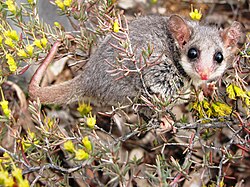
Key Facts
- Diversity: Includes roughly 70 species of small to medium-sized marsupials.
- Habitat: Native to Australia, New Guinea, and Sulawesi.
- Size Extremes: Ranges from the 10g Tasmanian pygmy possum to the 7kg bear cuscus.
- Dietary Range: Includes generalist herbivores, omnivores, insectivores, and nectar-feeders.
- Classification: A paraphyletic suborder within the order Diprotodontia.
Biological Diversity and Diet
The dietary habits of Phalangeriformes are incredibly varied, showcasing remarkable evolutionary adaptation. Some species act as generalist herbivores or omnivores, such as the common brushtail possum. Others have become highly specialized: the greater glider focuses on browsing eucalyptus, the mountain pygmy possum is an insectivore, and the honey possum is a dedicated nectar-feeder.
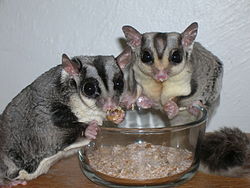
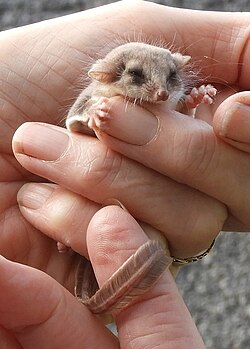
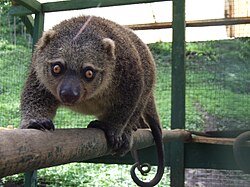
Size variation within the suborder is equally striking. The smallest member is the Tasmanian pygmy possum, a tiny creature with an adult head-body length of just 70 mm and a weight of only 10 g. On the opposite end of the spectrum, the two species of bear cuscus can grow to exceed 7 kg.
Classification and Evolutionary Context
Phalangeriformes belongs to the order Diprotodontia, which also includes the Vombatiformes (wombats and koalas) and the Macropodiformes (kangaroos and wallabies). It is important to note that while the name "possum" is used for these Australasian animals, they are not closely related to the opossums of the Americas. The name was adopted due to their physical resemblance, but Australasian possums are more closely related to kangaroos.
Taxonomic Groups
The suborder is divided into several superfamilies and families:
- Phalangeroidea: Includes the Burramyidae (pygmy possums) and Phalangeridae (brushtail possums and cuscuses).
- Petauroidea: Includes the Pseudocheiridae (ringtail possums), Petauridae (gliders), Tarsipedidae (honey possums), and Acrobatidae (feathertail gliders).
The Cuscuses and Possums
The Phalangeridae family contains a wide array of species, including the various cuscuses found across Sulawesi and Australia. The common spotted cuscus and the southern common cuscus are notable examples of this group.
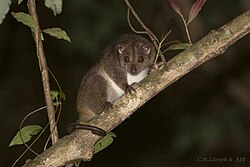
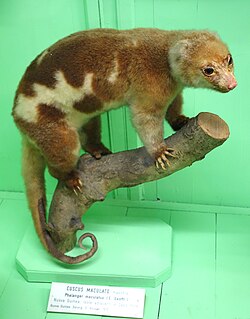
The Pseudocheiridae family is well known for the ringtail possums. These include the common ringtail possum and the Herbert River ringtail possum, which inhabit various niches across the region.
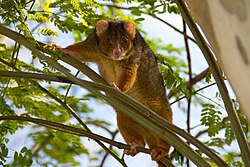
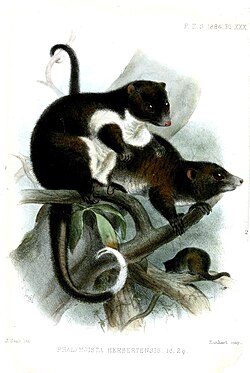
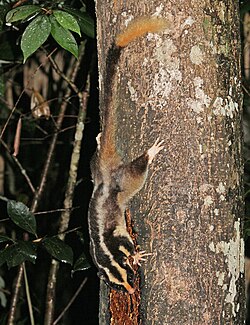
Gliders and specialized possums, such as the striped possum, belong to the Petauroidea superfamily. This group also features the highly specialized sugar glider and the tiny feathertail glider.
Summary of Phalangeriformes Groups
| Family | Common Names | Notable Species |
|---|---|---|
| Burramyidae | Pygmy possums | Mountain pygmy possum, Tasmanian pygmy possum |
| Phalangeridae | Brushtail possums, Cuscuses | Common brushtail possum, Sulawesi bear cuscus |
| Pseudocheiridae | Ringtail possums, Greater gliders | Common ringtail possum, Southern greater glider |
| Petauridae | Gliders, Striped possums | Sugar glider, Striped possum |
| Tarsipedidae | Honey possum | Honey possum (noolbenger) |
| Acrobatidae | Feathertail gliders | Feathertail glider |
Frequently Asked Questions
Are Australasian possums related to American opossums?
No. Despite sharing a similar name, Australasian possums are more closely related to other Australasian marsupials, such as kangaroos, than they are to the opossums found in the Americas.
What is the smallest Phalangeriform?
The smallest is the Tasmanian pygmy possum, which weighs approximately 10 g and has a head-body length of about 70 mm.
Are all possums nocturnal?
Yes, Phalangeriformes species are typically nocturnal, meaning they are most active during the night.
What do these animals eat?
Their diets vary significantly depending on the species; they can be generalist herbivores, omnivores, insectivores, or even nectar-feeders.
Where can these animals be found?
They are native to Australia, New Guinea, and Sulawesi.