Gliders: The Science and Evolution of Unpowered Flight
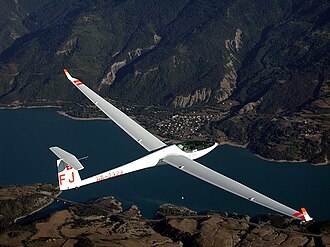
A glider is a fixed-wing aircraft that remains airborne through the dynamic reaction of air against its lifting surfaces. Unlike traditional airplanes, a glider's free flight does not depend on an engine. While most are entirely unpowered, some motor-gliders feature small engines to sustain altitude or enable self-launching, though they primarily rely on rising air to maintain height.
From simple paper toys to sophisticated spacecraft, gliders vary wildly in wing construction, aerodynamic efficiency, and purpose. Today, they are most commonly associated with air sports, but their legacy spans military operations and cutting-edge aerospace research.
Key Facts
- Core Principle: Gliders use lifting surfaces and meteorological phenomena (rising air) to maintain or gain altitude.
- Main Types: The primary recreational categories are sailplanes, hang gliders, and paragliders.
- Performance: High-performance sailplanes can achieve glide ratios of 60:1, allowing them to travel thousands of kilometers.
- Versatility: Glider technology is used in everything from foot-launched sports to the re-entry phase of spacecraft.
The History of Unpowered Flight
Early Attempts and Pioneers
Early accounts of gliding are often difficult to verify, but historical records mention several daring attempts. In the 9th century, Abbas Ibn Firnas reportedly attempted flight near Córdoba, Spain. Between 1000 and 1010 AD, Eilmer of Malmesbury is said to have glided 200 meters from his abbey roof. Later, around 1630–1632, Hezârfen Ahmed Çelebi allegedly flew across the Bosphorus strait in Istanbul. Notably, both Eilmer and Ibn Firnas attributed their crashes to a lack of a tail.
The Scientific Era
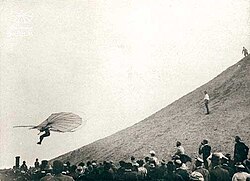
The transition to scientific aviation began around 1849 with Sir George Cayley, who developed gliders based on published principles. This paved the way for pioneers like Otto Lilienthal, who completed over 2,000 successful flights and was the first to use rising air to prolong flight. Other key contributors included Jean Marie Le Bris, John J. Montgomery, Percy Pilcher, and Octave Chanute.
The Wright Brothers also utilized a series of three manned gliders to refine their controls before achieving powered flight, later returning to glider testing in 1911.
Modern Recreational Gliding
Sailplanes
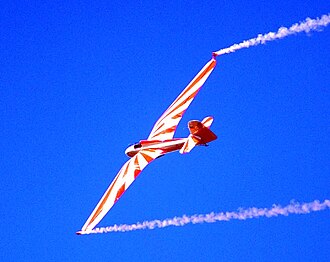
Developed largely in the 1920s, sailplanes are designed for high lift-to-drag ratios (the distance a glider travels forward for every unit of altitude lost). This efficiency allows pilots to seek out sources of lift and fly cross-country distances exceeding 1,000 kilometers in a single day.
Hang Gliders
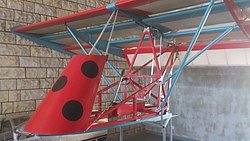
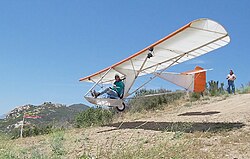
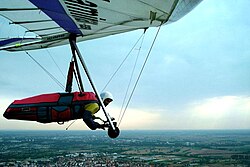
Modern hang gliding evolved from the 1951 patent of a flexible wing by Francis and Gertrude Rogallo. NASA tested this "Rogallo wing" for Gemini space capsule recovery before it was adapted for foot-launching by innovators like Barry Hill Palmer and Mike Burns. Today, hang gliders are categorized by their structure, ranging from simple foot-launched wings to high-performance models with rigid structures and pilot fairings.
Paragliders
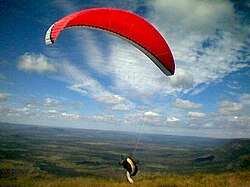
Paragliding utilizes a ram-air wing—a fabric wing inflated by the passage of air through open leading edges. Patented by Domina Jalbert in 1963 as the "Parafoil," this design allows the aircraft to be packed into a backpack. While they have lower glide ratios than sailplanes, they are among the most economical and portable modes of flight.
Comparison of Recreational Gliders
| Feature | Paragliders | Hang Gliders | Sailplanes |
|---|---|---|---|
| Undercarriage | Pilot's legs | Pilot's legs | Wheels or skids |
| Wing Structure | Ram-air fabric | Rigid/Flexible frame | Rigid high-performance wing |
| Max Glide Ratio | ~10:1 | ~17:1 to 20:1 | Up to 60:1 (Open Class) |
| Max Speed | ~60 km/h | Moderate | Up to 280 km/h |
| Transport | Backpack | Car roof/Trailer | Purpose-built trailer |
Specialized and Military Applications
Military Gliders
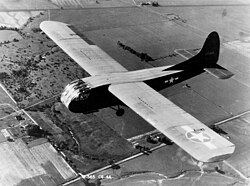
During World War II, gliders like the Waco CG-4A and Airspeed Horsa were used to transport troops and heavy equipment silently into combat zones. Towed by transport planes, these disposable aircraft allowed for the concentrated delivery of forces, an advantage over dispersed paratrooper drops.
Research and Spaceflight
Glider technology is critical for high-speed atmospheric re-entry. Lifting bodies—aircraft that use the fuselage itself to generate lift—were developed to handle the stresses of hypersonic flight. This research led to the development of the Space Shuttle and the Soviet Buran, both of which landed as unpowered gliders after re-entering the atmosphere at Mach 25.
Rocket Gliders and Glide Bombs
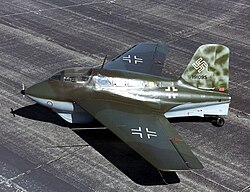
Rocket-powered aircraft, such as the Me 163B and the Bell X-1, often spend the majority of their flight time gliding after their fuel is rapidly consumed. Similarly, glide bombs use aerodynamic surfaces and remote control to extend their range and accuracy, allowing bombers to release payloads from a safe distance.
Frequently Asked Questions
What is the difference between a glider and a sailplane?
While the terms are often used interchangeably, a sailplane is a specific type of high-performance glider designed for soaring and long-distance flight by maximizing the lift-to-drag ratio.
How do gliders stay in the air without an engine?
Gliders maintain altitude by exploiting meteorological phenomena, such as thermals (rising columns of warm air) or ridge lift (wind hitting a slope and moving upward).
What is a ram-air wing?
A ram-air wing is a fabric structure used in paragliders where the wing's shape is maintained by air pressure entering vents at the front of the wing during flight.
Were gliders used in war?
Yes, particularly during World War II, military gliders were used to deliver troops and heavy equipment into combat zones without the dispersion associated with parachuting.
Can a glider be used for space travel?
While they cannot travel through the vacuum of space, gliders are used for the re-entry phase. The Space Shuttle, for example, landed as a glider after exiting the atmosphere.