Petros and Sanos: The Armenian Merchant Magnates of Ottoman Aleppo
In the late 16th and early 17th centuries, the city of Aleppo served as a vital crossroads of global commerce. Among the most influential figures of this era were the brothers Petros (Petik) and Sanos, merchant magnates from Old Julfa. These brothers rose to extraordinary heights of wealth and political power, dominating the silk trade and serving as high-ranking tax-farmers for the Ottoman government.
Their influence extended far beyond the city walls of Aleppo, weaving a commercial web that connected the Indian subcontinent and Persia to the Dutch Republic and Italy. While their lives ended in tragedy, their legacy remains etched in the architectural and cultural revival of the Armenian community in Syria.
Key Facts
- Origins: The brothers were wealthy merchants from Old Julfa.
- Trade Monopoly: They established a near-monopoly on the silk trade in Aleppo between 1590 and 1632.
- Political Power: Both served as emin-i gümrük (chief customs officers) in Aleppo and Erzurum.
- Philanthropy: They funded the major reconstruction of the Forty Martyrs Cathedral and other churches.
- Fate: Both brothers were eventually executed by Ottoman authorities, though the exact reasons remain debated.
The Silk Trade and Commercial Empire
Petros Petik founded a mercantile silk firm in Aleppo that quickly became the preferred partner for European powers. By the turn of the century, merchants from Venice, Spain, France, England, and the Dutch Republic relied on the brothers to facilitate their silk transactions.
Their operation was not merely a local business but a global network. They managed the flow of raw silk from Persia and Anatolia while distributing manufactured European goods across Asia. Petik's financial reach was staggering; his ledgers recorded up to twenty-four different income streams, including the management of khans (commercial inns), public bathhouses, and police superintendency offices purchased from the government.
Customs Control and Political Influence
The brothers leveraged their wealth to acquire official positions, most notably as the chief of customs for Aleppo, Tripoli, and Alexandretta. This gave Petik control over the customs of all Ottoman Syria. The role of emin-i gümrük (customs officer) was a position of immense power and profit, which the brothers contested fiercely against rivals, such as the Syrian Jewish merchant Musa ibn Ishaq.
Their power occasionally led to friction with the Ottoman Porte (the central government). Petik was known for his boldness, once boasting that his position as customs collector made him immune to imprisonment. He even bypassed official channels to negotiate tariffs directly with the Dutch consul, a direct violation of his granted powers.
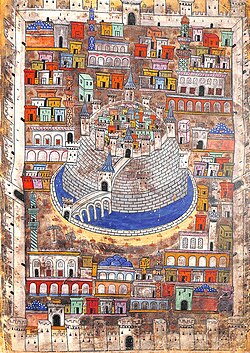
![Khan al-Gümrük, the hub for international merchants in Aleppo during that period[43]](/images/f6/f7/f6f75fb809a1ff0181bec575f9a83a8e823e4a24687964b7838f04f652d79011.jpg)
Patronage and Cultural Renaissance
Despite their political volatility, Petros and Sanos were vital patrons of the Armenian community. During a period of cultural renaissance in Aleppo, they funded architects, miniaturists, and artisans, fostering an artistic revival that was unmatched among other Ottoman Armenian populations.
Their most significant contribution was the 1616 reconstruction of the Forty Martyrs Cathedral. This expansion allowed the church to accommodate more parishioners and the Armenian Catholicos. Because the expansion of Christian churches often contravened Ottoman building regulations, this project served as a testament to the brothers' exclusive influence. Sanos also commissioned an ornate Armenian cathedral in Erzurum and donated illuminated Gospels to the church in Aleppo.
The Fall and Execution of the Khwajas
The ascent of the brothers ended in execution, though historians disagree on the exact timeline and causes. Petik was beheaded in the citadel of Aleppo, with dates cited between 1627 and 1639. Some researchers attribute his fall to complaints from European consuls regarding his "rapacious behavior" and excessive power.
Sanos continued to manage the customs office until 1640. Despite his vast personal fortune and his reputation for piety—including the liberation of over 1,000 Armenian slaves—he too was removed from office and executed. His fall marked the end of Armenian hegemony over the customs offices of the Syrian cities, with the position returning to Musa walad Ishaq al-Khakham.
| Feature | Petros (Petik) | Sanos |
|---|---|---|
| Primary Role | Founder of silk firm; Chief of Customs | Business partner; Chief of Customs |
| Key Territories | Aleppo, Tripoli, Alexandretta, Erzurum | Aleppo, Erzurum |
| Major Contribution | Global trade network expansion | Church reconstruction & slave liberation |
| Fate | Executed (dates vary 1627–1639) | Executed (1640) |
Frequently Asked Questions
Who were Petros and Sanos?
They were Armenian merchant magnates from Old Julfa who dominated the silk trade and held high-ranking customs positions in Ottoman Syria and Western Armenia during the late 16th and early 17th centuries.
What was an emin-i gümrük?
An emin-i gümrük was a chief customs officer responsible for collecting duties on goods entering or leaving a city, a highly lucrative and influential position in the Ottoman Empire.
How did they impact the Armenian community in Aleppo?
They acted as major patrons, funding the reconstruction of the Forty Martyrs Cathedral and supporting a cultural renaissance of Armenian arts, architecture, and literature.
Why were the brothers executed?
While not fully understood, evidence suggests their executions were linked to their excessive power, accusations of extortion from European merchants, and complaints filed by foreign consuls to the Ottoman Porte.
What was their connection to the silk trade?
They established a near-monopoly on the silk trade in Aleppo, acting as the primary intermediaries for European merchants (Dutch, English, French, Spanish, and Venetian) trading in raw silk from Persia and Anatolia.