Personal Aide-de-Camp to the Sovereign
Within the intricate structure of the United Kingdom's Royal Household, the role of Personal Aide-de-Camp (ADC) to the King or Queen stands as a unique distinction. Unlike standard aides-de-camp, who are typically serving military officers of colonel or brigadier rank, this specific appointment is reserved exclusively for members of the British royal family who hold military rank.
While the role is primarily honorary and carries few daily responsibilities, it serves as a significant symbol of the bond between the Sovereign and their family members within the armed forces. Those appointed may use the post-nominal letters ADC(P) to signify their position.
Key Facts
- Eligibility: Reserved only for royal family members with military rank.
- Origin: Established by Queen Victoria in the 1870s.
- Insignia: Identified by the royal cypher, crown, and gold aiguillettes.
- Nature: An honorary role with minimal official duties.
- Permanence: Royal cyphers on shoulder straps are retained even after the appointment ends.
History and Evolution
The tradition began in the 1870s under Queen Victoria. A defining moment occurred in 1895 when the Queen wrote to her cousin, Prince George, Duke of Cambridge, informing him of her intent to make him her first personal Aide-de-Camp. This appointment granted him the right to attend the Queen on all military occasions and to hold the Parade during her birthday celebrations.
Over time, the role gained ceremonial prominence. During the Coronation processions of 1937 and 1953, Personal Aides-de-Camp were specifically designated to ride close behind the Gold State Coach.
It is important to distinguish this role from other sovereign aides. The Royal Household also employs First and Principal Naval Aides-de-Camp, Flag Aides-de-Camp, Aides-de-Camp General, and Air Aides-de-Camp, most of whom are professional serving officers rather than royal family members.
Insignia and Uniforms
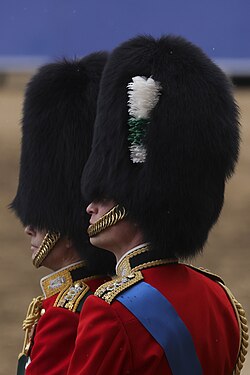
The visual markers of a Personal Aide-de-Camp are highly specific and designed to denote their proximity to the monarch. The primary emblems are the royal cypher (the monarch's monogram) and the crown, both worn on the uniform's shoulder straps.
When wearing certain uniforms, they don No. 1 gold aiguillettes—ornamental braided cords—on the right shoulder. These are distinguished from those worn by other Aides-de-Camp by the addition of the royal cypher and crown to each tag. Historically, in the 20th century, these cyphers were rendered in block letters rather than the standard stylized format.
![Prince William in the gold cord (aiguillette) of the queen's personal aide-de-camp, 2013[1]](/images/55/32/553249a54d06d189530ddf51c04ae4bccb2f698ea1fe94b34b7a5ab6639f59cf.jpg)
A unique aspect of this appointment is that the royal cypher remains on the shoulder straps even after the officer relinquishes the role. If an individual served as a Personal Aide-de-Camp under multiple monarchs, they wear the cyphers of each sovereign they served.
Historical Appointments by Reign
The following table provides a summary of notable Personal Aides-de-Camp across different reigns, highlighting the diversity of military branches involved.
| Reign | Notable Appointees | Military Branch |
|---|---|---|
| Victoria | Prince George, Duke of Cambridge | British Army |
| Edward VII | Prince George, Duke of Cornwall and York | Royal Navy |
| George V | Prince Albert (later Duke of York) | Royal Navy / RAF |
| George VI | Philip, Duke of Edinburgh | Royal Navy |
| Elizabeth II | Prince William, Duke of Cambridge | Royal Navy / Army / RAF |
| Charles III | Princess Anne, Princess Royal | Army / Navy / RAF |
Frequently Asked Questions
Who can be appointed as a Personal Aide-de-Camp to the Sovereign?
Only members of the British royal family who hold a military rank can be appointed to this specific role.
What are the duties of a Personal Aide-de-Camp?
It is an honorary position with very few actual duties or responsibilities, serving primarily as a ceremonial link between the royal family and the military.
How do you identify a Personal Aide-de-Camp's uniform?
They are identified by the royal cypher and crown on their shoulder straps and gold aiguillettes on the right shoulder, which feature the royal cypher and crown on the tags.
Do they stop wearing the royal cypher after their term ends?
No, Personal Aides-de-Camp continue to wear the royal cypher on their shoulder straps even after they have relinquished the appointment.
How does this role differ from a standard Aide-de-Camp?
Standard Aides-de-Camp are typically serving professional officers (such as colonels or brigadiers), whereas Personal Aides-de-Camp must be members of the royal family.