The Future of Farming: Understanding the Potential of Perennial Rice
Imagine a rice crop that doesn't need to be replanted every season. Instead of the constant cycle of plowing, sowing, and harvesting new seeds, a single planting could regrow season after season. This is the promise of perennial rice—a group of long-lived rice varieties currently being developed by plant geneticists to transform sustainable agriculture.
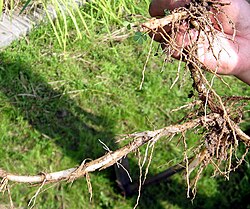
While most rice grown today is an annual crop, perennial rice varieties are genetically distinct and designed to live for multiple years. These plants can spread through rhizomes (underground stems) or stolons (stems that grow along the soil surface), while still reproducing sexually through flowers, pollen, and seeds. For farmers, the primary harvest remains the same: the nutritious grain produced from the seeds.
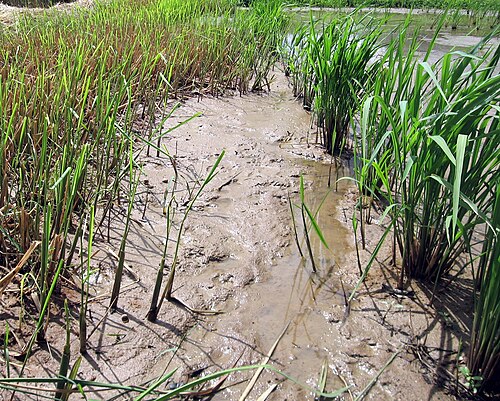
Annual vs. Perennial Rice: Key Differences
To understand the significance of this innovation, one must look at the biology of domesticated rice, known scientifically as Oryza sativa. Most modern cultivars are short-lived; they typically die after producing seeds. While some can undergo ratooning—a process where the plant regrows a second crop from the remaining stalks under favorable conditions—most annual systems require farmers to remove dead stalks, cultivate the soil, and sow new seeds every few months.
In contrast, the wild ancestor of Asian rice, Oryza rufipogon, is often perennial. It can live for many years, spreading vegetatively and setting seed annually. Other wild species in the Oryza genus also exhibit perennial traits. For example, while O. rufipogon uses above-ground stolons to spread, species like O. longistaminata, O. officinalis, O. australiensis, and O. rhizomatis utilize underground rhizomes to expand.
The Environmental and Agricultural Benefits
Agronomists suggest that increasing the use of perennial crops can stabilize agricultural landscapes, improve soil health, and provide vital habitats for wildlife. The benefits of perennial rice are particularly significant in several key areas:
Reduced Soil Erosion
Erosion is one of the most severe environmental consequences of rainfed upland rice production. In humid tropics, fields that have been cleared or recently plowed are highly vulnerable to the loss of soil and nutrients through wind and water. This erosion leads to decreased productivity and causes downstream issues like the silting of waterways and hypoxia (oxygen depletion) in rivers and oceans.
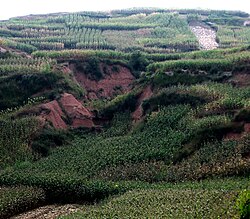
Perennial rice helps mitigate this because the plants regrow quickly after harvest, maintaining a protective cover over the soil. Because the plants stay in the ground, the fields do not require frequent plowing after the initial planting, which keeps the soil structure intact.
Combating Deforestation
Many subsistence farmers currently rely on slash-and-burn agriculture. In this system, a patch of forest is cleared and burned to create a plot for crops. Once the soil nutrients are exhausted, the plot is abandoned, and a new section of forest is cleared. This cycle leads to biodiversity loss, increased carbon dioxide emissions, and altered rainfall patterns.
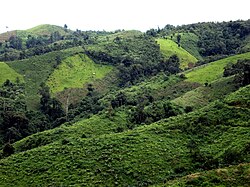
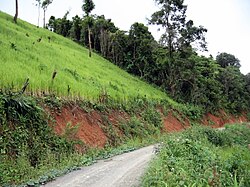
A high-yielding, perennial cereal could allow these farmers to produce food on the same plot of land indefinitely, preserving the surrounding forests by maintaining soil productivity.
Drought and Weed Resistance
Annual rice typically has a shallow root system, making it highly susceptible to drought. Perennial plants, however, have more time to develop deep, extensive root systems that can access moisture deeper in the soil. Additionally, because perennial plants provide continuous ground cover, they can out-compete many annual weeds, reducing the need for intensive weeding.
Improved Nutrient Management
While shallow-rooted annuals rely on topsoil nutrients, the deep roots of perennials can access phosphorus and other nutrients from the subsoil. This makes them more efficient in nutrient-poor environments. Furthermore, perennial systems can lead to a more efficient use of applied fertilizers.
Potential Challenges and Disadvantages
While the benefits are substantial, researchers are also working to address several potential drawbacks. Continuous plant cover may provide improved habitats for pests like rodents and insects. Additionally, perennial systems can make crop rotation more complex, as the longer lifespan of the crop slows down the rotation cycle, potentially allowing pathogens to build up.
There is also the risk of "nutrient immobilization." In soils with low organic matter, large perennial root systems might build up organic matter so significantly that they trap available nitrogen and phosphorus, potentially reducing productivity unless managed with fertilizer. Finally, there are hydrological considerations; perennial plants may use more rainfall, which could impact water tables or reduce surface flow to rivers.
Target Growing Environments
Perennial rice research is being tailored to three main types of agricultural systems:
- Upland Rice: Grown on over 7.5 million acres of steeply sloping soil in southern China and Southeast Asia. Perennial rice could prevent the severe erosion common in these areas.
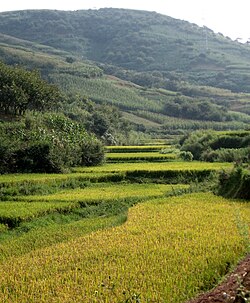
- Rainfed Paddy Rice: This includes 38 million hectares of terraced but unirrigated land. Perennial rice could help farmers manage the risks of erratic rainfall and drought through deeper root systems.
- Irrigated Paddy Rice: While highly productive, irrigated systems could benefit from perennial varieties through "fixing hybrid vigor." If a high-performing hybrid is rhizomatous, farmers could create millions of genetically identical clones from rhizome pieces, making it easier to maintain exceptional genetic lines.
The History of Perennial Rice Research
The journey to develop perennial rice has been a complex scientific endeavor involving international collaboration. In the early 1990s, researchers at Kasetsart University in Thailand, including Dr. Dayun Tao and Dr. Prapa Sripichitt, worked on interspecific hybridization—crossing different species to combine their traits. This was incredibly difficult; for example, it took 3,000 pollinations between rice and O. rhizomatis to produce just one viable plant.
Following this, the International Rice Research Institute (IRRI) in the Philippines launched a perennial upland rice program from 1990 to 2001. While the IRRI project ended due to budget cuts, the Yunnan Academy of Agricultural Sciences (YAAS) in China has continued the vital work. Researchers like Hu Fengyi have successfully mapped the genes, specifically rhz2 and rhz3, that control rhizome production.
Current breeding efforts focus on restoring seed fertility, identifying rhizomatous plants more quickly through marker-assisted selection, and removing undesirable wild traits—such as small seed size or "awns" (bristle-like appendages)—to ensure the final product meets farmer needs.
Key Facts
- Definition: Perennial rice varieties are long-lived plants that regrow season after season without the need for reseeding.
- Reproduction: They can spread via rhizomes (underground stems) or stolons (above-ground stems).
- Primary Goal: To improve sustainability in upland, rainfed, and irrigated rice farming systems.
- Environmental Impact: Helps reduce soil erosion, deforestation, and nutrient runoff.
- Major Research Hubs: The International Rice Research Institute (Philippines) and the Yunnan Academy of Agricultural Sciences (China).
Comparison of Rice Growing Systems
| Feature | Annual Rice | Perennial Rice |
|---|---|---|
| Lifespan | One growing season | Multiple seasons |
| Planting Frequency | Requires reseeding every season | Regrows from existing plants |
| Soil Coverage | Soil often left bare between crops | Continuous protective cover |
| Root System | Typically shallow | Can develop deep, extensive roots |
| Tillage Needs | Frequent plowing and cultivation | Reduced need for tillage |
Frequently Asked Questions
What is the main difference between annual and perennial rice?
Annual rice completes its life cycle in one season and must be replanted every year. Perennial rice is designed to live for multiple years, regrowing from its own stems (rhizomes or stolons) after each harvest.
How does perennial rice help prevent soil erosion?
Because perennial rice regrows quickly and stays in the ground, it provides continuous vegetation cover. This protects the soil from being washed away by rain or blown away by wind, which is a major problem in upland farming.
Why isn't perennial rice available in all markets yet?
Developing these varieties is scientifically difficult. Researchers must cross different species to get perennial traits, which often results in low fertility or undesirable wild traits (like small seeds) that must be carefully bred out.
Can perennial rice grow in irrigated fields?
Yes. While much of the research focuses on upland and rainfed areas, irrigated systems can benefit from the ability to clone high-performing hybrid plants using rhizomes, making it easier to maintain high yields.
What are rhizomes?
Rhizomes are specialized underground stems that allow certain plants to spread horizontally and store nutrients, enabling the plant to regrow even after the top part has been harvested.