Perennial Plants: Life Cycles, Types, and Agricultural Benefits
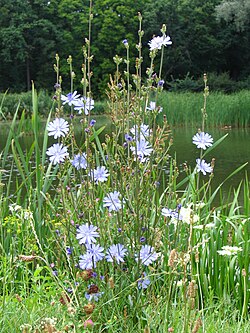
In the diverse world of botany, plants are often categorized by their lifespan. While annuals complete their cycle in a single season and biennials take two, perennials are defined by their ability to live for more than two years. In fact, an estimated 94% of all plant species fall into this category. This longevity allows them to become dominant fixtures in various ecosystems, from lush forests to wind-swept tundras.
Key Facts
- Perennials make up approximately 94% of all plant species.
- They are defined as plants that live for more than two years.
- Most perennials are polycarpic, meaning they flower over many seasons.
- They often use specialized structures like bulbs, tubers, or rhizomes to survive dormancy.
- Perennial crops offer significant agricultural benefits, including soil erosion prevention and nitrogen capture.
Understanding Perennial Life Cycles
Perennials vary significantly in how they manage their growth and survival. Many are herbaceous perennials, which grow and bloom during spring and summer but die back to the ground every autumn. They survive the winter via their rootstock or other overwintering structures, returning to life once the growing season resumes.
However, a plant's classification can change based on its environment. For instance, tomato vines live for several years in tropical habitats, but in temperate regions, they are grown as annuals because their above-ground biomass cannot survive the winter frost.
Monocarpic vs. Polycarpic Growth
While most perennials are polycarpic (or iteroparous), meaning they flower repeatedly throughout their lives, some are monocarpic (or semelparous). Monocarpic plants may live for many years—such as the century plant, which can grow 30 meters tall over 80 years—only to flower and fruit once before dying.
Classifications of Perennial Plants
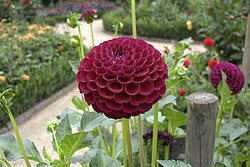
Perennials are generally grouped into three main structural categories:
- Herbaceous: These plants lack woody stems and die back to the ground at the end of the season.
- Evergreen: These perennials retain their foliage throughout the year without having woody stems.
- Woody: These plants possess persistent above-ground stems that survive from year to year, often featuring secondary growth (increase in girth).
Additionally, an intermediate class known as subshrubs exists, which retain a small, vestigial woody structure during the winter months.
Survival Mechanisms and Adaptations
To endure cold or dry seasons, perennials invest heavily in underground or specialized structures. These include bulbs, tubers, rhizomes (horizontal underground stems), turions, and woody crowns. These structures serve as storage units for carbohydrates, providing the energy necessary to trigger new growth once dormancy ends.
Some perennials have evolved unique ways to handle environmental stress. For example, certain species use cold acclimation, which involves the overexpression of DNA repair genes to protect against freezing stress. Others, like certain trees and shrubs, utilize thick cork layers to protect their stems from wildfires.
Perennials in Agriculture and Gardening
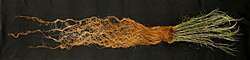
In gardening, perennials are highly valued for their ornamental beauty and the ability to be divided to increase plant numbers. In agriculture, the shift toward perennial crops offers promising environmental advantages. Because of their deep, extensive root systems, perennial crops can hold soil in place to prevent erosion and capture dissolved nitrogen, preventing it from contaminating water sources.
Researchers are currently working to increase the seed yields of perennial species to create new perennial grain crops. Recent reports indicate that a perennial rice developed in 2018 provided yields similar to replanted annual rice over eight consecutive harvests.
| Plant Type | Lifespan | Key Characteristic |
|---|---|---|
| Annual | One growing season | Completes life cycle and dies via seed production. |
| Biennial | Two growing seasons | Takes two years to complete its biological cycle. |
| Perennial | More than two years | Often returns from rootstock or woody structures. |
Frequently Asked Questions
What is the difference between a perennial and an annual?
An annual completes its entire life cycle—from germination to seed production—within a single growing season and then dies. A perennial lives for more than two years, often returning each year from the same root system or woody structure.
Why are some perennials grown as annuals?
This usually happens due to climate. A plant that is naturally perennial in a tropical climate may not have the ability to survive freezing temperatures. In such temperate regions, gardeners treat them as annuals by replanting them every year.
What are herbaceous perennials?
Herbaceous perennials are plants that do not have woody stems. They typically grow and bloom during the warm months and die back to the ground during autumn and winter, surviving through their roots or crowns.
How do perennials survive the winter?
Many perennials enter a state of dormancy. They store energy in specialized structures like bulbs, tubers, or rhizomes. These structures allow the plant to remain alive underground while the above-ground parts die back due to cold or dry conditions.
Can perennials help the environment?
Yes. Perennial plants often have deep root systems that prevent soil erosion, help capture nitrogen to protect water quality, and can out-compete weeds, which may reduce the need for chemical herbicides.