Discovering Kniphofia: The Vibrant Red Hot Poker
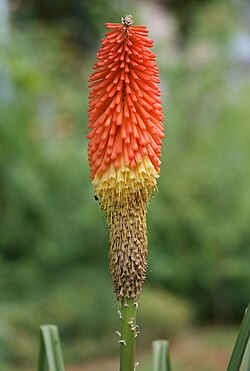
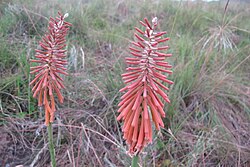
With their striking, torch-like blooms and bold colors, Kniphofia plants are some of the most visually arresting additions to any landscape. Commonly known as the red hot poker, tritoma, torch lily, or poker plant, these perennial flowering plants are celebrated for their architectural form and brilliant hues. Native to Africa, they bring a touch of exotic energy to gardens worldwide.
Key Facts
- Origin: Native to Africa.
- Family: Asphodelaceae.
- Flower Colors: Shades of red, orange, and yellow, often appearing bicoloured.
- Growth Habit: Available as either herbaceous or evergreen perennials.
- Pollinators: Attracts bees, nectar-feeding birds, and uniquely, the Ethiopian wolf.
- Species Diversity: 73 accepted species (as of February 2025), including two hybrids.
Botanical Characteristics
The genus Kniphofia is diverse in its physical structure, primarily divided into herbaceous and evergreen species. Herbaceous species and their hybrids typically feature narrow, grass-like leaves ranging from 10 to 100 cm in length. In contrast, evergreen species possess broader, strap-shaped foliage that can reach up to 1.5 meters in length.
The most defining feature of the plant is the flower spike. These upright clusters of brightly coloured flowers rise well above the foliage. During their bloom, these flowers produce copious amounts of nectar, making them a primary target for various pollinators.
Pollination and Ecological Impact
Due to their high nectar production, Kniphofia species are highly attractive to bees and nectar-feeding birds. In their native African habitats, they are frequently visited by sunbirds and sugarbirds. When grown in the New World, they attract nectarivores such as New World orioles and hummingbirds.
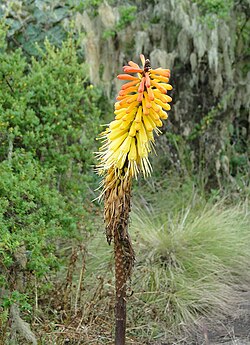
One of the most fascinating ecological interactions involves Kniphofia foliosa. The Ethiopian wolf (Canis simensis) has been observed feeding on the nectar of this species. This makes the Ethiopian wolf the only known macropredator (a large predator) that potentially acts as a pollinator.
Taxonomy and Species Diversity
The genus was first established in 1794 by Conrad Moench, who named it in honor of Johann Hieronymus Kniphof, a German botanist and physician of the 18th century. Moench determined that the species (specifically what is now known as Kniphofia uvaria) was distinct enough from the genera Aletris and Veltheimia to warrant its own classification.
As of February 2025, there are 73 accepted species. These are distributed across various African regions, including South Africa, Ethiopia, Madagascar, and Zaire. While most remain in Africa, Kniphofia uvaria has become naturalized in several other parts of the world, including Spain, Turkey, Mexico, and several U.S. states such as California, Oregon, and Washington.
Cultivation and Garden Use
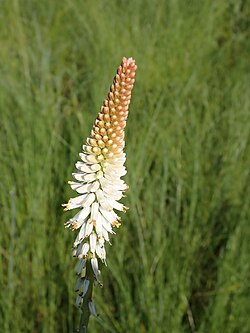
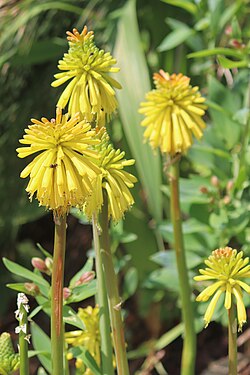
Gardeners value Kniphofia for its strong architectural properties. Several species are particularly popular for cultivation, including K. galpinii, K. northiae, K. rooperi, and K. thomsonii.
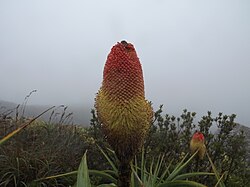
Beyond wild species, many cultivars have been developed for ornamental use. The Royal Horticultural Society (RHS) has granted the Award of Garden Merit to numerous varieties based on their color and height, such as:
- 'Fiery Fred': Orange blooms reaching 130 cm.
- 'Royal Standard': Red and yellow blooms at 90 cm.
- 'Buttercup': Clear yellow blooms at 75 cm.
- 'Nobilis': An evergreen variety with orange and yellow flowers exceeding 150 cm.
- 'Tawny King': Cream/brown blooms reaching 120 cm.
Summary of Kniphofia Characteristics
| Feature | Herbaceous Species | Evergreen Species |
|---|---|---|
| Leaf Shape | Narrow, grass-like | Broad, strap-shaped |
| Leaf Length | 10–100 cm | Up to 1.5 m |
| Flower Form | Upright spikes | Upright spikes |
| Common Colors | Red, Orange, Yellow | Red, Orange, Yellow |
| Primary Origin | Africa | Africa |
Frequently Asked Questions
What are the common names for Kniphofia?
Kniphofia is most commonly known as the red hot poker, but it is also referred to as the torch lily, tritoma, or poker plant.
Where does the red hot poker plant originate?
All species of the Kniphofia genus are native to Africa, though some species like K. uvaria have been naturalized in regions such as North America, Spain, and Turkey.
Which animals pollinate these plants?
They are primarily pollinated by bees and nectar-feeding birds, including sunbirds, sugarbirds, hummingbirds, and New World orioles. Interestingly, the Ethiopian wolf is also known to feed on the nectar of K. foliosa.
What is the difference between herbaceous and evergreen Kniphofia?
Herbaceous species have narrow, grass-like leaves (10–100 cm), while evergreen species have broader, strap-shaped foliage that can grow up to 1.5 meters long.
How many species of Kniphofia exist?
As of February 2025, Plants of the World Online recognizes 73 accepted species, which includes two hybrids.