The Majestic World of Peonies: A Comprehensive Guide to the Genus Paeonia
The peony is one of the most celebrated flowers in the world, known for its lush, voluminous petals and intoxicating fragrance. Belonging to the genus Paeonia, these plants are the sole members of the Paeoniaceae family. Whether they are growing as delicate herbaceous perennials or sturdy woody shrubs, peonies have captured the hearts of gardeners, artists, and historians for centuries.
Peonies are native to diverse regions across Asia, Europe, and Western North America. While scientists sometimes debate the exact number of species—with estimates ranging from 25 to 40—the current scientific consensus recognizes 33 known species. These plants are highly valued in temperate regions for their spectacular late spring and early summer displays.
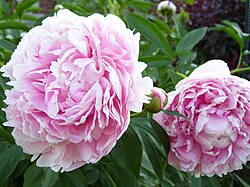
Understanding Peony Growth Habits
When selecting peonies for a garden, it is essential to understand the two primary growth habits: herbaceous and woody. Herbaceous peonies are perennials that die back to the ground level each autumn, with their stems reappearing from the roots the following spring. They typically grow between 0.25 and 1 metre (1–3 ft) tall. In contrast, woody peonies, often called tree peonies, are shrubs that maintain permanent stems above the ground throughout the winter. These can reach heights of up to 3.5 metres (1–11 ft).
A unique third category exists: the Itoh or intersectional hybrids. Created in 1948 by horticulturist Toichi Itoh, these plants are a cross between tree and herbaceous peonies. They possess the foliage of tree peonies but the abundant, large flowering habit of herbaceous varieties, often offering better resistance to peony wilt.
Botanical Morphology and Phytochemistry
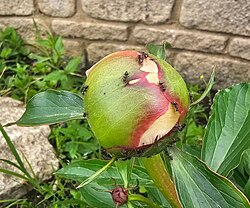
The flowers of the peony are large and bisexual, meaning they contain both male and female reproductive organs. Most flowers are single and located at the end of the stem. A typical flower features 3–7 tough sepals and anywhere from 5 to 13 petals. Within the petals, you will find numerous stamens (the male reproductive parts) and 1–15 carpels (the female reproductive parts). Each carpel eventually develops into a dry fruit known as a follicle, which contains one or more fleshy seeds.
Beyond their beauty, peonies are chemically complex. Scientists have identified over 262 compounds within the Paeoniaceae family, including flavonoids, tannins, and steroids. These include substances like paeonols and phenols, which have demonstrated various biological activities in laboratory settings, such as antioxidant and immunomodulative properties. The plants also utilize C3 carbon fixation—a method of photosynthesis—and contain crystals of calcium oxalate.
Taxonomy and Genetic Diversity
The genus Paeonia is divided into three distinct sections: Moutan, Onaepia, and Paeoniae. The Moutan section contains the woody tree peonies, primarily found in Central and Southern China. The Onaepia section includes two herbaceous species native to Western North America. The Paeoniae section comprises the remaining herbaceous species, which are distributed in a band stretching from the Mediterranean to Japan.
Genetically, peonies exhibit fascinating complexity. While the basic chromosome number is five, many species are tetraploid, meaning they possess four sets of chromosomes instead of the usual two. This genetic variation is a result of complicated evolutionary processes, including hybridization, where different species interbreed to create new varieties.
Flower Types and Cultivation
In the world of herbaceous peonies, enthusiasts often categorize flowers into seven distinct types based on their petal arrangement:
- Single: A single or double row of broad petals surrounding visible stamens and carpels.
- Japanese: Broad petals surrounding broadened staminodes (sterile stamens).
- Anemone: Broad petals surrounding narrow, incurved petal-like staminodes, with no fertile stamens.
- Triple: Multiple overlapping rows of broad petals.
- Semi-double: Broad petals intermingled with stamens.
- Bomb: A single row of broad petals surrounding a dense, narrow-petaled pompon.
- Double: Many broad petals that may include altered stamens and carpels.
Cultivation of the peony has a deep history, particularly in China. During the Tang dynasty, they were grown in imperial gardens, and by the Song dynasty, the city of Luoyang had become a global center for peony cultivation. Today, the Netherlands is a major commercial producer, specifically for the cut flower market, with the 'Sarah Bernhardt' cultivar being a dominant force in global sales.
Cultural Significance and Symbolism
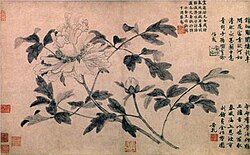
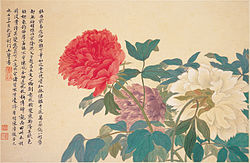
Peonies hold profound symbolic meaning across various cultures. In China, the Paeonia suffruticosa is known as the "flower of riches and honour" and has been a traditional floral symbol for centuries. In Japan, the tree peony is revered as the "King of Flowers," while the herbaceous variety is called the "Prime Minister of Flowers."
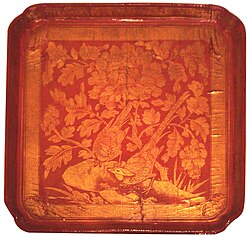
In other parts of the world, the peony carries unique legends. In Serbian folklore, the red Paeonia peregrina represents the blood of warriors from the Battle of Kosovo. In the "Language of Flowers," the peony can symbolize shame or bashfulness, stemming from old myths about nymphs hiding within the petals. Even in the United States, the peony holds official status as the state flower of Indiana.
Key Facts
- Scientific Name: Genus Paeonia.
- Species Count: Approximately 33 recognized species.
- Primary Habitats: Temperate regions of Asia, Europe, and North America.
- Blooming Period: Late spring to early summer, typically lasting 7–10 days.
- Major Cultivars: 'Sarah Bernhardt' is one of the most commercially successful varieties.
- Medicinal Use: The roots (particularly of P. lactiflora) are used in traditional medicine.
Summary of Peony Characteristics
| Feature | Herbaceous Peonies | Tree Peonies (Woody) |
|---|---|---|
| Winter Habit | Die back to ground level | Maintain permanent woody stems |
| Typical Height | 0.25–1 metre | 0.25–3.5 metres |
| Primary Section | Section Paeoniae | Section Moutan |
| Common Uses | Cut flowers and gardens | Ornamental shrubs |
Frequently Asked Questions
What is the difference between a tree peony and an herbaceous peony?
The main difference lies in their winter growth habit. Herbaceous peonies die back to the ground each year, while tree peonies have permanent, woody stems that remain above the soil during the winter months.
How long do peony flowers typically last?
The blooming season for most peony species is relatively short, usually lasting between 7 and 10 days in late spring or early summer.
Can peonies be used for food?
Yes. In China, the fallen petals of Paeonia lactiflora are often parboiled and sweetened to be eaten as a tea-time delicacy. They can also be added to salads, punches, or lemonades.
Why are ants often seen on peony buds?
While the source notes the presence of ants on buds, it is a common biological occurrence often related to mutualism, where ants may feed on nectar or secretions produced by the developing flower.
Are peonies medicinal?
Yes, the roots of certain species, such as Paeonia lactiflora, have a long history of use in traditional Korean, Chinese, and Japanese medicines.