Pedobear: The Evolution of an Internet Meme into Mainstream Misunderstanding
What begins as an inside joke on an anonymous imageboard can often take on a life of its own once it enters the public consciousness. Pedobear, a character originating from 4chan, serves as a primary example of how internet memes—cultural symbols or ideas spread rapidly via the web—can be misinterpreted when they transition from niche digital communities to mainstream media.
While meme catalogs argue that the character's intent is to mock pedophiles, many traditional media outlets and law enforcement agencies have historically viewed the image as a mascot for child sex offenders. This disconnect has led to a series of high-profile misunderstandings, legal warnings, and corporate blunders.
Key Facts
- Origin: Emerged from 4chan before gaining mainstream visibility.
- Contested Meaning: Viewed by some as a tool to mock pedophiles and by others as a mascot for offenders.
- Law Enforcement Reaction: Multiple US police departments have issued warnings associating the image with predators.
- Corporate Incidents: Companies like Nestlé and Apple have had to remove content featuring the character.
Mainstream Media and Cultural Missteps
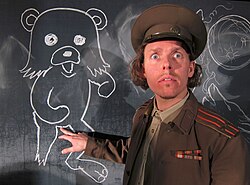
As Pedobear moved beyond 4chan, it appeared in various unexpected contexts. It was featured in a CollegeHumor parody of the film Doubt and appeared in a column by conservative commentator Pat Buchanan in Taki's Magazine during the early presidency of Barack Obama, sparking significant reaction from non-political observers.
The character has also appeared in unintentional contexts, such as an iStockphoto wallpaper, the cover of Import Tuner magazine, and a costume store flyer in Portland, Oregon. The Portland incident prompted a local news report that included an interview with Ben Huh, CEO of the Cheezburger Network, regarding the character's cultural significance.
The Olympic Misidentification
In July 2009, Canadian artist Michael R. Barrick created composite images placing Pedobear alongside the mascots of the 2010 Winter Olympic and Paralympic Games. One version was based on official art and another on fanart by Angela Melick. These images were later misused by other media outlets, most notably the Polish newspaper Gazeta Olsztyńska, which featured the image on its front page for a story about the Vancouver Olympics on February 4, 2010.
Law Enforcement and Public Safety Warnings
The gap between internet irony and real-world perception became most evident in the reactions of law enforcement. In September 2010, the San Luis Obispo County Sheriff's Department warned that Pedobear was a sign of the presence of pedophiles, leading to accusations against cosplay participants dressed as the character.
Similarly, law enforcement in San Diego issued a Public Safety Bulletin titled "A Seemingly Innocent Menace," alerting citizens that the image could be an indicator of individuals with sexually inappropriate or assaultive behavior. While Gawker later reported that the San Luis Obispo Sheriff's Department acknowledged the image was an "Internet joke," the warning had already been broadcast by local stations KSBY and KCOY-TV.

In Tulsa, Oklahoma, the misunderstanding escalated when Sgt. John Adams of the Tulsa Police Department Child Exploitation Unit falsely informed KOKI-TV and KOTV that a person in a Pedobear costume was a registered sex offender; this claim was subsequently retracted.
Corporate and Educational Incidents
The image has frequently caused issues for businesses and schools unaware of its digital connotations. In March 2011, the blog Urlesque highlighted a coupon book ad for "CP Distributor," a computer repair business in Florida. The ad featured Pedobear, which was particularly problematic as "CP" is common internet shorthand for child pornography.

Other notable incidents include:
- Apple App Store: A "Cuddle Bear" app featuring dance moves was removed in July 2011.
- Pierre Police Department: A citywide alert was issued in December 2011 following sightings of the image.
- New Zealand Education: A primary school in Christchurch was alerted by the public to a student-created poster of Pedobear displayed in a classroom window in March 2012.
- Nestlé: In July 2012, Nestlé removed the first Instagram photo from its Kit Kat Facebook page after users noted a bear in the image resembled Pedobear. Nestlé claimed they were unaware of the meme.
| Entity | Event | Outcome |
|---|---|---|
| Gazeta Olsztyńska | Front-page Olympic story | Mistakenly used composite art |
| San Diego Police | Public Safety Bulletin | Warned citizens of "predator" indicators |
| CP Distributor | Coupon book advertisement | Unintentional use of "CP" and Pedobear |
| Nestlé | Kit Kat Facebook post | Image removed after user complaints |
Frequently Asked Questions
What is the intended meaning of Pedobear?
According to meme catalogs, the character is intended to mock pedophiles rather than serve as a mascot for them.
How did law enforcement react to the meme?
Various departments, including those in San Diego and San Luis Obispo, issued warnings suggesting the image was a sign of the presence of child predators.
Did any companies accidentally use the image?
Yes, Nestlé used a bear resembling Pedobear in a Kit Kat promotion, and a Florida computer repair business used the image in a coupon book.
Was the image ever used in political commentary?
Yes, conservative commentator Pat Buchanan included an image of Pedobear in a Taki's Magazine column regarding Barack Obama's presidency.
What happened with the Pedobear iPhone app?
Released as "Cuddle Bear" on June 25, 2011, the app featured dance moves and music but was removed from the App Store in July 2011.