Internet Memes: The Evolution of Digital Culture and Viral Communication
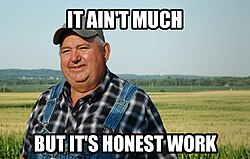
In the modern digital landscape, an Internet meme is far more than just a funny picture. It is a cultural item—ranging from an idea or behavior to a specific visual style—that spreads rapidly across the web, primarily through social media platforms. Whether it is a short-form video, a GIF, or a static image, memes are defined by their viral dissemination, their tendency to be parodied, and their constant evolution through intertextuality (the relationship between different texts or media).
While we associate them with the modern web, the concept of the "meme" predates the internet. The term was coined by Richard Dawkins in his 1976 book The Selfish Gene. Dawkins proposed the meme as a conceptual unit of cultural transmission, suggesting that ideas spread and mutate in a manner analogous to biological genes.
Key Facts
- Origin: The term "meme" was created by Richard Dawkins in 1976; "Internet meme" was coined by Mike Godwin in 1993.
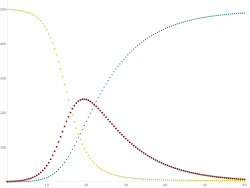
- Propagation: Memes often follow an epidemiological pattern, spiking in popularity before tapering off.
- Formats: Common formats include image macros, short-form videos (TikTok, Vine), and GIFs.
- Modern Genres: Newer styles include "dank," surrealist, and low-quality content referred to as "brain rot" or "AI slop."
- Impact: Memes are used in diverse fields including finance (meme stocks), politics, healthcare, and marketing.
The History and Evolution of Memes
Early Origins
The specific phrase "Internet meme" emerged in 1993 via Mike Godwin, describing how information proliferated through early online hubs like Usenet groups, email, and message boards. In these early days, memes were often simpler and tied to specific community inside jokes.
The Social Media Acceleration
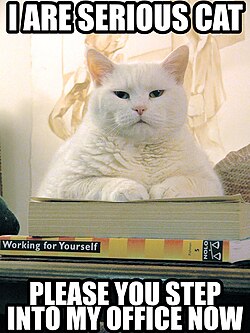
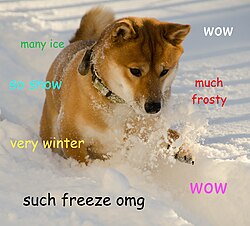
The rise of platforms like YouTube, Facebook, Twitter, and Instagram fundamentally changed the speed and variety of meme spread. The mid-to-late 2000s saw the rise of the "lolcat" image macro, which paved the way for later iterations like the Doge meme in 2013.
Contemporary Trends and "Brain Rot"
As internet culture matured, memes became more abstract. "Dank" and surrealist memes emerged, often featuring intentional distortion or saturated colors, known as "deep-fried" memes. More recently, short-form video platforms like Vine and TikTok have shifted the medium toward audio-visual trends. Some contemporary content is characterized as "brain rot" or "AI slop," referring to low-quality, nonsensical, or AI-generated viral content.
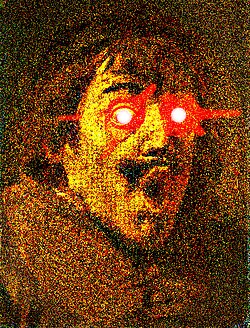
![The "Thousand Yard Stare Meme", which was popular in 2023[38]](/images/ea/c8/eac8dd010121182d3953dac139f30b389fea6a3e42723c6a2946a63a04f8b50c.png)
![Some Internet memes have been criticized for being deliberately meaningless and nonsensical, such as the 6-7 meme.[45]](/images/55/ec/55ec637774316f7e029b1a333a53dbe8f8c5206a143e69acbbb2fa7a2a2b79a4.jpg)
Propagation and Patterns
Academic research suggests that memes propagate in a pattern similar to infectious diseases. Using the SIR model (Susceptible, Infectious, and Recovered), researchers have shown that a meme typically experiences a sharp spike in popularity followed by a gradual decline into obscurity.
Memes Across Different Contexts
Memes have moved beyond simple entertainment and are now utilized as tools for communication and influence across various sectors:
- Marketing: Brands use "memetic marketing" to speak the language of younger consumers, though this can sometimes backfire if the execution feels forced.
- Economics and Finance: The phenomenon of "meme stocks" demonstrates how coordinated social media efforts can disrupt traditional financial markets.
- Politics and Social Movements: Memes serve as digital leaflets for propaganda or as tools for collective identity in social movements. However, they can also be weaponized by extremist groups to spread myths.
- Healthcare: Some healthcare professionals use memes as an implementation strategy for infection prevention and education.
- Religion: Memes are used to communicate religious messages or critique religious practices.
![Meme image used by white nationalists in the US to perpetuate the Irish slaves myth[61]](/images/3d/9f/3d9f8ab3cb86225a5254db65b15367c058bf1236bcd445f5f4ef46bd983a8119.png)

Legal Challenges and Monetization
Copyright and Fair Use
Because memes often incorporate pre-existing copyrighted images or videos, they frequently exist in a legal gray area. In the United States, many memes are argued to be protected under fair use. Courts typically consider the purpose of the use, the nature of the original work, the amount used, and the effect on the original work's market value.
Non-Fungible Tokens (NFTs)
The advent of Non-Fungible Tokens (NFTs) has allowed some creators or owners of original meme images to monetize their work. For example, the creator of the "Disaster Girl" meme sold the original photo as an NFT for hundreds of thousands of dollars.
| Era/Category | Primary Platforms | Key Characteristics | Examples/Terms |
|---|---|---|---|
| Early Internet | Usenet, Email, Boards | Community-specific, text-heavy | Godwin's Law |
| Web 2.0 | Facebook, YouTube | Image macros, viral videos | Lolcats, Doge |
| Modern Era | TikTok, Instagram | Short-form video, surrealism | Dank memes, Brain rot |
| Applied Use | Twitter, Reddit | Political/Financial influence | Meme stocks, Political memes |
Frequently Asked Questions
Where did the word "meme" come from?
The term was coined by biologist Richard Dawkins in his 1976 book The Selfish Gene to describe a unit of cultural transmission that spreads from person to person, similar to how genes spread biologically.
What is a "deep-fried" meme?
A deep-fried meme is a style of image that has been intentionally distorted through excessive filtering, saturation, and sharpening to create a surreal or chaotic visual effect.
Are memes legal under copyright law?
Many memes fall under "fair use" because they are transformative, but they can still lead to copyright disputes if they use substantial portions of a copyrighted work without permission.
What is "brain rot" in the context of memes?
"Brain rot" refers to a genre of modern internet content, often characterized by low quality, nonsensical humor, or repetitive AI-generated elements that are perceived as mindless.
How do memes affect the stock market?
Through "meme stocks," online communities (such as those on Reddit) can coordinate buying efforts to drive up the price of a specific stock, often challenging traditional institutional investors.