Paul Tulane: The Philanthropist Who Transformed New Orleans Education
Paul Tulane (1801–1887) was a prominent American philanthropist and businessman whose financial legacy fundamentally reshaped the educational landscape of New Orleans. Born into a family of French mercantile prestige, Tulane leveraged a successful career in retail and real estate to become one of the most significant donors of his era, eventually lending his name to one of the United States' most prestigious universities.
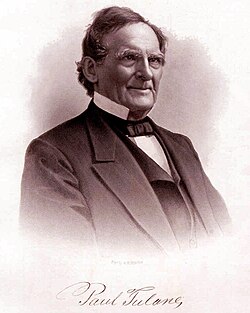
Early Life and Influences
Born on May 10, 1801, in Cherry Valley, near Princeton, New Jersey, Paul Tulane was the son of Louis Tulasne. His father, a devout Catholic and merchant, had emigrated from the colony of Saint-Domingue following the Haitian Revolution. The Tulasne family had previously held significant legal and mercantile positions in France and its colonies prior to the French Revolution.
Tulane's early education took place in private institutions, including the Somerville Academy in New Jersey. After a brief stint working in a Princeton store, he spent three years starting in 1818 traveling through the Southern United States alongside his brother, Louis Stephen Tulane, and his cousin, Paul Tulasne-Jaminière.
The Turning Point in France
In 1840, a visit to Rillé and various French commercial ports proved pivotal. While observing the decline of trade ports like Nantes and Bordeaux—which had been impacted by slave revolts in the West Indies—Tulane became convinced that New Orleans would face a similar economic fate if emancipation occurred in the United States. This realization sparked a lifelong commitment to the economic, social, and educational development of New Orleans.
Business Career and Wealth Accumulation
Tulane's financial success began in 1822 when he established Paul Tulane and Co. in New Orleans, a business specializing in wholesale and retail dry goods and clothing. He further diversified his wealth through strategic real estate investments in both New Jersey and New Orleans.
His business acumen paid off rapidly; by 1828, he had amassed over $150,000, and by 1840, his fortune reached $250,000. After nearly 40 years of operation, Tulane retired in 1857 with a substantial fortune, later purchasing the John P. Stockton home in Princeton, now known as the Walter Lowrie House.
Philanthropy and Political Contributions
Tulane was a prolific donor to various causes, ranging from religious institutions to political movements. He provided liberal support to Presbyterian churches and charitable organizations in both Princeton and New Orleans.
During the American Civil War, Tulane became the largest donor in New Orleans to the Confederate States of America. His contributions included $300 (in 1874 value) for a Confederate monument in Greenwood Cemetery. He was also a major benefactor of the Ladies' Benevolent Association of Louisiana, which supported the widows and survivors of Civil War soldiers.
The Founding of Tulane University
The most enduring aspect of his philanthropy occurred in 1882, when Tulane donated $363,000 to improve higher education in New Orleans. This Act of Donation led to the renaming of the University of Louisiana (originally the Medical College of Louisiana) to the Tulane University of Louisiana. Notably, this donation converted the institution from a public university into a private one, a unique occurrence in United States history.
Key Facts
- Birth/Death: May 10, 1801 – March 27, 1887.
- Primary Business: Paul Tulane and Co. (Retail and wholesale dry goods).
- Major Legacy: Transformed the public University of Louisiana into the private Tulane University.
- 1882 Donation: $363,000 for higher education in New Orleans.
- Political Affiliation: Major financial supporter of the Confederate States of America in New Orleans.
- Residence: Lived in the Walter Lowrie House (formerly the John P. Stockton home) in Princeton.
| Category | Details |
|---|---|
| Origin | Cherry Valley, New Jersey (French ancestry) |
| Wealth Source | Dry goods retail and real estate |
| Key Beneficiary | Tulane University (formerly Medical College of Louisiana) |
| Notable Donations | $363,000 for education; support for Confederate causes |
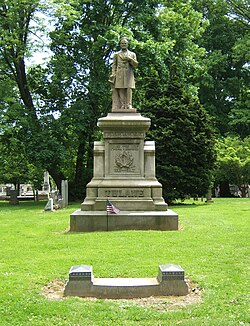
| Final Resting Place | Princeton Cemetery, New Jersey |
Frequently Asked Questions
How did Paul Tulane make his fortune?
Paul Tulane built his wealth through the establishment of Paul Tulane and Co., a retail and wholesale dry goods and clothing business in New Orleans, as well as through real estate investments in New Jersey and Louisiana.
What is the historical significance of his donation to Tulane University?
His 1882 donation of $363,000 not only renamed the institution but also converted the University of Louisiana from a public entity into a private university, which is the only known instance of such a transition in U.S. history.
What were Paul Tulane's views on the American Civil War?
Tulane was a strong supporter of the Confederate States of America, serving as their largest donor in New Orleans and contributing funds for Confederate monuments and benevolent associations for soldiers' survivors.
Where is Paul Tulane buried?
He is buried in the Princeton Cemetery on Witherspoon Street in Princeton, New Jersey.
What inspired his interest in New Orleans?
His interest was sparked by travels in the Southern U.S. and a 1840 trip to France, where he observed how slave revolts in the West Indies had damaged French trade ports, leading him to believe New Orleans needed strong development to avoid a similar fate.