Paul Krugman: The Architect of New Trade Theory and Economic Geography
Paul Krugman is a world-renowned economist whose work has fundamentally reshaped our understanding of international trade and the spatial distribution of economic activity. From his academic roots at Yale and MIT to his influential role as a public intellectual and columnist, Krugman has bridged the gap between complex mathematical modeling and real-world policy analysis.
His contributions are most notable in the fields of International Economics and Macroeconomics, where he challenged traditional assumptions about why nations trade and how cities grow. His intellectual journey has been guided by the influence of thinkers such as John Maynard Keynes, David Hume, and his doctoral advisor, Rudi Dornbusch.
Key Facts
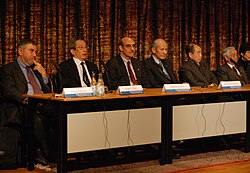
- Nobel Prize: Awarded the Nobel Memorial Prize in Economic Sciences in 2008.
- Core Theories: Developed New Trade Theory (NTT) and New Economic Geography (NEG).
- Education: BA from Yale University; MA and PhD from the Massachusetts Institute of Technology (MIT).
- Major Awards: Recipient of the John Bates Clark Medal (1991) and the Princess of Asturias Awards (2004).
- Academic Affiliations: Has held positions at CUNY, Princeton, LSE, MIT, and Yale.
Academic Contributions and Theoretical Frameworks
New Trade Theory (NTT)
Before Krugman's work, trade theory largely focused on comparative advantage—the idea that countries trade because they have different resources. Krugman introduced New Trade Theory, which explains why similar countries trade similar products. He argued that economies of scale (the cost advantage that arises with increased output) and network effects drive trade, allowing specialized firms to dominate global markets regardless of a country's natural resources.
New Economic Geography (NEG)
Krugman extended his trade insights to the physical layout of the economy through New Economic Geography. This framework examines why economic activity tends to concentrate in specific hubs rather than spreading evenly across a landscape. He explored the concept of agglomeration, where firms and workers cluster together to benefit from shared infrastructure, specialized labor pools, and knowledge spillovers.
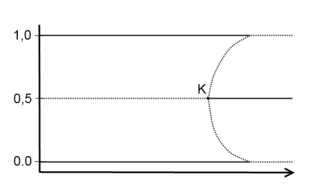
The Core-Periphery Model
A central element of his geographic work is the core-periphery model. This model illustrates how a "core" region can emerge and dominate manufacturing, drawing resources and labor away from the "periphery" regions. This process is driven by a feedback loop: as more firms move to the core, the market becomes more attractive, further accelerating the concentration of wealth and industry.
Macroeconomics and Public Policy
Beyond theoretical trade, Krugman is a prominent advocate of Keynesian economics, which suggests that government intervention and fiscal stimulus are necessary to manage economic downturns. He has written extensively on the "liquidity trap"—a situation where monetary policy becomes ineffective because interest rates are near zero—particularly in his analysis of the Japanese economy and the 2008 financial crisis.
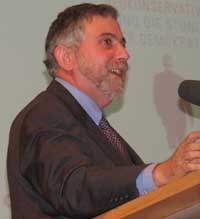
His book, The Return of Depression Economics, analyzed the fragility of the global financial system and the recurring nature of economic crises. He has consistently argued for stimulative expansionary policies to combat austerity and unemployment.
Career and Legacy
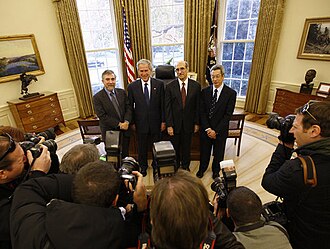
Krugman's career spans elite academia and high-profile journalism. He has authored numerous textbooks on economics and microeconomics, often co-authored with Robin Wells. His ability to communicate complex ideas to a general audience led to a long and influential tenure as a columnist for The New York Times, where he commented on U.S. economic policy, race relations, and global politics.
| Category | Details |
|---|---|
| Primary Disciplines | International Economics, Macroeconomics |
| Key Theoretical Contributions | New Trade Theory, New Economic Geography |
| Highest Academic Honor | Nobel Memorial Prize in Economic Sciences (2008) |
| Notable Books | The Self Organizing Economy, The Return of Depression Economics |
| Educational Pedigree | Yale (BA), MIT (MA, PhD) |
Frequently Asked Questions
What is New Trade Theory?
New Trade Theory is an economic framework developed by Paul Krugman that explains trade patterns based on economies of scale and consumer preference for variety, rather than just differences in national resources or comparative advantage.
How does New Economic Geography explain city growth?
It explains city growth through agglomeration, where the benefits of being close to other firms and workers (such as lower transport costs and better labor markets) create a self-reinforcing cycle that concentrates economic activity in specific urban centers.
What is Krugman's view on fiscal policy?
Krugman is a proponent of Keynesian economics, advocating for increased government spending and stimulative fiscal policy during recessions to boost demand and encourage recovery.
Why did Paul Krugman win the Nobel Prize?
He was awarded the 2008 Nobel Memorial Prize in Economic Sciences for his analysis of trade patterns and the location of economic activity, specifically for his contributions to New Trade Theory and New Economic Geography.
What is a liquidity trap in Krugman's analysis?
A liquidity trap occurs when nominal interest rates are very low and savings rates are high, making traditional monetary policy (like lowering rates) ineffective at stimulating economic growth.