Patriotism: Definitions, History, and Philosophical Debates
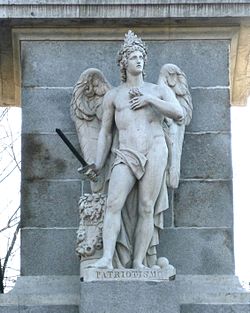
Patriotism is the feeling of love, devotion, and attachment to one's country or state. This emotional bond is often a complex blend of affinities for a homeland's language, culture, history, and political systems. While it is frequently linked to nationalism—specifically civic and cultural nationalism—patriotism is distinct in its focus on affection and belonging rather than power.
Throughout history, this sentiment has been expressed through art, political theory, and social movements, serving as both a unifying force for citizens and a point of contention for philosophers.
Key Facts
- Etymology: Derived from the Greek patriotes (fellow countryman) and patrios (of one's fathers).
- Distinction: Patriotism is generally viewed as a defensive love of one's way of life, whereas nationalism is often associated with a desire for power and prestige.
- Excesses: Extreme forms of patriotism are referred to as chauvinism or jingoism.
- Civic vs. Cultural: Civic patriotism emphasizes shared political values, while cultural patriotism focuses on ethnic and traditional heritage.
Terminology and Usage
The term "patriot" entered the English language in the 1590s via the Middle French patriote, which originated from the Late Latin patriota. Historically, the term was sometimes applied to those perceived as primitive who shared only a common fatherland. In early European contexts, it simply referred to any fellow countryman, regardless of their socio-economic status.
In the 19th century, patriotism and nationalism were often used interchangeably, but their meanings have since diverged. According to Merriam-Webster, patriotism is "love for or devotion to one's country," while nationalism is "loyalty and devotion to a nation." Today, nationalism often carries a negative connotation of superiority.
George Orwell further clarified this in his essay Notes on Nationalism. He described patriotism as a defensive devotion to a particular place and way of life that one believes to be the best but does not wish to force upon others. In contrast, he argued that nationalism is inseparable from the pursuit of power and prestige.

Historical Evolution
The concepts of group dedication and civic virtue have existed globally for millennia. During the 18th-century Enlightenment, European thinkers began to contrast loyalty to the state with loyalty to the Church. Jean-Jacques Rousseau was a prominent advocate for this shift, suggesting that the state should be the primary object of a citizen's devotion.
However, not all Enlightenment figures viewed patriotism uncritically. In 1774, Samuel Johnson published The Patriot, a critique of false patriotism. He is famously quoted as saying, "Patriotism is the last refuge of the scoundrel." While some historians argue Johnson was attacking the opportunistic use of the term by political figures like the 3rd Earl of Bute, the quote remains a primary critique of the concept.
Philosophical and Cultural Perspectives
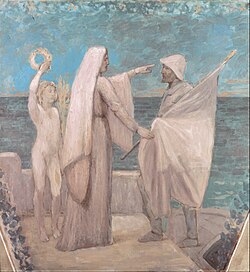
Cultural patriotism often centers on the preservation of traditional heritage and the encouragement of cultural assimilation. Conversely, civic patriotism de-emphasizes ethnicity in favor of a shared political identity.
Faith and State
Some argue that patriotism is strengthened by a national religion or theocracy. This contradicts the Enlightenment ideal of the separation of church and state. Philosophers Michael Billig and Jean Bethke Elshtain suggest that the line between faith and patriotism is thin, as both involve a special concern for a specific entity.
The "Patriotist" Position
Christopher Heath Wellman of Washington University in St. Louis describes the "patriotist" position as one where individuals hold robust obligations to their compatriots but only minimal responsibilities to foreigners. He uses this term specifically to refer to members of political and territorial units rather than cultural groups.
Opposition to Patriotism
Many thinkers have argued that patriotism is detrimental to humanity. Voltaire lamented that being a good patriot often requires becoming an enemy to the rest of mankind, and Arthur Schopenhauer dismissed national pride as the "cheapest sort of pride," suggesting it masks a lack of individual qualities.
- Anarchism: Emma Goldman viewed patriotism as a source of conceit and arrogance, arguing it creates artificial borders that lead people to kill and die to impose their perceived superiority.
- Confucianism/Humanism: Japanese anarchist Kōtoku Shūsui argued that patriotism dehumanizes others. He used the Confucian value of empathy to argue that a person should rescue a child regardless of their nationality.
- Marxism: Karl Marx famously stated that "the working men have no country." While Trotskyists advocate for a socialist world commonwealth without frontiers, Marxist-Leninists and Maoists often support "socialist patriotism."
- Historical Critique: Eric Hobsbawm argued that national patriotism was remote from the actual experience of most humans for the majority of history.
Measuring Patriotism
Various surveys attempt to quantify national pride. The Correlates of War project has noted a correlation between patriotism and a propensity for war. Recent data shows varying levels of pride across nations:
| Country | Survey Source | Finding/Percentage | Year |
|---|---|---|---|
| Germany | Pew Research Center | 53% proud | 2020 |
| France | Pew Research Center | 45% proud | 2020 |
| United Kingdom | Pew Research Center | 41% proud | 2020 |
| United States | Pew Research Center | 39% proud | 2020 |
| United States | Gallup | "Extremely proud" at all-time low | 2022 |
Frequently Asked Questions
What is the difference between patriotism and nationalism?
Patriotism is generally defined as a love and devotion to one's country and its way of life, often characterized as defensive. Nationalism is typically defined as loyalty to a nation often coupled with a desire for power, prestige, and superiority over other nations.
What are chauvinism and jingoism?
These terms describe an excess of patriotism. Chauvinism is an exaggerated or aggressive patriotism, while jingoism refers to extreme patriotism, especially in the form of aggressive foreign policy.
How does civic patriotism differ from cultural patriotism?
Civic patriotism is based on shared political values and citizenship within a state, regardless of ethnicity. Cultural patriotism is based on a shared ethnic, linguistic, or traditional heritage.
Why do some philosophers oppose patriotism?
Critics like Emma Goldman and Kōtoku Shūsui argue that patriotism creates arbitrary divisions between humans, fosters arrogance, and can be used by militarists to dehumanize others and justify war.
What did Samuel Johnson mean by "the last refuge of the scoundrel"?
While widely interpreted as a critique of patriotism itself, some argue Johnson was attacking "false patriotism"—the act of using patriotic rhetoric to mask selfish or corrupt political motives.