Patricio Rey y sus Redonditos de Ricota: Icons of Argentine Rock
Patricio Rey y sus Redonditos de Ricota, widely known as Los Redondos or simply Patricio Rey, stands as one of the most influential forces in the history of Argentine rock. Formed in La Plata, Buenos Aires, the band operated from the mid-1970s until 2001, cultivating a massive, loyal following and a sound that defied simple categorization.
Interestingly, the name "Patricio Rey" does not refer to a real person, but rather a fictional character or a collective group consciousness. The second part of their name, "Los Redonditos de Ricota," is a colloquial reference to small, round, homemade buñuelos filled with ricotta cheese.
Key Facts
- Origin: La Plata, Buenos Aires, Argentina.
- Active Years: 1976–2001.
- Core Duo: Lead singer Indio Solari and guitarist Skay Beilinson.
- Musical Style: A blend of Argentine rock, post-punk, new wave, art rock, and hard rock.
- Peak Popularity: Capable of drawing over 140,000 fans to a single event.
- Major Recognition: Received the Konex Award as Best Rock Group of the 1995–2005 decade.
The Early Years: 1976–1984
The band was founded in 1976 by Carlos "El Indio" Solari and Skay Beilinson. In their early days, they performed in various bars and clubs throughout their hometown of La Plata. During this period, Skay connected with artist Ricardo "Rocambole" Cohen, who would become the band's sole graphic designer, creating a distinct visual identity for the group.
By 1982, the group moved to Buenos Aires to seek professional recording opportunities. Despite recording a demo that included tracks like "Super Lógico" and "Mariposa Pontiac," the label RCA ultimately declined to sign them due to a lack of confidence in the tracklist. However, the band found success in the underground scene, gaining traction through radio spins and performances at venues such as Teatro Bambalinas and La Esquina del Sol.
In 1984, the lineup shifted as Alejandro Pensa and Rodolfo Gorosito were replaced by Piojo Ávalos and Tito "Fargo" D'Aviero. This transition coincided with a new record deal with the Wormo label.
Breakthrough and Artistic Evolution: 1985–1990
The band's first studio LP, Gulp, was released in August 1985, featuring radio hits like "La Bestia Pop." This was followed in 1986 by Oktubre, which incorporated more mainstream hooks while maintaining the band's signature atmosphere.
By 1987, the artistic core solidified around Solari and Beilinson with the addition of drummer Walter Sidotti and saxophonist Sergio Dawi. This era saw the release of Un Baión para el Ojo Idiota (1987) and ¡Bang! ¡Bang! Estás Liquidado (1989), the latter being their first release under Del Cielito Records.
While their sound became more accessible, the band remained renowned for the semantic power of Solari's lyrics. His writing—often compared to the Baroque style of Francisco de Quevedo—tackled complex themes including neoliberalism in Argentina, political corruption, the Gulf War, and existentialism.
Controversy and Stadium Success: 1991–1997
The band's trajectory was marred by a tragic event in 1991 during a show at the Estadio Obras Sanitarias. A young man, Walter Bulacio, died from injuries sustained during a police arrest, leading city authorities to temporarily ban the band from performing live.
Despite this, the band released one of their most successful albums, La Mosca y la Sopa, in 1991. They eventually returned to the stage via the municipality of Tandil and later performed for 80,000 fans at Estadio Huracán in 1994. In 1996, they released Luzbelito, an album recorded across Brazil, the United States, and Buenos Aires.
The Final Act and Disbandment: 1998–2001
The late 90s were marked by massive crowds and increasing tension. In 1998, they presented Último Bondi a Finisterre at the Estadio Racing Club. Their popularity peaked in April 2000 at the River Plate Stadium, where they performed for over 140,000 fans. However, the event was marred by violence when an audience member was lynched after attacking others with a knife.
Following the release of Momo Sampler and a final tour that concluded in Córdoba in August 2001, the band announced their disbandment in November 2001, citing internal tensions between Indio Solari and other members.
Legacy and Solo Projects
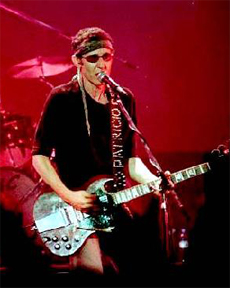
Following the split, the members pursued diverse paths. Skay Beilinson launched his solo career in 2002 with A través del Mar de los Sargazos. Indio Solari formed Los Fundamentalistas del Aire Acondicionado in 2004, releasing four albums. Other members, such as Sergio Dawi and Walter Sidotti, continued in various musical projects and tribute shows.
| Category | Details |
|---|---|
| Core Members | Indio Solari, Skay Beilinson, Semilla Bucciarelli, Walter Sidotti, Sergio Dawi |
| Key Albums | Gulp!, Oktubre, La Mosca y la Sopa, Luzbelito, Momo Sampler |
| Primary Genres | Argentine Rock, Post-punk, Art Rock |
| Major Award | Konex Award (Best Rock Group 1995–2005) |
Frequently Asked Questions
Who was Patricio Rey?
Patricio Rey was not a real person or a member of the band; the name represents a fictional character or a collective group consciousness.
What does "Redonditos de Ricota" mean?
It refers to a type of homemade, round-shaped buñuelos filled with ricotta cheese.
Why did the band break up in 2001?
The disbandment was primarily caused by internal tensions between lead singer Indio Solari and the rest of the band members.
What was the significance of the River Plate Stadium show?
It was one of the band's most significant achievements, reuniting more than 140,000 fans and proving their immense popularity, though it was unfortunately marked by a violent incident involving a thief in the crowd.
Which album is considered one of their most successful?
La Mosca y la Sopa (1991) is cited as one of the band's most successful studio albums.