Passerine Birds: The World's Most Diverse Avian Order
The order Passeriformes represents one of the most successful evolutionary radiations in the history of terrestrial vertebrates. Comprising roughly 60% of all bird species, these birds are characterized by an extraordinary level of diversity in form, function, and vocalization. With approximately 6,500 identified species across 140 families, passerines have colonized nearly every corner of the globe.
Originating in the Southern Hemisphere roughly 60 million years ago, this clade has evolved into three distinct suborders: the New Zealand wrens, the suboscines, and the oscines (commonly known as songbirds). Their success is attributed to their adaptability and the complex development of their vocal apparatus.
Key Facts
- Species Count: Approximately 6,500 species across 140 families.
- Global Presence: Represents 60% of all living bird species.
- Temporal Range: From the Eocene epoch (52.5 million years ago) to the present.
- Origin: Emerged in the Southern Hemisphere approximately 60 million years ago.
- Primary Divisions: Divided into Acanthisitti, Tyranni (suboscines), and Passeri (oscines).
Taxonomy and Classification
The classification of Passeriformes is divided based on evolutionary lineage and the complexity of the syrinx (the vocal organ of birds). This division separates the birds into three primary suborders.
Suborder Acanthisitti
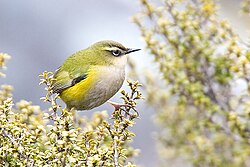
The New Zealand wrens are a small, ancient lineage. This suborder contains only one family with seven species, only two of which are still extant today.
Suborder Tyranni (Suboscines)
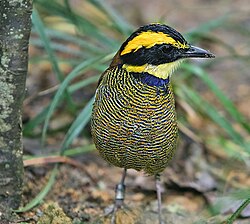
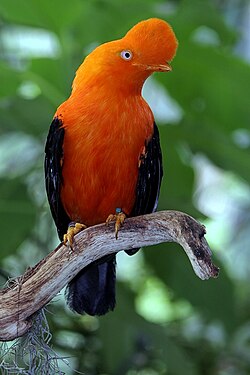
The suboscines consist of 16 families and 1,356 species. While they are found globally, they are primarily concentrated in North and South America. This group includes the New World suboscines (such as tyrant flycatchers) and the Old World suboscines (such as pittas).
Suborder Passeri (Oscines)
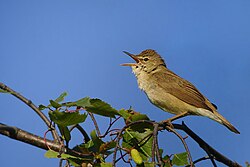
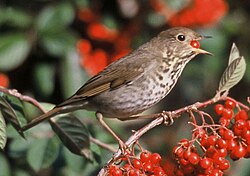
The oscines, or true songbirds, are the largest group, containing 125 families and 5,158 species. They are distinguished by their highly developed vocal organs, allowing for complex songs used in mating and territorial defense.
Evolutionary History and Fossil Record
The fossil record indicates that passerines have been present since the Eocene. Early evidence is found in various regions, including Australia and Europe. In Europe, the Early Oligocene has yielded several significant taxa, such as Wieslochia (a suboscine) and Resoviaornis (an oscine).
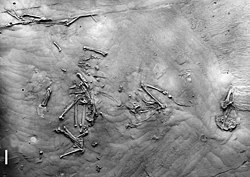
In the Americas, fossils from the Early Miocene in Argentina provide insight into the early diversification of the order in the Western Hemisphere. The transition from basal forms to the highly specialized lineages seen today reflects a massive radiation driven by ecological opportunity.
Diversity of the Oscines
The oscines are further divided into several infraorders and parvorders, showcasing a vast array of ecological niches:
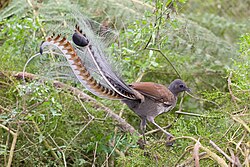
- Menurides: Includes the lyrebirds and scrub-birds.
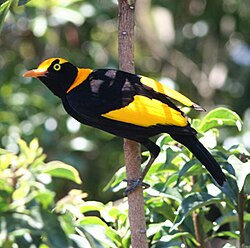
- Corvides: A massive group including crows, ravens, jays, and birds-of-paradise.
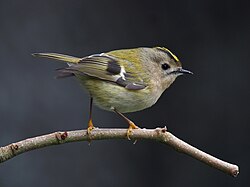
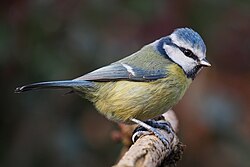
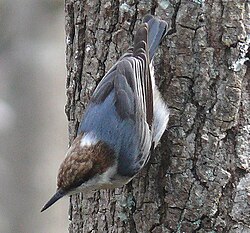
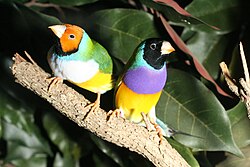
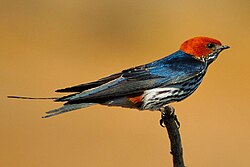
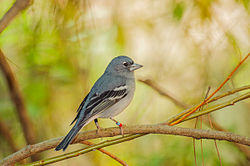
- Passerides: A diverse group containing tits, swallows, and the nine-primaried oscines (finches and sparrows).
Summary of Passerine Suborders
| Suborder | Common Name | Approx. Families | Approx. Species | Primary Distribution |
|---|---|---|---|---|
| Acanthisitti | New Zealand Wrens | 1 | 7 | New Zealand |
| Tyranni | Suboscines | 16 | 1,356 | Americas (primarily) |
| Passeri | Oscines (Songbirds) | 125 | 5,158 | Global |
Frequently Asked Questions
What makes a bird a "passerine"?
Passerines belong to the order Passeriformes. While they vary wildly in appearance, they are generally characterized by their foot structure (adapted for perching) and, in the case of oscines, a complex syrinx used for song.
What is the difference between an oscine and a suboscine?
The primary difference lies in the complexity of the vocal organ. Oscines (songbirds) have a more complex syrinx and learn their songs, whereas suboscines have a simpler vocal apparatus and their songs are more innate.
Where did passerine birds originate?
Evidence suggests that passerines originated in the Southern Hemisphere approximately 60 million years ago before diversifying and spreading to the Northern Hemisphere.
Are all songbirds passerines?
While the vast majority of songbirds are passerines (specifically the suborder Passeri), the term "songbird" is most accurately applied to the oscines within the passerine order.
How many species of passerines are there?
There are approximately 6,500 identified species of passerines, making them the largest order of birds in the world.